


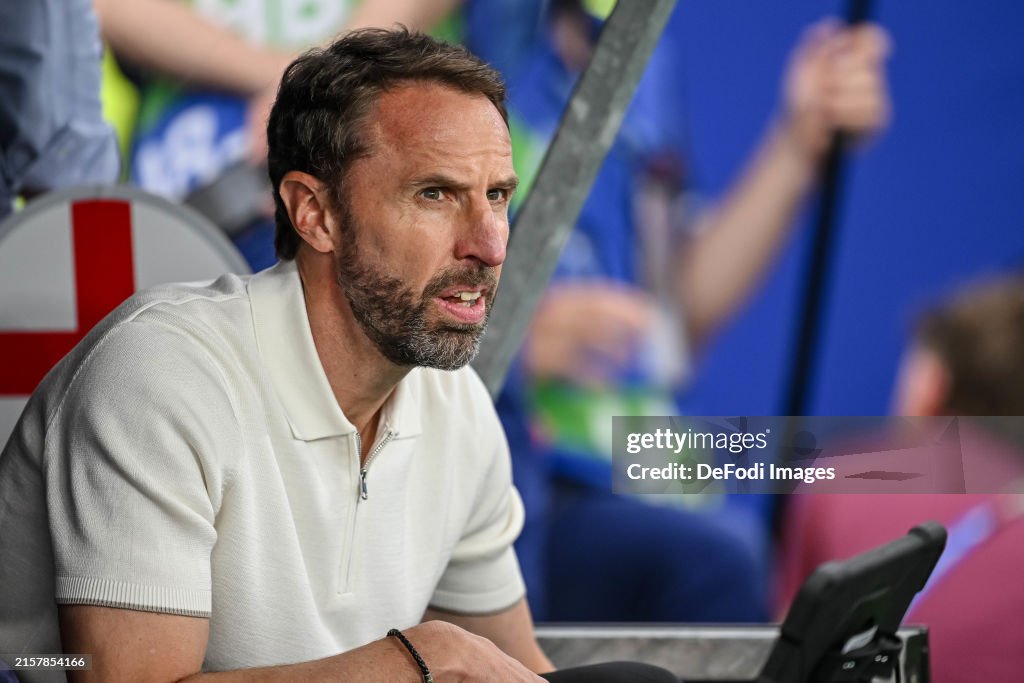

There is no doubt that the solutions are there for Gareth Southgate to save England’s European Championship campaign, it’s just whether there is enough time and the clarity of thought to make it work.
England were horribly dysfunctional during their disappointing draw against Denmark in Frankfurt on Thursday, and it was a second successive performance in the early days of Euro 2024 that suggested Southgate’s team have some way to go to live up to their billing as one of the favourites.
There have been iffy starts to tournaments before, both under Southgate and before. However, whereas the second-game draws to Scotland at Euro 2020 and the United States during the World Cup 19 months ago were underwhelming affairs, the encounter with Denmark saw a disjointed England side struggling.
Pre-tournament hopes have been dashed, the dial on the It’s-Coming-Home-ometer has panged back left and there may be a valid argument in that this rather inexperienced squad are finding it difficult to deal with the expectations now associated with the national team.
Southgate’s England may be becoming a victim of their own, relative, success. It is no longer enough to obtain four points from the opening two games of a tournament. Southgate has engaged a nation but now must live with the increased eyeballs on his team. Yet, they are undoubtedly hugely underperforming.
On the journey back to their training base in Blakenhain, Southgate may have pondered whether he went too far in ditching more experienced members of the squad in favour of younger, but less experienced, in-form players. The likes of Jordan Pickford, Kyle Walker and captain Harry Kane will have a role to play over the next few days in ensuring heads do not drop.
It was interesting that Southgate hinted that possibly his players “care too much” and that they need to seek a balance; nerves could be responsible for the repeated retreats during games, but so too could both the physical and mental fatigue following a long season.
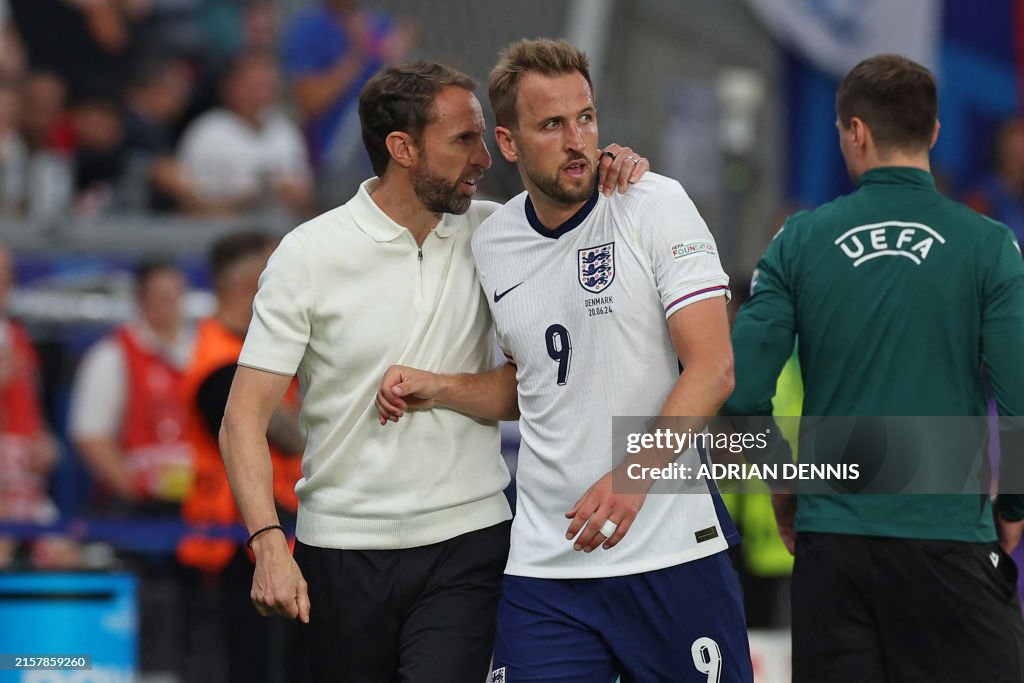
But this malaise dates back further. Notwithstanding the poor form that England took into the tournament — they won just one of their last five games and suffered a shock defeat to Iceland in their last warm-up match — Southgate has been struggling to square the circle of putting together a balanced team for much of the past 12 months.
Experimentation was not only present on the cusp of the tournament but has also gone on way into the group stages both due to injury and form.
Southgate has made it known before that England have had a midfield problem for the entirety of his tenure. “Had we not had Declan Rice, I don’t know where we would be,” he admitted after Thursday’s draw.
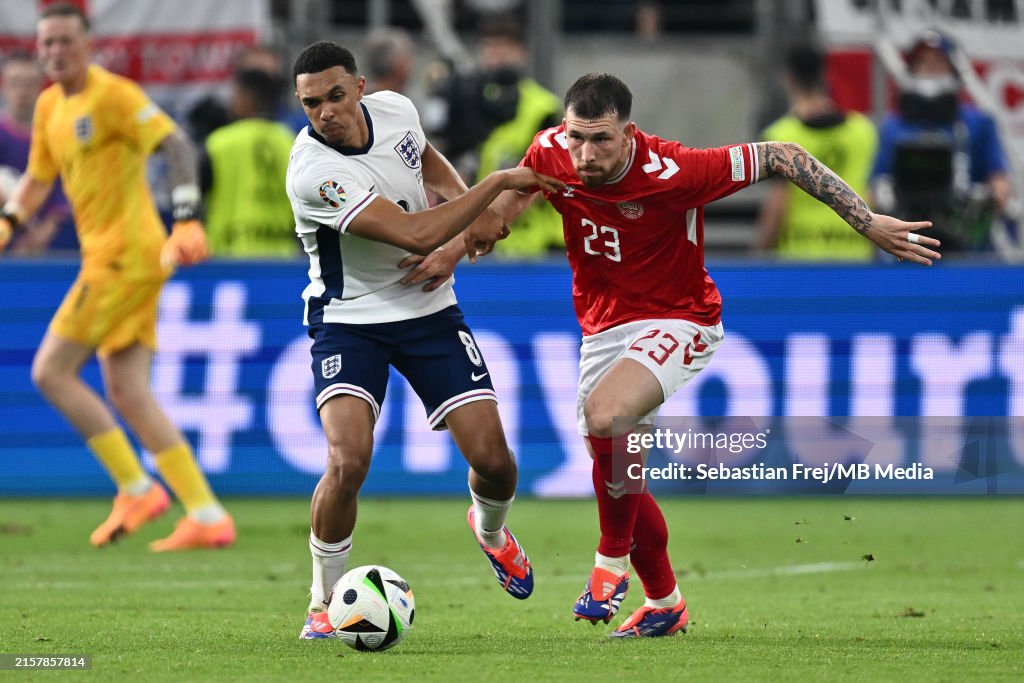
It is true that Southgate has never been able to pick from a position of strength and the use of Trent Alexander-Arnold, probably the country’s best passer of the ball, as Rice’s partner certainly felt like a worthy deployment.
But after two competitive games, in which Alexander-Arnold was substituted for Conor Gallagher in both of them, that particular trial will likely cease now. Probably the most vivid takeaways from the Denmark draw and narrow win over Serbia, is the sight of Rice being pulled from pillar to post with much ground to cover.
The final group game against Slovenia on Tuesday will see a shakeup to the lineup and that looks set to include Gallagher starting next to Rice. If England qualify for the knockout rounds — and they almost certainly still will, probably as group winners — then preparation for much harder games cannot be postponed.
England have lacked balance and control
A greater presence in midfield, however, will not alone fix the disjointed aspect of England’s play. There is a lack of cohesion that needs sorting.
Southgate does not need his team to press high, as some observers have called for — there are other ways to play — but their work off the ball must be consistent throughout the side. They either need to press high together or sit a little deeper and remain compact, not a mixture of the two that brings about gaps.
There has been an individualistic side to England’s play during the past two games, possibility a result of the experimentation and culling of some of the attackers Southgate once trusted.
Southgate has some big calls to make. Not least whether Bukayo Saka is in good enough form to continue starting on the right, whether Anthony Gordon should get a go on the left wing instead of Phil Foden, and if Kane might benefit from a second striker in and around him as England have lacked runners.
Noticeably, a lot of the decisions come in the forward areas of the pitch, which has never been Southgate’s forte. Under him, England have never been the epitome of free-flowing football, rather functional instead.
England’s defence has been solid enough so far: conceding just one goal (Morten Hjulmand’s long-ranger), Pickford has not been overly tested and John Stones and Marc Guehi have arguably been England’s two best performers.
But there remains plenty for Southgate to address. This has been the tournament when he has made the big moves that some believed he was incapable of making but, so far, they have not really come off.
Now, as the analysis burns and Southgate searches for answers, there must be clarity to his approach and to the way he wants his players to move forward.
