




After years attempting to do their own version of the Galacticos, Paris Saint-Germain have finally claimed the Champions League title that has eluded them since the Qatari takeover in 2011.
Assembling squads that included Zlatan Ibrahimovic, Sergio Ramos, and Lionel Messi, as well as investing hundreds of millions in stars Neymar and Kylian Mbappe, failed to crown them kings of Europe.
The pivot towards a more team-oriented mentality seemingly began with the hiring of Luis Enrique in 2023, which coincided with the departures of Neymar and Messi.
This was established months into his reign when he criticised Mbappe’s work off-the-ball despite the forward netting a hat-trick against Reims.
"I am not very happy with Kylian today. Why? Because managers are so strange. About goals, I have nothing to say, I have no complaints. But I think he can help the team a lot in a different way because he's so important.
"We think Kylian is one of the top players in the world … but we need more and we want him doing more things."
There are many world class players in the PSG side that hammered Inter 5-0 on Saturday, most costing sizeable millions in their own right, but the team’s ethos is now about commitment to ideals, rather than hoping for eye-catching moments from big game players to pull them through.
This is not only good news for Parisian fans, but possibly for those adorning the white of Madrid.
-
Enrique’s journey to second treble
In late 2024, behind-the-scenes footage emerged of Enrique trying to drum a selfless, defend from the front mentality into Mbappe, doing so by referencing basketball great Michael Jordan.
"I’ve read that you like Michael Jordan. He would grab all his teammates by the balls and he would defend like a son of b****."
The assumed narrative would be that Mbappe did not accept these terms, causing him to jump ship to Real Madrid last summer. In reality, the World Cup winner’s gripes were directed more towards the PSG board, with his relationship with president Nasser al-Khelaifi becoming so strained that he was convinced he would not be allowed to play for the club in the final year of his contract.
Mbappe later thanked Enrique and sporting director Luis Campos after leaving, saying that the pair “saved me. Without them, I'd never have put a foot on the pitch. The truth was very much that I had a good relationship with [them].”
It is a testament to how strongly Enrique was able to imprint himself onto the club - both on the pitch and in the boardroom - in such a short span of time. Given the average term of a PSG manager under Qatar Sports Investments is 20 months, being so insistent does run its risks.
Although he entered Paris with the Barca treble still swelling in the public consciousness, Enrique also had something to prove.
A four-year stint as Spain national team manager was ruptured by personal tragedy when his daughter Xana died from bone cancer in 2019, aged nine. When he returned to the role after four months, COVID restrictions meant he would have to wait until 2021 to lead his nation into a major tournament.
Once there, Enrique helped reinstall the possession-oriented values that characterised Spain’s golden generation between 2008 and 2012, but struggled to replicate the same success, with La Roja often lacking a cutting edge and being stodgy with the ball at times.
Luis de la Fuente would eventually fine tune that team to glory in 2024, but, in the aftermath of leaving, Enrique was both sought after and still unfairly branded as the man who happened to win a treble because he had potentially the greatest front three ever constructed at his disposal.
Messi, Luis Suarez and Neymar scored a combined 363 goals in three seasons under Enrique, who shifted to a quicker, more direct way of playing in order to give the trio as many chances as possible. Though even this caused issues, with some Barca fans dissatisfied by his apparent relinquishing of the ‘tiki-taka’ way in order to maximise MSN.
Now, two years into his job at PSG, he has created a team totally in his image. The demanding nature of Enrique’s style of play was difficult to implement in an international setup, as he acknowledged when Spain were knocked out of the 2022 World Cup by Morocco.
"I want to coach, I see myself wanting to take on a club and be able to develop with greater finesse and precision what I have not been able to do in the national side."
During the build-up to last week’s showpiece in Munich, Enrique confirmed that he, Campos and al-Khelaifi all sought to make his PSG side a team that plays as a collective and buys into the manager’s ideas.
-
Alonso’s road to Real return
Across the Pyrenees, another Spaniard is faced with the formidable task of trying to apply modern coaching and a philosophy onto a team, and a club, that have largely bypassed it, even in an era of football that is as tactical as ever.
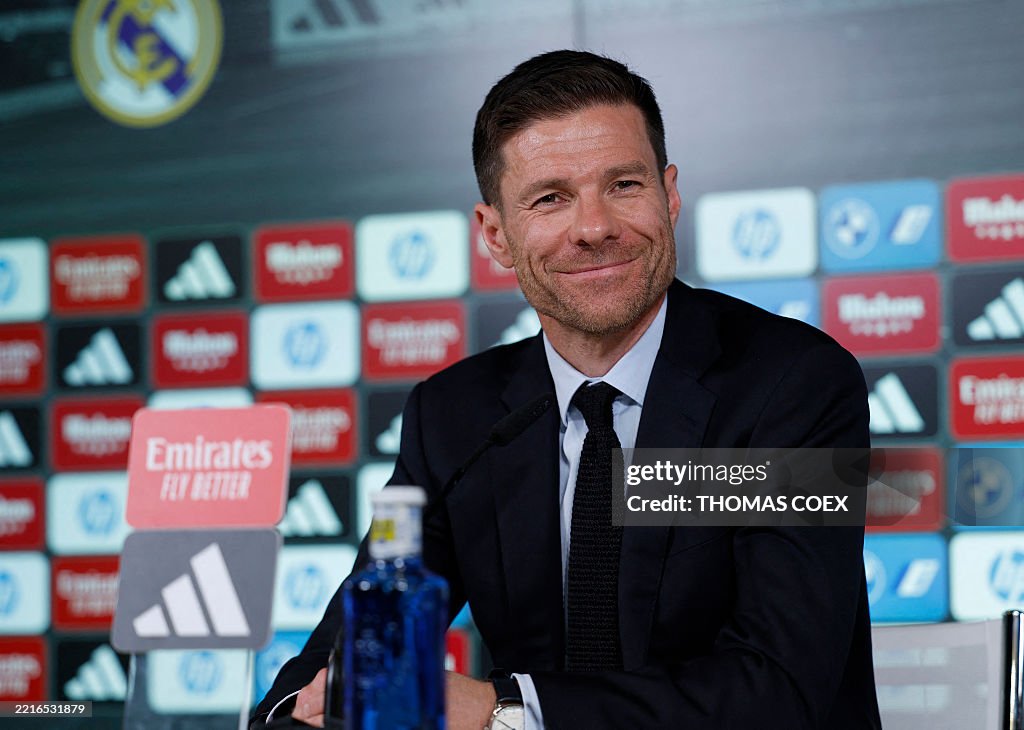
Xabi Alonso is the new head coach of Real Madrid, taking over from Carlo Ancelotti, the most successful manager in the club’s illustrious history.
The Italian will undoubtedly go down in the annals of footballing history for his leadership, charisma and ability to get the best out of hugely talented players, but not for his tactical nous.
For the last decade, it has so often been seen that to be at the helm of a super club like Real or PSG, you must first and foremost be a man manager to handle the supreme talent on offer and the seismic egos that come with that. Ancelotti and Zinedine Zidane were masters at this.
It likely also helped Enrique that he had previous experience of clubs of a similar magnitude to PSG, having managed at Barcelona and played for both them and Real Madrid for a total of thirteen seasons.
Having left the Spanish capital in 1996 because he did not feel appreciated by fans, Enrique felt more at home in the Camp Nou. It has also likely helped his PSG tenure that his coaching experience was born in La Masia, having taken over the Barcelona B team from Pep Guardiola in 2008.
In Catalonia, the Cruyffian philosophy is baked into the club's fabric, meaning, as he found out in his days coaching the first team, following that distinct Barca style is on par with winning trophies.
Real and PSG do not have that. Or at least, PSG didn’t before Enrique planted his own Blaugrana-inspired structure, which could, if they continue to pursue it, grow into the club’s DNA.
Built from aggressive pressing and positional fluidity, Alonso’s revolution at Bayer Leverkusen showcased one of the greatest single season’s of all-time in 2023/24, where Die Werkself won a domestic double and only lost one game.
2024/25 has proved trickier, ending trophyless bar a Supercup in August, but Alonso remains one of the most exciting coaches in the world.
At Leverkusen, he was able to mould youngsters like Jeremie Frimpong, Piero Hincapie and Florian Wirtz into hard-working, team-focused players, but they were still given enough space to shine as individuals.
"These days football demands flexibility, dynamism, that you know how to move pieces," Alonso said upon joining Real.
"Of course I have an idea of how I want us to play, but that idea of a fixed system sometimes [gives way to] something more dynamic. Will we play with four [at the back]? With three? We’ll see."
Having spent six years at the Bernabeu, namely working under Ancelotti and Jose Mourinho, Alonso finished his playing career at Bayern Munich, where his character as a coach was primarily informed by a Barcelona legend.
"Pep understands everything about the game. He doesn't force his way of thinking on the players; instead, he convinces us about his ideas," he said of his time working with Guardiola in Bavaria.
"If you manage that as a coach, you know that your players will push themselves even further and fight even harder for the team's shared goals."
-
This isn’t winning, it’s winning with style
While Ancelotti and Zidane certainly allowed freedom for their star players, that was more or less exclusively the plan. There was no embedded structure to fall back on and little in place to enhance those superstars’ impact further.
In recent years, Real Madrid have been associated with this individualistic way of doing things. A side that revels in overcoming the odds and beating more astute opposition because of vibes; because they have done such extraordinary things before so why not again.
Last year, five-time Champions League winner Gareth Bale spoke about the ‘aura’ surrounding them, particularly in Europe, that "other teams now are arguably playing the badge and not necessarily the team."
However, this year exposed the reliance on such an approach. Los Blancos may have wiggled past an out of sorts Manchester City side and rivals Atletico Madrid to reach the quarter-finals, but once there they were completely outplayed by Arsenal across two legs.
Mikel Arteta showed that if Real came up against an elite team with a stringent game plan then all of a sudden that aura was gone.
Meanwhile, Hansi Flick’s dynamic Barcelona dominated them domestically, winning all four Clasico’s, capturing the Copa Del Rey and retaining La Liga.
They have beaten more tactically rigorous sides in years gone by, - like other iterations of City and Atletico - but the immediate future asks clubs to have a fundamental footballing identity.
Naturally, Alonso is aware of this.
"We have players [at Madrid] who will interpret the idea well and work hard. The challenge now is to build a team, to get the potential out of all those players and ensure that we all work together as one,"
This has been rubber stamped by Enrique’s triumph with PSG. Alonso will now be able to point to their treble as a clear example of what can happen when a team gives itself over to a system. They can win and win in style.
-
Performing under higher expectations
Alonso has the advantage of being a former Galactico himself. Previous experience as a player served Zidane well in mitigating the internal politics of the dressing room, and his success at Leverkusen will give him credence as a coach, but the Spaniard will also have to deconstruct the teflon elements of the club for it to work.
And it will have to work. Because for all the innovations Alonso could bring, if he does not win trophies then he will be out the door.
Florentino Perez, Real Madrid’s all-seeing president, issued a not so subtle reminder of this during his welcoming statement to Alonso, "You are well aware of the demands of this club, with its relentless hunger for titles and a never-say-die attitude."
It is a massive jump in external pressure from Leverkusen, who, before the 43-year-old took charge, were often dubbed ‘Neverkusen’ due to their constant status as the nearly men, always coming up short of silverware.
Though he can gather from plenty of experience as a player at the highest level, delivering as a manager will be an altogether different order.
Charming Mbappe and Vinicius Jr. into bringing that Michael Jordan energy will be an intriguing first pointer on the checklist, but one that could help propel him to even greater coaching infamy.
Since winning the Bundesliga, it seemed almost destiny that Alonso would end up returning to Madrid as a manager.
Juggling his methodology with the titanic expectations of Los Blancos remains a difficult task, but Enrique’s achievements at Paris Saint-Germain have proven that attaining success at the biggest clubs is still doable with tactical principles in place.
