


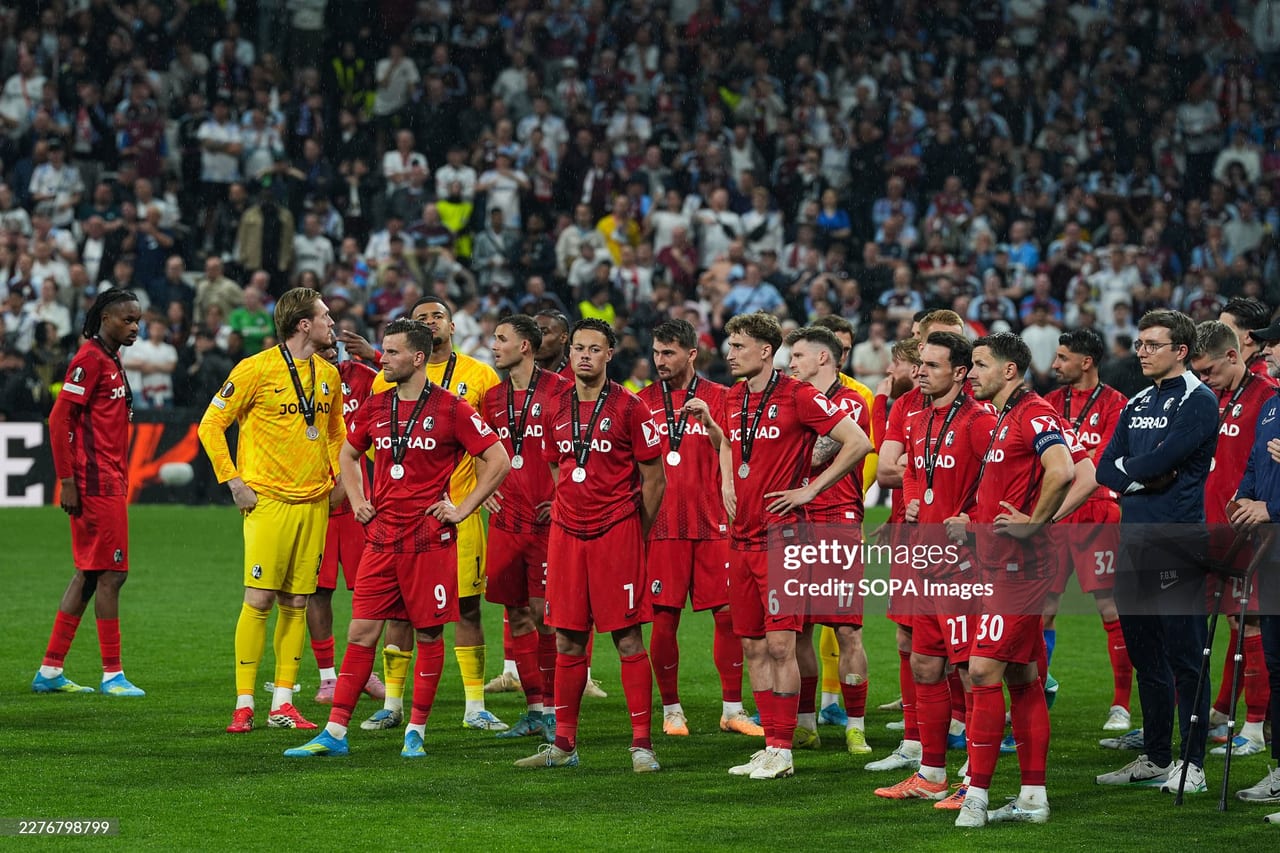



SC Freiburg’s Europa League dream ended in disappointment after a 3–0 defeat against Aston Villa in Istanbul. Looking at the final score, it feels like Villa is completely in charge of the night, but honestly that was not the case. The first half was way more complex than it looked.
Freiburg actually began the game quite well. They looked energetic, aggressive and confident enough to make Villa uncomfortable. The problem was that there is nothing fixed in such finals, and once the momentum flow against them, Freiburg never truly recovered.
By the end of the night, Villa looked calm and in control. Freiburg looked like a team still trying to process what had happened before halftime.
Freiburg’s start was encouraging, but they could not maintain it
The opening stages probably went exactly how Freiburg wanted.
They pressed high, closed spaces quickly, and tried to stop Villa from building any rhythm. Villa’s defenders were forced into rushed passes a few times, while Freiburg looked sharper in second balls and loose duels.
For around 20 minutes, the German side looked fully locked into the game.
But there was one problem that slowly became obvious. Freiburg’s pressure looked intense, yet it was not creating enough clear danger around Villa’s penalty area. They were making Villa uncomfortable without really hurting them.
And against a team coached by Unai Emery, that can become dangerous.
Villa slowly settled. Nothing dramatic happened, but they began keeping the ball for longer spells and forcing Freiburg to chase more often. You could feel the tempo changing little by little.
By the half-hour mark, Freiburg’s midfield no longer looked as compact as it did earlier. Small gaps started appearing between the lines, and Villa immediately looked more comfortable playing through them.
That was probably the first warning sign.
Freiburg completely lost control before half time
The final really changed in those few minutes before the break.
Tielemans scoring in the 41st minute was already difficult enough for Freiburg because they had worked hard to stay level. But what really damaged them was conceding again almost immediately afterwards.
Buendía’s goal in the 45th minute completely changed the mood of the match.
You could actually see the emotional shift happening on the pitch. Freiburg’s players suddenly looked frustrated, rushed and slightly shaken. Some players started forcing passes too quickly, while others looked unsure whether to press or drop deeper.
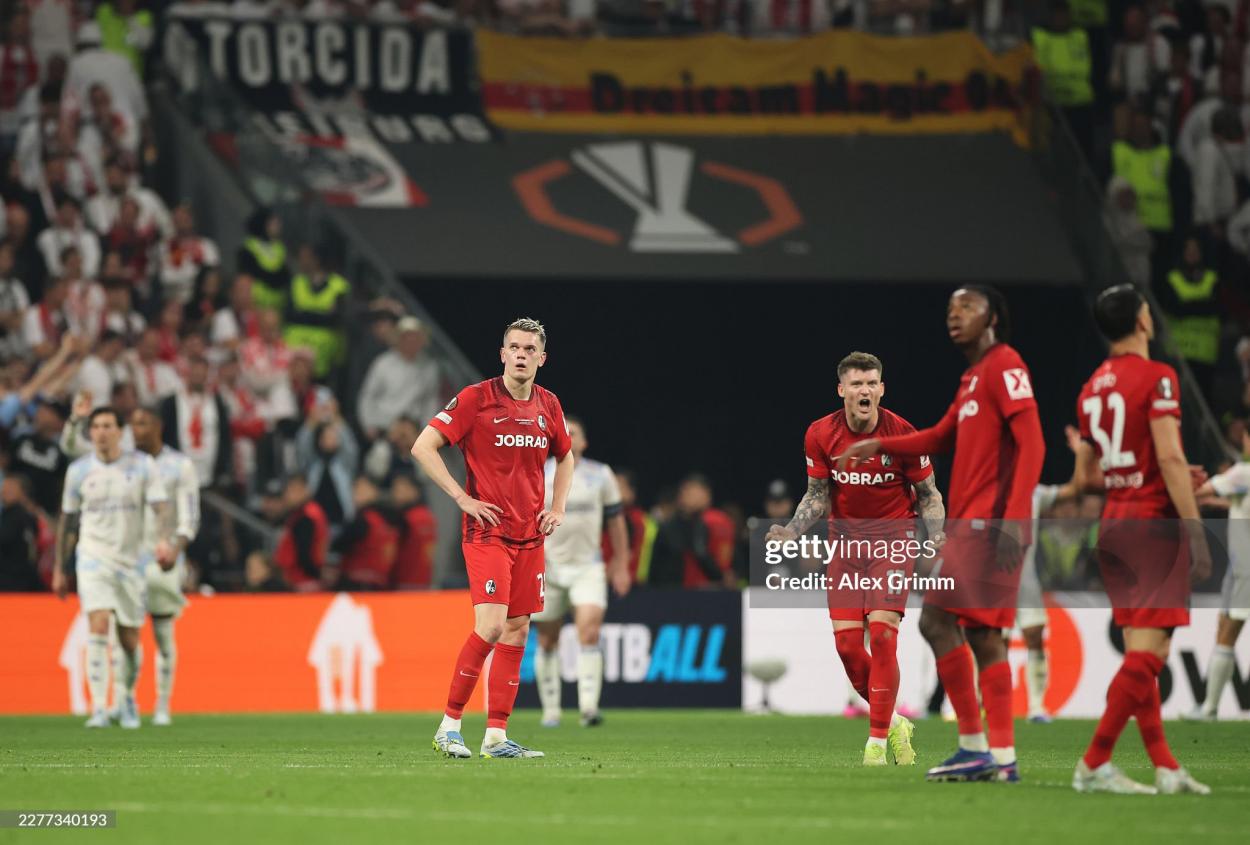
Everything just became messy very quickly.
That is the problem with finals sometimes. One difficult moment can suddenly become two, and then the whole game starts feeling different.
Going into half time 2–0 down against a side as organised as Villa was always going to be extremely difficult.
Chasing the game only opened more space for Villa
The second half became complicated for Freiburg because they had no real choice anymore.
At 2–0 down, they had to push higher and take risks. The issue was that Villa looked very comfortable once the game became more open.
Instead of forcing attacks, Villa just waited for the spaces to appear. Every time Freiburg committed players forward, gaps opened behind the midfield and around the wide areas.
Morgan Rogers’ goal in the 58th minute pretty much summed up the entire second half.
Freiburg were stretched, Villa attacked quickly, and suddenly the defensive shape could not recover in time. At that point, the match felt almost finished emotionally.
Freiburg still tried to push forward after the third goal, but the belief did not really feel there anymore.
4. Villa handled the emotional side of the final far better
Tactically, there were not huge differences between the two sides early on.
The bigger difference was emotional control.
Villa never looked rushed, even during difficult moments in the first half. They were patient, they trust their shape, and waited for the game to settle. Freiburg, meanwhile, started losing tempo of the game once things turned against them.
After the first goal, their passing became more hurried. The pressing lost coordination. Decisions started feeling emotional rather than controlled.
That happens in big finals sometimes, especially when momentum suddenly swings against you.
Villa looked like a team that had experience managing those moments. Freiburg looked like a team trying to recover from them while the game was still moving.
And against strong opposition, that becomes very difficult.
Final Conclusion
This was not one of those finals where one team dominates from the start of the game. Freiburg actually competed well for decent periods, especially early on.
But football at this level is often decided by short moments, and Freiburg never recovered from the two goals before half time.
Villa saw Freiburg struggling and took control of the game from there.
That was the biggest difference between these two teams.
Villa stayed calm when they needed to be.
Freiburg could not.
