


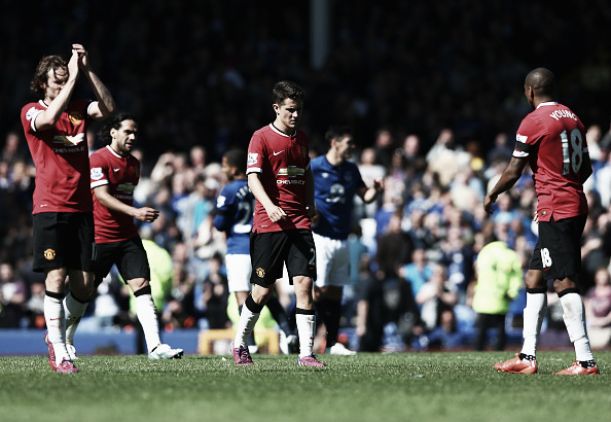
Having spent up to £150million pounds last summer, fans would have expected Manchester United to finish either in second or third place this past season. However, it appeared as though many had forgotten the fact that they'd finished seventh the term before.
Whilst many were excited with Louis van Gaal’s appointment, it took around three months before his work bore any fruits. Things did not go the way he'd planned and he had to wait for the fifth league game of the season for his first competitive win at the helm.
Experimenting hurt squad balance
The Dutchman spent a lot of the time experimenting with players in different positions. For example, club captain Wayne Rooney was shifted into a central midfield role, which did not work much at all. The decision would have been understandable had the other strikers at the club been on form, but this was the opposite in reality.
Robin van Persie, the former Arsenal forward, struggled to maintain consistency and found himself out of the squad quite frequently. This was coupled with the fact that Radamel Falcao was underwhelming to say the least - enduring a disappointing campaign with the Red Devils.
Lack of goals hindered progress
One aspect that has been heavily criticised at the club, is Rooney's lack of goals. Saying that though, supporters are quick to forget that the Englishman was utilised in the centre of the park for around five to seven of the league matches. Had Wayne consistently featured up-front, as opposed to in midfield, it could have easily made the real difference between finishing third and fourth. Unfortunately though, we'll never know what could have been.
Another key reason as to why the club struggled to finish above the much-dreaded UEFA Champions League play-off spot, is due to the fact they were struck by plenty of injuries.
Countless injuries to key players forced constant rotation
United topped the injury table with 39 in total. Chelsea, who were crowned champions in the 2014/15 campaign, only had half of that. This allowed José Mourinho to pick a rather familiar starting eleven in each and every match, allowing the team to flourish together.
Not only that, but the Blues enjoyed success because they had immense squad depth within the first-team ranks. For example, if Cesc Fábregas was low on fitness or picked up a knock, they could have easily called upon John Obi Mikel or Ramires. On the other hand, United could not enjoy the same luxury.
When Michael Carrick got injured, van Gaal was forced to play Rooney in his position as a replacement. Whilst the 29-year-old did not perform poorly when covering in a deeper role, it evidently hindered his opportunities to get forward as he was obliged to focus more on defensive duties for the team.
Also, the side committed too many defensive errors due to lapses in concentration - which could have easily been resolved. The backline as a whole was inconsistent to say the least, and United knew they had David de Gea to thank on a number of occasions as he made fantastic saves to salvage up to 40 defensive errors from his team-mates in big matches.
It should come as no surprise then, that the Spaniard has been heavily linked with a move back to La Liga, with Real Madrid interested in making him their new number one 'keeper following the sale of Íker Casillas to FC Porto.
Louis van Gaal tried also to adapt the 352 formation to life at Old Trafford. This proved troublesome despite his recent successes with the Netherlands, famously at last year's World Cup in Brazil. Players were played in different positions, constant rotation was unsettling and the formation itself limited how quickly United could drive forward on the counter attack and hit teams to devastating effect on the break.
