

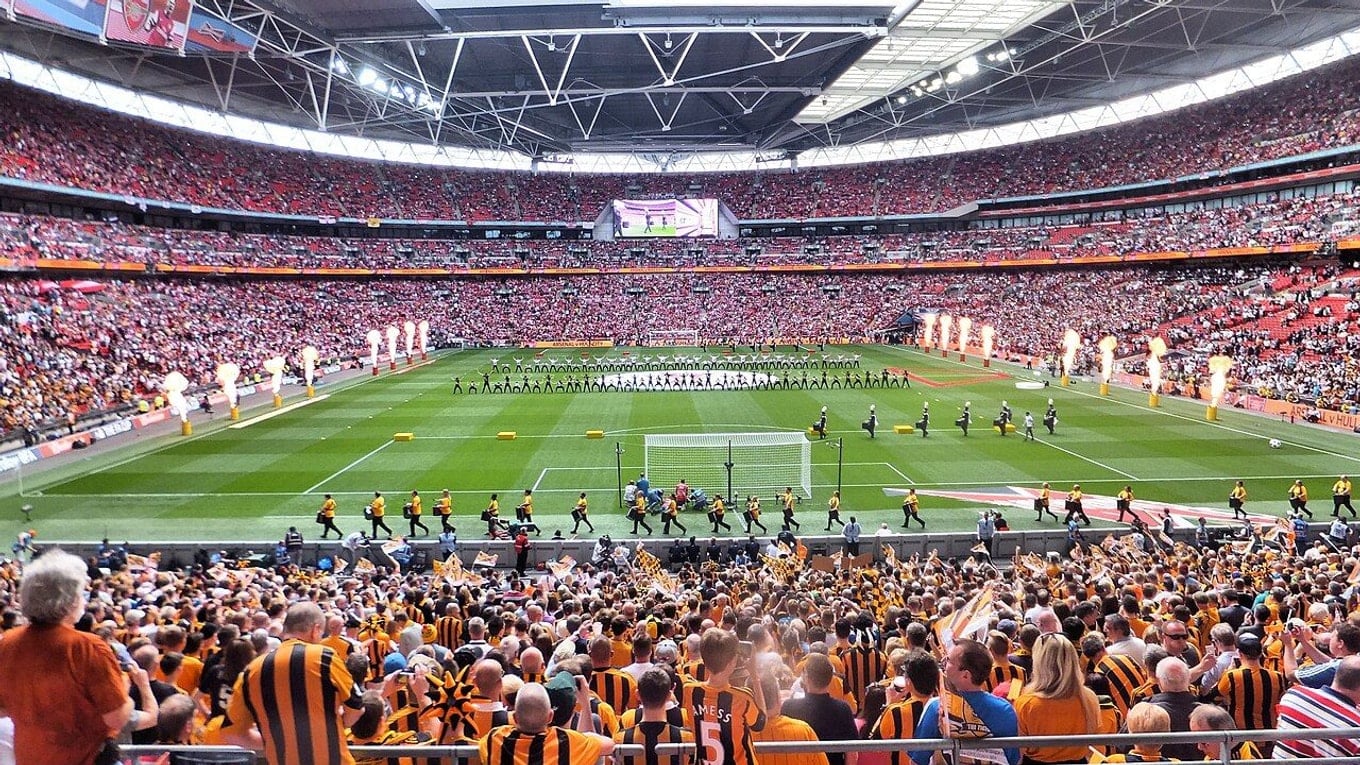

For well over a century, holding a top-flight giant to a 1-1 draw on a muddy League Two pitch in January meant hitting the financial jackpot: a lucrative midweek replay under the floodlights at Old Trafford, Anfield, or Highbury with half the gate receipts wired straight back to the underdog's bank account. That piece of English cup romance now belongs strictly to the history books. Under a landmark six-year calendar and funding agreement signed between The Football Association and the Premier League in April 2024, domestic cup rules shifted permanently to accommodate expanded 36-club UEFA midweeks.
Yet supporters watching winter midweek ties still get tripped up because England's two major knockout trophies do not settle 90-minute draws in the same way. In the FA Cup, players play thirty minutes of extra time in every single round; in the Carabao Cup, the referee blows for full-time at 90 minutes and marches both sides straight to the penalty spot.
Are There Replays in the FA Cup and Carabao Cup?
There are no replays in the FA Cup from the First Round Proper onwards; every drawn tie goes straight to 30 minutes of extra time and penalties on the night. In the Carabao Cup, ties go straight to penalties after 90 minutes up to the Quarter-Finals without extra time.
| Rule or Competition Feature | Emirates FA Cup (Round 1 Proper to Final) | Carabao Cup / EFL Cup |
|---|---|---|
| Replays after a 90-minute draw | Scrapped from Round 1 Proper (kept in Qualifying only) | Zero replays in any round |
| Extra time in early rounds & Quarter-Finals | Yes: 30 minutes (two 15-min halves) then penalties | No: straight to penalties immediately after 90 mins |
| Semi-Final format & venue | Single knockout match at Wembley Stadium (neutral) | Two-legged home & away ties (extra time in 2nd leg) |
| Substitutions allowed | 5 subs in 3 windows (+ 6th sub & window in extra time) | 5 subs in 3 windows (+ 6th sub in Semi/Final ET) |
| VAR deployment | Active from Fifth Round onwards at all ties | Semi-Finals (where installed) and Wembley Final |
| European berth for lifting trophy | UEFA Europa League League Phase spot | UEFA Conference League Play-Off Round spot |
Why FA Cup Replays Were Abolished From Round One Onwards
Replays vanished in stages across thirty years before disappearing from the main draw altogether. Back in the 1990s, The FA scrapped endless second and third replays; Quarter-Final and Fifth Round replays dropped away during the late 2010s and pandemic schedules; and finally, from the 2024/25 campaign onwards, replays were removed across the First, Second, Third, and Fourth Rounds Proper as well.
Why did English football's governing bodies pull the plug? Calendar congestion. Expanding the Champions League and Europa League from six autumn group games to eight League Phase fixtures added extra UEFA midweek slots in late January, while FIFA expanded the summer Club World Cup. In exchange for abolishing replays from Round One onwards, the Premier League committed an additional £33m per year on top of over £100m in existing grassroots and lower-tier solidarity funding, alongside protected calendar windows:
- Exclusive FA Cup Weekends: The Fourth Round, Fifth Round, and Quarter-Finals are played across clear weekends without colliding Premier League fixtures, and the FA Cup Final now sits on its own standalone Saturday in May (the weekend before Premier League Matchweek 38) with zero top-flight matches kicking off on the same day.
- No Midweek FA Cup Rounds: Every round of the FA Cup Proper from November to May is scheduled around weekend slots rather than crammed into Wednesday nights.
- Qualifying Rounds Exception: Replays still survive inside the non-league Preliminary and Qualifying Rounds (Extra Preliminary Round up to the Fourth Round Qualifying in October), preserving essential replay gate splits for Step 2 through Step 5 semi-professional clubs battling simply to reach Round One Proper.
Remember when Arsenal and Manchester United collided in the FA Cup Third Round at the Emirates Stadium in January 2025? Locked at 1-1 after Diogo Dalot's red card and Martin Odegaard's saved penalty, neither club faced a replay at Old Trafford ten days later; they battled through 30 scoreless minutes of extra time before Altay Bayindir saved Kai Havertz's spot-kick to send ten-man United through 5-3 on penalties on Sunday afternoon.
How Carabao Cup Rules Differ: Straight to Penalties and Two-Legged Semis
Organised by the English Football League across all 92 Premier League and EFL clubs, the Carabao Cup cuts match minutes even harder than the FA Cup. Back in June 2018, EFL clubs voted overwhelmingly to scrap extra time up to and including the Quarter-Finals so squads would never endure 120 minutes on a Tuesday or Wednesday night sandwiched between two weekend league fixtures.
From Round One in August (split regionally into Northern and Southern sections until Round Three) all the way through December's Quarter-Finals, if a Carabao Cup tie finishes 0-0 or 3-3 at the end of 90 minutes plus stoppage time, there is zero extra time. Both teams walk straight to the centre circle and contest a standard ABAB penalty shootout.
Two distinct quirks kick in deeper inside the Carabao Cup:
- Seeded Round Three Bowl Draw for European Clubs: While EFL clubs enter in Round One and non-European Premier League sides enter in Round Two, clubs competing in Europe join in Round Three. Because Carabao Cup Round Three spans two separate midweeks in September that overlap exclusive Champions League Week 1 and Europa League Week 1 dates, the EFL pre-places Champions League clubs and Europa League clubs into separate bowls so they cannot draw each other in Round Three and trigger an unplayable calendar clash.
- Unseeded Two-Legged Semi-Finals With Extra Time Restored: Alone among English domestic knockout rounds, the Carabao Cup Semi-Finals remain two-legged home-and-away ties played in January and early February. Away goals do not count double at any stage (scrapped in 2018/19). If the aggregate score is dead level at the end of 90 minutes in the second leg, 30 minutes of extra time returns (unlocking a sixth substitute), followed by penalties if required, exactly as rules apply in March's one-off Wembley Final.
Gate Receipt Splits, Wembley Semi-Finals, and European Qualification
Off the pitch, financial rules make an away draw at a 60,000-seat Premier League ground transformational for an EFL underdog even without replays. In the FA Cup Proper, net gate receipts after matchday policing and staging expenses are split 45% to the home club, 45% to the visiting club, and 10% to the central pool (adjusted slightly to 50% for non-league sides visiting EFL/Premier League opposition in select scenarios). That 45% away slice meant fifth-tier Tamworth or Maidstone United could fund two years of academy and pitch upgrades from a single afternoon against Tottenham or Ipswich Town. In the Carabao Cup, gate money is likewise split 45% home, 45% away, and 10% to the EFL pool.
Why does The FA stage both FA Cup Semi-Finals at neutral Wembley Stadium in April rather than Villa Park and Old Trafford as it did before 2008? Strictly business: hosting two extra 85,000-crowd showpieces every spring formed a core pillar of The FA's financial business plan to pay off the £757m construction of the rebuilt national stadium opened in 2007.
Winning either Wembley showpiece opens a direct door into Europe, though the two trophies sit one rung apart on UEFA's access list:
- FA Cup Winners: Qualify directly for the 36-club UEFA Europa League League Phase in September (as 8th-placed Manchester United did by beating Manchester City 2-1 at Wembley in May 2024, knocking 6th-placed Chelsea down into the Conference League and bumping 7th-placed Newcastle United out of Europe altogether, and as Crystal Palace earned in May 2025).
- Carabao Cup Winners: Qualify for August's two-legged UEFA Conference League Play-Off Round rather than the Europa League.
Neither European berth ever goes to the losing Wembley finalist! Whenever the FA Cup or Carabao Cup winner has already qualified for the Champions League or Europa League through its final Premier League table position, that cup's European ticket cascades straight down to the highest-placed Premier League finisher not yet qualified for Europe (typically 6th, 7th, or 8th place) once Wembley's final whistle blows in May.
Related Official Rules & Competition Guides on VAVEL
- Premier League Prize Money Per Position: Merit Payments and TV Distribution
- Premier League Red Card Suspension Rules: 1, 2 and 3-Match Bans Explained
- How Does the Premier League Earn a 5th Champions League Spot? UEFA Coefficient Explained
- Premier League Yellow Card Rules: How Many Bookings Trigger a Suspension and Cut-Off Dates
