

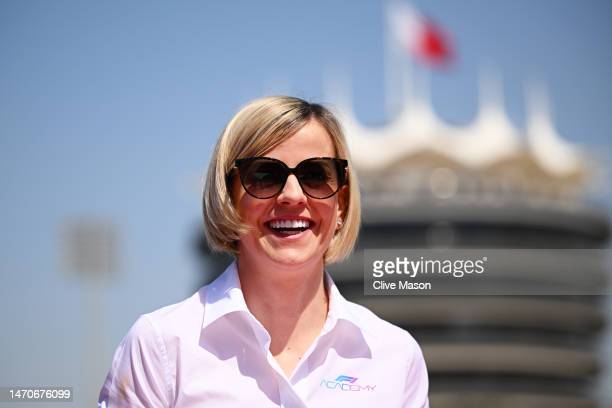

Back in 2019, the W series was the first all-female FIA championship. It had to curtail its last three races in 2022 due to a lack of funding, so can the F1-funded F1 Academy provide the same opportunities?
What is the F1 Academy?
The Susie Wolff-led F1 Academy is a new racing championship with a focus on promoting and preparing young women for the F1-F2-F3 ladder. F1 is pouring €2.25 million into the sport (€150,000 per car) and in the inaugural season, there are currently 15 drivers across 5 teams.
The championship will feature 21 races across seven rounds, with plans to mirror the F1 calendar from next year. The rounds feature two qualifying sessions and three races, which means there will be lots of action over a single weekend.
Susie Wolff said: “The F1 Academy presents an opportunity to promote genuine change in our industry by creating the best possible structure to find and nurture female talent on their journey to the elite levels of motorsport, both on and off the racetrack.
“There is a lot of work to be done but there is also a clear determination to get this right."
Stefano Domecalli, CEO of Formula 1, noted: “We are committed to maximising the opportunities in our sport for anyone to reach their true potential and achieve their dreams and we believe F1 Academy is a very important part of our plans to be a more diverse and inclusive sport.”
Who is racing?
Many notable young racing drivers are competing, such as Chloe Grant, Marta Garcia, and Megan Gilkes. The focus is on preparing the 15 drivers physically, mentally, and technically and getting them into F3 and hopefully F1. The driver budgets are capped at €150,000.
As for the teams, big names such as Campos, ART, Carlin, MP and Prema will back three drivers each as they hope to come out on top.
What cars are they using?
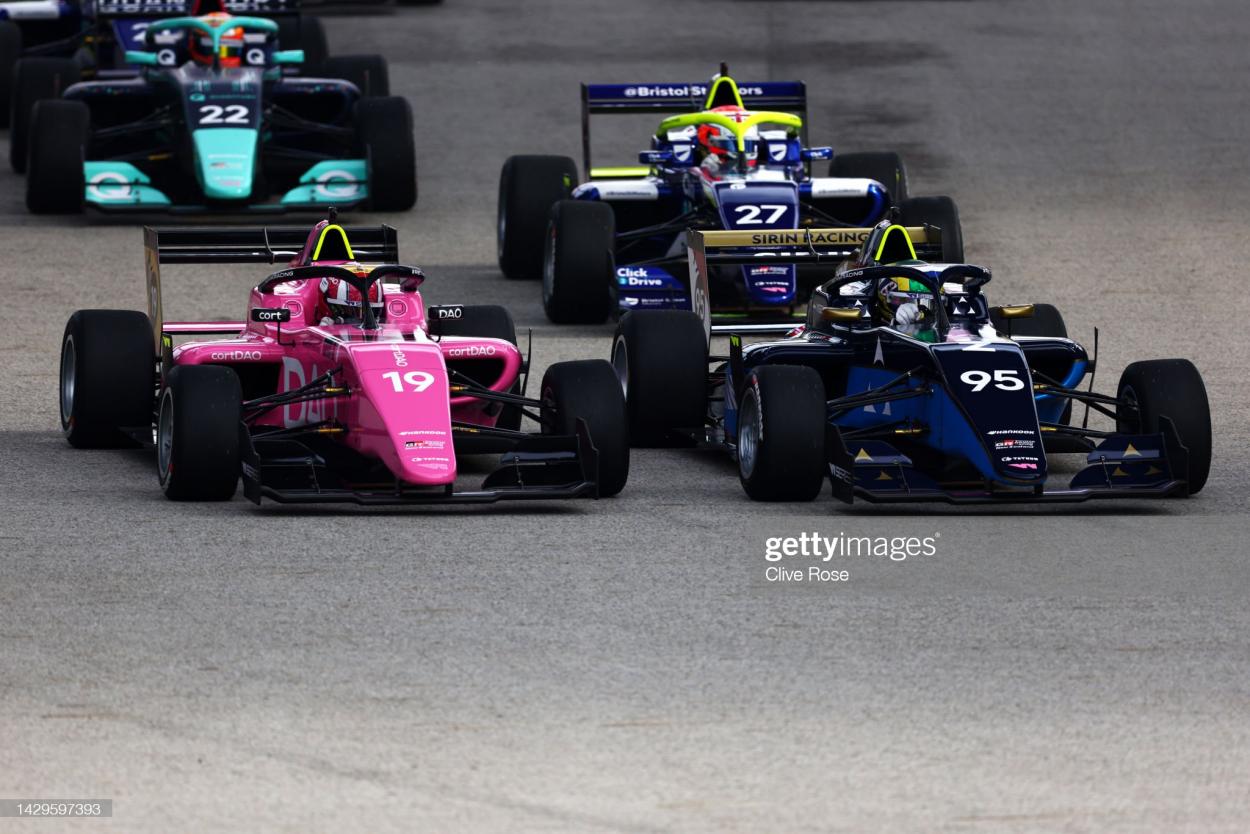
The cars are designed by Tatuus Automobili and are similar to other entry-level chassis used in F4. They will be powered by a four-cylinder, 1.4-litre engine that produces 174hp. Achieving a top speed of 240 km/h, these cars are built to be cheap and easy to repair to drive costs down and sustain the future of the teams. Of course, Pirelli will provide the tires.
What is the format?
With a focus on the track time and development, it is no wonder the weekends are busy.
There are two free practice sessions, both 40 minutes long, followed by two qualifying sessions at 15 minutes each.
The first qualifying session sets the grid for 30-minute race 1, while the second sets the grid for also 30-minute race 3. A 20-minute race two is decided by reversing the top 8 from race one.
Points follow the same system as Formula 1 in races one and three, but the top 8 drivers get points in race two, with ten being the maximum.
It sounds pretty confusing! But it will be a good system to keep the hype going throughout the weekend.
Where are they racing?
In 2023, the racing will take place in seven locations internationally.
At the time of writing, they are all getting prepared in Barcelona in two days of pre-season testing.
The calendar starts in Spielberg, Austria, and is then followed by Valencia and Barcelona in Spain. Zandvoort and Monza follow before Le Castellet in July.
After Le Castellet, the cars will be sent to Austin in October to support the F1 race. While this is a long break, they are sending the cars by ship to save on logistics funding.
With the series being closely related to F1, the racing should be on Sky Sports F1, like F2 or F3.
The first round is in Spielberg on the 28-29th of April.
