

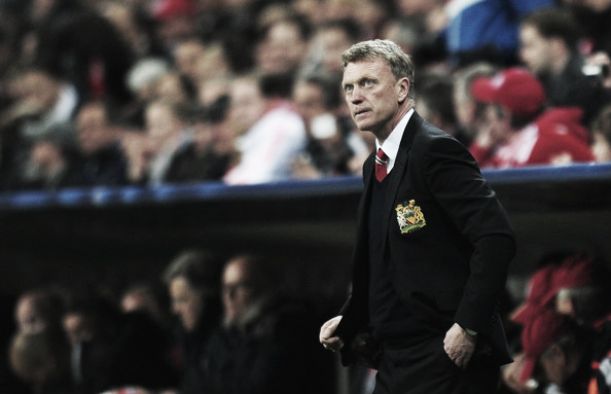
Manchester United. Undoubtedly the biggest club in English football, and a club that hold a worldwide reputation for their successes over the years. However, the surprise retirement announcement from Sir Alex Ferguson in the final weeks of last season sent shockwaves through Manchester, and all of football. His successor: David Moyes.
Moyes had received countless praise in his 11-year Everton reign, during which, he led the Toffees from almost certain relegation to top four contenders in three short seasons. The level of consistency he held while at Everton, with top-half league finishes in all but two of the full seasons he took charge of the Merseyside club.
Moyes was able to build his own success at Everton, despite selling some of the biggest up-and-coming talents in English football, with Wayne Rooney the highest-profile departure. Moyes made no signs in slowing down with the exile of top talent from the club, also selling both Joleon Lescott and Jack Rodwell for a total of £39m.
Young talents were brought in over the years, the likes of Phil Jagielka and Leighton Baines joining for a combined £9m, and undoubtedly their biggest purchase, Marouane Fellaini, Everton’s most expensive signing to date. These purchases continued to help the Everton team go from strength to strength, and allowed the club to build some legends of their own.
First appearances in the Champions League for Everton at the beginning of the 2005-06 season were the closest Everton had come to Champions League football on a fortnightly basis since the late 1980’s, under the leadership of three-time Everton manager Howard Kendall, who led the club to remarkable back-to-back titles, as well as a second place finish between 1985-1987, however, due to the tragic Heysel Stadium disaster in May 1985, all English clubs were given a five-year ban from European competitions, therefore ruling Everton out of continental football.
Both Everton and David Moyes have since moved on from his outstanding tenure with the club, with Moyes attempting to fill Sir Alex Ferguson’s boots at Old Trafford, while Bill Kenwright opted for the most recent winning manager of the FA Cup, Roberto Martinez, despite his Wigan side also being relegated at the end of last season. One has enjoyed huge successes in his first season, the other has struggled greatly, with fan protests, some of which were visible in the skies, showing the lack of faith that many of the faithful now hold in their team’s manager.
So why have Manchester United fallen from grace so suddenly?
The biggest difference in the Manchester United results table is the drastic change in home form. The days of Sir Alex Ferguson saw Old Trafford quickly become a fortress, sometimes with a little bit of ‘Fergie Time’ to come to the rescue, with many teams fearing the trip to Manchester. This season has seen the Red Devils lose a considerable amount of their games on home turf this season, losing six of their 16 home league games. There are many lower table sides, West Brom, as well as Newcastle, who have come away from Old Trafford with an easy three points. Relegation-threatened teams such as Fulham have also managed to pick up a point from their visit to Old Trafford.
Moyes’ incapability to collect points against higher-placed opposition has also been a serious concern for the club. Moyes has almost continued the same record he held at Everton, where he struggled to beat teams in the top four on a consistent basis. United have suffered heavy defeats at home to title chasers Liverpool and Manchester City, the latter also thumping Moyes’ men at the Etihad, a game which ended in a 4-1 reverse for Manchester United. The only team in the top six that have failed to beat the Reds in either Premier League fixture is Arsenal, with a 0-0 draw at the Emirates and a single goal from Robin van Persie being enough to collect four points from the Gunners.
The general adaptation to a new manager for the first time in almost 28 years is another big shock to the players, most notably the long-serving players, who would’ve had to completely change their style of football to match that of David Moyes. The lack of consistency in the team line-ups is also a worry, Moyes having fielded 51 different teams in the 51 games he has managed at United, never playing the same XI back-to-back.
The fact that Moyes has managed to take a team that had won the league by a considerable margin just three months before he took over, and watched the mighty fall so far so quickly is a very concerning sign for both himself and the club. The Red Devils are already out of contention for a top-four place for the first time since the start of the Premier League era, and are also on course for their lowest points finish since the 1990-91 season, where they ended on just 59 points and settled for a sixth-place finish.
With rumours rife of player revolts, and fans turning their back on the manager, is time already running out for David Moyes at Manchester United?
