


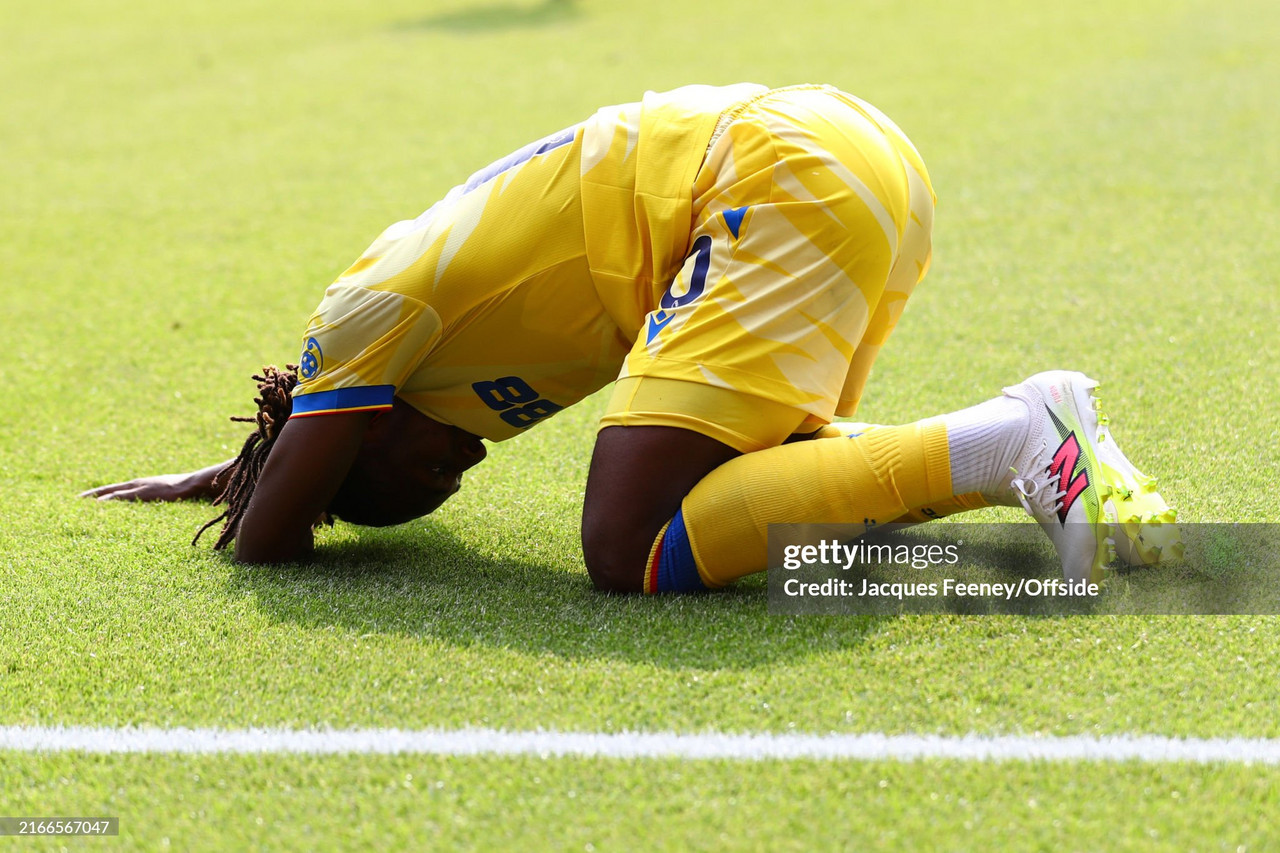

Crystal Palace’s long unbeaten run against Brentford came to an end on Sunday at the Gtech Community Stadium, as the Bees, who were without star striker Ivan Toney, counter punched twice to emerge victorious.
The Eagles were left to rue a poor refereeing decision that controversially ruled out Eberechi Eze’s wonderful first half free-kick moments before Bryan Mbeumo put Brentford in front for the first time. Referee Sam Barrott had already blown his whistle for an off-ball foul before the ball crossed the goal line, meaning VAR could not review or intervene, despite no foul being obvious on replay.
The South London side struck back early in the second half through an own goal from Ethan Pinnock, diverting Daniel Munoz’s header into his own net.
For a time it looked like the comeback was on, but the home team squeezed in a winner from Yohan Wissa, after a save from Dean Henderson.
The away side had chances to draw level again, but seemed to run out of steam late on, with changes from the bench failing to have the desired effect.
Despite a disappointing opening day loss, there are plenty of things for Palace to take away from the match.
-
Palace looked comfortable in Glasner's formation
First, a positive.
The Eagles started on the front foot, aggressive in the press and dominating possession all over the field. Fourteen shots from Glasner’s men tells a story, even if only six were on target.
Eze in particular was confident on the ball, even if he, like Jean-Philippe Mateta, was not quite at his imperious best meaning the chances created were not finished with the polish that Palace demonstrated at the end of last season.
Adam Wharton took control of the midfield for much of the game, and given that so many of the first team squad had only just returned to the squad after international summer duties across the world, a lack of cutting edge was maybe to be expected.
-
Mitchell happy to be up the pitch
One notable improvement from last season was how high Tyrick Mitchell played, and the threat he provided.
With all the attacking joy the Eagles demonstrated following the change in manager last season, they also often looked lopsided.
The 3-4-2-1 shape needs both wing backs to be able to play high and offer attacking width.
Since coming into the side, Daniel Munoz has shown how effective an attacking wing-back can be in Glasner's system, and what that offers to the sometimes ‘narrow’ attacking patterns with the inverted "tens" utilising the attacking half-spaces.
During pre-season Mitchell had shown promise, scoring in the victory against West Ham, and showcasing greater ambition to contribute to the Palace attack.
Against Brentford this trend continued, Mitchell, played much higher than we have often come to expect from him.
He had an opportunity to score early on, and it was his cross that led to the Palace equaliser, as well as offering ample support to Eze throughout.
Repeat performances and success will allow his confidence to continue to grow, and with it the South London side's options to attack left and right will also flourish.
-
Olise not yet replaced
It was always going to be difficult to replace an elite player such as Michael Olise, who provided 16 goal contributions in 19 appearances last season. So far sporting director Dougie Freedman has brought in Ismaila Sarr and Daichi Kamada, coming from Olympique Marseille and Lazio respectively.
Kamada started this match and looked particularly industrious off the ball, often leading the press and almost setting up Eze through a defensive action, pressurising the Bees keeper into a sloppy clearance, from which the Palace number ten looked destined to score were it not for a last gasp sliding cynical foul from Wissa.
Sarr came on late in the match, but seemed to struggle to impact the game, largely looking passive in possession.
Freedman, and Palace fans will hope both players grow into their roles, and as they settle in at the South London club, will be able to provide greater threat in the attacking phase going forward.
-
The lack of VAR intervention
This one isn’t exclusive to the Eagles, but the visitors will feel hard done by in the absence of a VAR intervention.
Eze scored a wonderful free-kick, from the right-hand side, which cannoned into the back of the net off the upright.
The goal would not stand as a foul had been given by the referee for a collision between Will Hughes and Nathan Collins away from the ball.
Upon review, the incident between Hughes and Collins looked to be a coming together, with Collins perhaps the more guilty party in the tussle, but as VAR reviewed the incident it became clear that the official had blown before the ball had crossed the goal-line, therefore making VAR intervention impossible.
As Eze commentated after the game: “I was told [by the referee] that he blew too early and made the mistake.”
Whilst the accountability shown by the official is to be respected, and it is entirely natural that mistakes do happen given the difficulties faced with officiating a top-flight game, it is still a tough pill for Palace to swallow as the entire outcome of the match would have been altered.
Had the referee delayed his whistle even fractionally to let the attacking action pan out, then VAR would likely intervened to have given the goal.
The hope of Howard Webb and the PGMOL, and to be frank everyone associated with the Premier League, is that planned VAR changes and referee directives – such as the higher bar for VAR interventions, and the ‘in game’ dialogue from the referee when VAR is utilised – will collectively lead to a better experience of VAR, improving the accuracy and reducing controversy.
From today’s experience it seems we are not there just yet.
