



“The 2006 World Cup will be a homecoming for football.” These were the words uttered by the German FIFA World Cup 2006 ambassador, Andreas Kopke in 2005. It may have been viewed as fanciful back then. But it proved a cathartic moment for the nation.
The last time Germany hosted a major football tournament, was back in 2006. It was equally, if not more about the nation re-shaping it’s public image as well as re-defining what nationalism means to them. The older generation were still left with past scars and the ‘wall in their heads’ mentality, but this was now a reunified state, in need of a grand revival.
Germany had hosted the European Championships in 1988, but the political partition meant matches were only played in West Germany. Crucially no matches in Berlin and the East. The 2006 World Cup represented the first (save the 2005 Confederations Cup) since the Berlin Wall had been torn down by their own people. And provided a tangible marker to help the younger generation divorce the nation's fascist past with this new-found embrace of patriotism and what the colours of their famous flag could represent in a post-war, non-divided world.
On the pitch, the German national team had exited Euro 2004 in the group stage and arrived at their home tournament ranked as low as 22nd in the world rankings. There were no major expectations that the team would produce any sort of form. Head coach Jurgen Klinsmann, chose a group of relative rookies, hoping this youthful streak paired with home comforts could provide the spark.
The squad did rally and with a vociferous, and crucially, a united fan support behind them, this team, which included eight players with 20 caps or less, became the toast of the nation again. And that was without winning the trophy too.
Third place went down as a huge success. The quarter-final penalty shootout victory over Argentina lives long in the memory.
Striker Miroslav Klose won the tournament’s top goalscorer and it also spawned breakout stars such as Lukas Podolski and Philipp Lahm (remember that goal against Costa Rica).
Signs of life under Nagelsmann
If you fast forward to 2024, the mood music is strangely familiar — the team are coming off the back of two group stage losses and one round of 16 exit in their last three major tournaments. In the summer of 2023, Hansi Flick oversaw a run of one draw and three defeats against opponents Ukraine, Poland, Colombia and Japan.
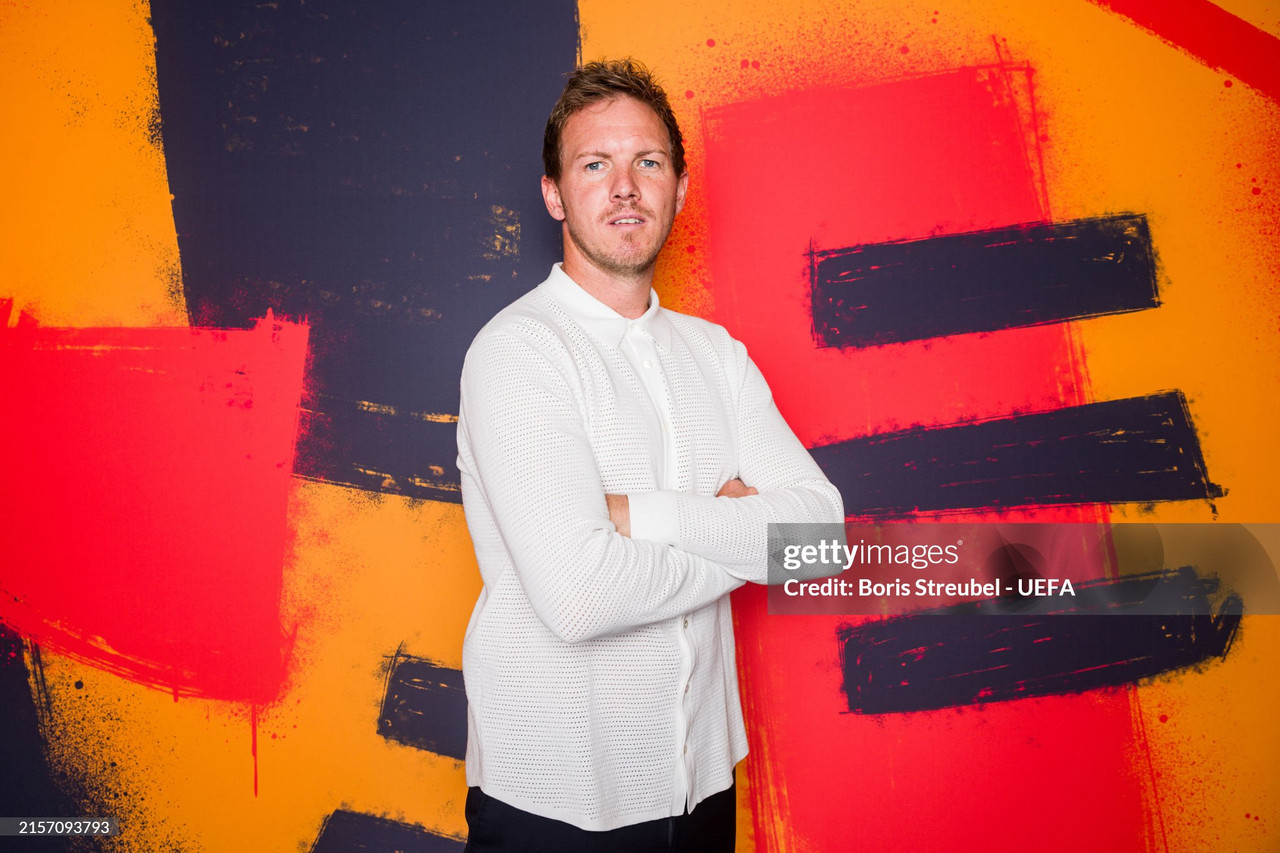
It meant a change in manager and direction was desperately needed. Out went Flick and in came former Bayern Munich, RB Leipzig and Hoffenheim manager Julian Nagelsmann.
Since becoming a Bundesliga manager at the age of 28, Nagelsmann has had a meteoric rise into the public and global consciousness. Now at 36, he’d already managed the most influential domestic club in Germany, and the most controversial in RB Leipzig.
Much like Klinsmann’s appointment, there was still some hesitancy at Nagelsmann taking over the helm of the national team. His confidence was questioned for arrogance by Bayern’s hierarchy and ultimately contributed to his demise in Bavaria.
This was reflected in the DFB only handing the coach a deal until July 2024, effectively whenever Germany’s Euro 2024 tournament came to an end.
However, Nagelsmann has managed to steady the ship and integrated a clutch of younger players into the setup. His provisional 27-man Euro 2024 squad includes 15 players with 20 caps or less.
The mood has changed somewhat since the March 2024 international break with victories over tournament favourites France and a competitive Netherlands team. It has led to an extension to Nagelsmann’s contract to remain in charge until after the 2026 World Cup.
Germany in 2024; evoking celebrated memories
15,000 fans piled into Carl Zeiss Jena’s stadium in Blankenhain to watch the first pre-tournament training session. Is it too churlish to say this wouldn’t have happened in June 2023 — even if they were for free?
Albeit France and England are the front-runners to claim the trophy, there is now cautious optimism that the host nation can have a serious impact. No more first-round exits.
In March, Klinsmann himself backed Nagelsmann to turn things around, and build a rich team spirit and playing style that the nation is proud of again.
They do have some of the world’s most exciting and dynamic talent. Florian Wirtz is fresh off his most prolific and dominant season with Bayer Leverkusen, Jamal Musiala has been recognised for at least 18 months as one of the best playmakers in Europe.
And much like the 2006 side that featured Jens Nowotny, Bernd Schneider, Oliver Neuville and Michael Ballack, Nagelsmann has got a clutch of lieutenants with a bag of experience to draw on. Think Ilkay Gundogan, Joshua Kimmich and Thomas Muller. Plus, it’ll be Toni Kroos’ final swansong before retirement.
Whilst the nation doesn’t need waking up from nightmares of a politically strung, totalitarian agenda. The German national team were sleepwalking into a period of anonymity, but could this be the slap in the face they need?
The introduction of football fan parks in 2006 really ignited the furore, and these spaces around the country from Köln to Munich and Leipzig could again be where emotions push the national team on to great things.
