



A decade has passed since Craig Bellamy called time on playing.
Captain of Wales for four years and totalling seventy-eight caps, he became the heartbeat of his nation’s football scene in between the underwhelming showings of Ryan Giggs and the legendary heights of Gareth Bale.
As his attention turned to coaching, the storybook narrative suggested he would one day lead his country again, but this time from the dugout.
Now, what he called his “ultimate dream” of managing Wales has come to fruition.
Ahead of his first game at the helm, here is how both he and The Dragons reunited and what to expect from his leadership.
-
Page’s chapter ends
After a rollicking 2-1 victory over Croatia in October of last year, Wales were second in Group D in UEFA Euro 2024 qualifying.
It was a much needed display, one that manager Rob Page called the best performance of his then three year tenure. Both in terms of points on the board and an injection of genuine belief for life after Bale, who had retired in 2022.
The qualification campaign had started with such possibilities after a late Nathan Broadhead equaliser clinched a 1-1 in Split, but hop forward to a mortifying defeat at Armenia, paired with a loss to group leaders Turkey, and the picture was suddenly looking bleak.
But a brace from Harry Wilson later and they had overcome the World Cup bronze medallists, putting their place in Germany in their own hands.
However, like their away draw, Wales could not follow up their heroics, allowing Croatia to sneak past them in the final two qualifying games as they tripped up once more to Armenia and Turkey.
They would have to settle for the play-offs.
A straightforward win over Finland set up a winner-takes-all encounter with Poland. A typically fervent atmosphere at the Cardiff City Stadium grew increasingly tense as both sides came ever so close to breaking the deadlock.
In the end, a single spot kick miss from Daniel James proved agonisingly decisive and Wales would miss their first European Championships since 2012.
Everything seemingly pointed to the exit door as Page failed to meet the target of reaching the Euros - a target quite alien to the men’s national team throughout its history, but one that is now the expectation.
In truth, Page’s success also sowed the seeds of his eventual sacking.
Ending his nation’s 64 year wait to play in a World Cup was remarkable, but once in Qatar there was a clear gulf in class that made the journey to the tournament more memorable than the tournament itself.
An evergreen Gareth Bale and a squad with tremendous unity certainly papered over the tactical cracks that were exposed on the biggest of stages.
The lack of a coherent system was costly when Bale hung up his boots. So much so that rumblings of discontent turned into full-blown chants calling for Page’s dismissal following the shootout defeat to Poland.
In June, a 0-0 draw against Gibraltar (then 203rd in the FIFA world rankings) and a 4-0 thumping at the hands of Slovakia ultimately spelled the end.
Though friendly matches, the football was stale and the spirit that had been a given for any Wales performance in the last decade was ebbing away.
Fresh blood was needed and the FAW (Football Association of Wales) looked for a replacement to reinvigorate things.
Concurrently, Burnley had just been relegated from the Premier League.
-
Bellamy’s emergence
Though his attempt to replicate the slick, possession-heavy football that brought the Lancashire club resounding success in the Championship fell flat in the top flight, Vincent Kompany still had a number of suitors.
Eventually, the Belgian would find himself at the helm of Bayern Munich, but his assistant, Craig Bellamy, would not be following him to Bavaria.
The Welshman stayed with the Clarets, with most expecting him to either naturally slot into Kompany’s spot as manager or remain part of the coaching team for the next appointment.
Neither happened. Instead Scott Parker took the reins at Turf Moor and Bellamy went back home.
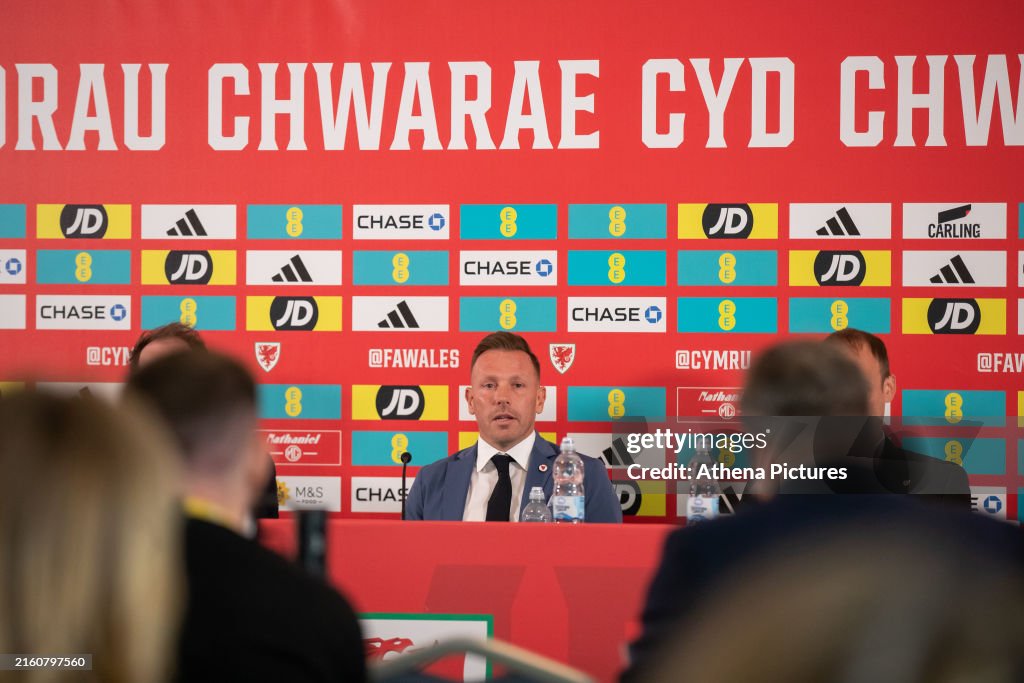
“I was happy, but I needed more,” he said during his first press conference as Wales manager.
“I needed to look for a number one spot for me as a person, for my progression. Obviously Bayern Munich came up, but it was still my option to be a number one.
“I was still looking at clubs, but I have to be honest it can drag you. Wales has always been really important to me.
“With Mark Hughes coming to mind, Gary Speed coming to mind, it just became clear to me that if there was an opportunity to do this then this is the one I wanted.”
Bellamy’s post-playing ambitions have been evident from the offset, even speaking about the steps he was taking to become a manager in his retirement interview back in 2014.
He would spend the next five years as an academy coach and overseeing player development at his hometown club, Cardiff City, alongside television punditry.
A volatile persona garnered him much attention during his playing days, but the Bellamy who spoke on Sky Sports was articulate, knowledgeable and plainly passionate about the game. There was undoubtedly a coach’s mind at work.
Links to Oxford United and the top job at Wales he now possesses cropped up in 2018, but failed to materialise. Perhaps for the best, given the experience Bellamy would go on to gain in the ensuing years.
His temperament would become the topic of conversation a year later, however, as he left the Bluebirds in the wake of bullying allegations. Bellamy apologised following an internal investigation, which highlighted 'significant concerns' within the club.
"The message for everyone who goes into youth coaching is to be mindful,” Bellamy said in July of this year when reflecting on the incident.
“Please, really do your homework for the levels you’re going into and what you allow. I didn’t understand, so I apologised for that.
“There's a lot of things that I thought might sound right, but it actually could be a big deal and I didn't realise."
-
Keeping Kompany
It would be a quick turnaround as his next role took him to mainland Europe and the under-21s post at RSC Anderlecht. He soon earned a promotion to the first team staff as second-in-command to Kompany.
However, resurfacing of mental health troubles caused him to call time on his duties in Belgium in 2021.
Just over ten years prior, the death of his former teammate and close friend Gary Speed became the catalyst for his first steps into psychiatric help while at Liverpool.
Bellamy would go on to describe this period as the worst time in his life and was diagnosed with depression in 2017.
“During my career, depression was worse, way worse when I was a player. I would come home and I wouldn’t sleep for about two or three days.”
Having suffered from the condition, as well as major mood swings, since his teenage years, medication and counselling enabled him to deal with it more effectively.
“I’d recommend it [counselling] to anyone. It’s even been good for my coaching," he said a few months after leaving Belgium.
"I have been lucky the last five or six years that I’ve had people around it who notice it before I do. They know me and know what to watch out for. I get to talk about it and these things really help me and help me become a better coach.”
Bellamy’s openness in discussing mental health issues and acknowledging mistakes of his past is an indication of the insightful, mature individual that was always present but rarely on show in the public eye.
He would later rekindle his assistant position with Kompany at Burnley.
“I've heard people say that Craig is someone who is misunderstood and I think that's very true,” said the former Manchester City skipper.
“I think the headlines during his career don't necessarily reflect how we experienced him as a teammate.
"[He is] very intelligent, who cares, sometimes more about others than himself, and that's been really important in us achieving success.”
At the time of speaking, Kompany was preparing for the soon-to-be ill-fated stint in the Premier League having taken Burnley back to the big time in 2022/23.
Although storming to that EFL Championship title, with 101 points, 87 goals scored and an elegant style of play to boot, had already rubber stamped the coaching staff’s credentials for a bright future.
-
What to expect
It is likely that Bellamy will be inspired by Kompany’s progressive and control-centred ideas.
“We will be very much [on the] front foot,” Bellamy told the FAW website. “I love pressing and I’m excited about pressing and counter-pressing without the ball. It’s a real passion for me, and I love to dominate the ball.”
This could incorporate build-up play concentrated through deep-lying boxes, with a high volume of passes to recycle possession, wide men hugging the touchline and a striker being just as intent on link up play as they are being the focal point.
Calling up left-back Owen Beck for the first time shows Bellamy’s desire to get an attacking force down that side of the pitch, which Ben Davies would struggle to provide. Sorba Thomas’ recall also shows this apparent honing on width going forward.
Other recalls also show early signs his plans. Ollie Cooper is another option at the integral number 10 position - another crux of a Kompany side - and Mark Harris offers a more nimble profile up top to counteract Keiffer Moore’s physicality.
Burnley and Wales defender Connor Roberts - himself a key part of that Championship winning season - has already said about how Bellamy’s methods emulate his previous approach at the Clarets.
“For me, it [the change] has been relatively easy. I’ve heard the messages 100 times before … I don’t think there is a group of staff or a manager that works as hard as I know Craig and his staff do.
“Everyone is excited to see what a Craig Bellamy team looks like, how they play. It’s the same with the players. I think he’s a fantastic coach.”
Wales’ UEFA Nations League group should give a good platform for Bellamy to begin from.
That is not to say it is an easy start as they host Turkey, a side that laid many a stumbling block in their path last year, but games against Montenegro and Iceland are certainly more winnable.
A brand new backroom staff includes Andrew Crofts, formerly of Roberto De Zerbi's Brighton, and Piet Cremers, who was Man City's chief analyst between 2018 and 2022 - both with well attuned in forthright philosophies.
The mixture of fixtures and the new personnel alongside gives Bellamy a strong platform to gain managerial experience and imprint a new tactical identity onto the team.
It is an exciting prospect, especially ahead of a North American World Cup that will have more countries competing than ever before.
Bellamy’s raring to go attitude that purveyed much of his time as a player still seemed intact in the early media commitments.
But should there be the natural trepidation, there is solace in a Welsh proverb: Deuparth gwaith yw ei ddechrau – Starting the work is two-thirds of it.
