



A new report on social media abuse during the 2022 FIFA World Cup has found that over 19,500 abusive, discriminatory or threatening posts were made throughout the tournament, with the largest spike occurring in the England vs France quarter final.
The study, commissioned jointly by FIFA and FIFPRO - an organisation representing professional footballers worldwide - also revealed that nearly three quarters of such abuse came from Europe and South America.
Twitter was the platform on which the most abusive content was found, with 13,105 reports, just 23% of which were then removed by the site, with the study noting that the 'automated report' feature rarely worked, instead having to contact the company directly.
One of the biggest issues appears to be non-English language posts; the report stated that "overt racism or homophobia in other languages remained live for longer".
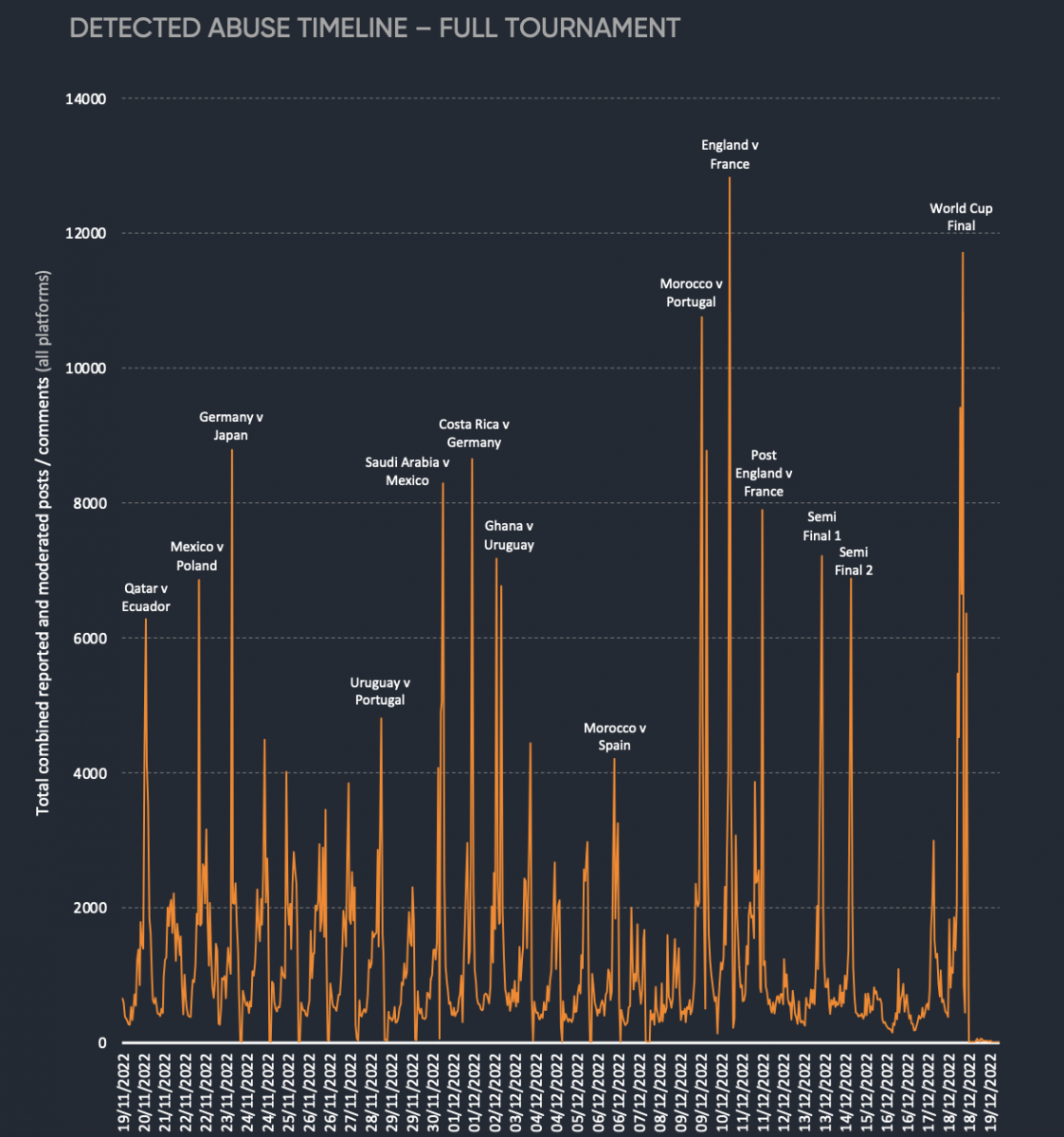
By tracking posts over time, the report was able to identify which matches provoked the greatest levels of abuse, finding that the latter stages of the tournament saw huge spikes, in particular the Final.
However, it was not that game that led to the most abusive posts - that came on the day of the quarter final between England and France, in which the latter knocked out the former, with Harry Kane missing a penalty late on.
Astonishingly, there were over 12,000 automatically detected abuses that day, and though some would go on to be removed by human verification the levels remain shockingly high.
Looking at the number of comments against each team more specifically, it is again both England and France that find themselves amongst the three most affected, with Brazil also facing major issues, especially after the group stage.
Of those abuses, the study pointed out that "detected abuse in the early stages of the tournament was more issue-based" - likely a reference to the stand teams such as Germany and England took against LGBTQ discrimination in the host country Qatar.
Much of the content was also flagged as threatening violence, whether that be against the player themselves, or their own family, demonstrating the severe issues that continue on these sites.
Committing to future action
In a particularly damning example, the report described how during the World Cup Final, "racist abuse was detected coming from an account where even the name of the account contained identifiably abusive and racist terms".
When this was reported to Meta, the parent company of Instagram, it took over four months for the account to be shut down - something the report called "a vulnerability in the platform’s own review process".
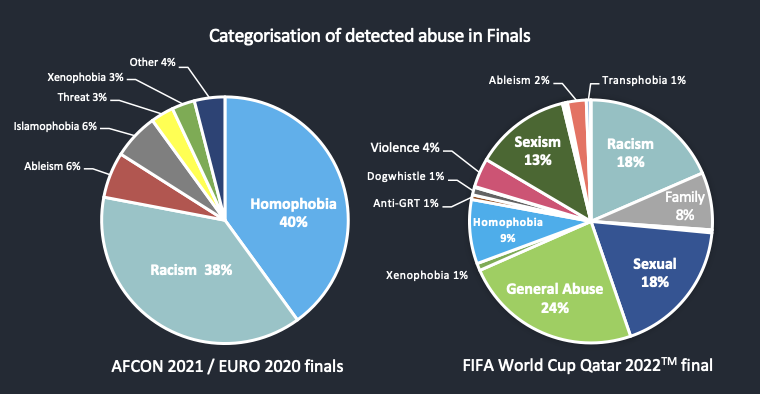
A comparison was also drawn by the report to the respective finals of both the 2021 African Cup of Nations and the 2021 European Championships, with regards to the type of abuse detected online.
It showed that during these events the predominant issues were that of racism and homophobia, making up a combined 78% of abusive content.
In contrast, the World Cup Final had a far greater spread, also encompassing sexism, sexual abuse and threats of violence, indicating the huge extent of the problem on the biggest stage of all in football.
FIFA claims it is committed to continuing these studies, with the 2023 Women's World Cup the next major tournament where its 'Social Media Protection Service' will be active.
The organisation says that it "will continue to take action against individuals or groups who [...] have produced or disseminated abusive, discriminatory and threatening social media content".
It goes on to commit to "reporting offenders to social media platforms and working with regional law enforcement where appropriate", though the effectiveness of doing so is often questioned by those facing abuse.
Nobody can deny the extent of the problem posed by online abuse towards those involved in football - the real challenge now is actually doing something about it.
