



In a modern-day mega-storm of complex, sometimes confusing financial fair play rules with extra branches and regulations stemming from the wider footballing world, clubs are encouraged to make their money sustainably.
Or as those rules are dubbed, clubs must comply with the profit and sustainability rules (PSR), which tortured several Premier League clubs in the summer transfer window earlier this year.
Living on the breadline is not an enthralling thought for any human, business or footballing organisation. Just to clarify, these teams are not on that line, but they are more asset-rich and cash-poor.
The cash-poor element is entangled in what money they can spend. The budget is fantastic in terms of off-pitch expenditure, but they cannot spend the money to win those elusive big prizes.
Put two and two together, you may have figured that a profitable stadium is a revenue source for football clubs to spend in the transfer market.
Several Premier League clubs have either explored a move, have moved, or are in the process of moving. The three case studies of three football clubs at those stages will outline the benefits of a move.
-
The Stadia Success: Tottenham Hotspur
White Hart Lane was beautiful ground, astute, classic and engraved with bundles of historic moments for both visiting opposition and every supporter who has entered through the turnstiles.
The romanticisation of these rectangular stadiums is understandable. White Hart Lane was built for fans to watch football with 30,000 others on most weekends.
By the time Spurs entered the 2010s, Daniel Levy watched his club fall behind his competitors and rely on a strong youth academy and impressive recruitment to keep the club in European places.
Many a homeowner will peek over the fence to look at their neighbours' garden. Is it prettier than mine? Does it have a patio? What plants do they have?
Levy looked at the Emirates Stadium, which was financially beneficial to North London rivals Arsenal. He saw an opportunity and shopped across garden centres and landscapers to improve his lawn.
In 2017, the final day at the Lane came, with a backdrop of construction and bundles of emotion.
Following a couple of painful years at Wembley, in April 2019 the first game at the Tottenham Hotspur Stadium arrived, and therefore an announcement to the world that this ground was open for business.
Capacity gains blatantly help any stadium, and the almost-doubling for Tottenham is the benefit that unlocks a guaranteed avenue of revenue.
The gigantic gain was made in the multi-purpose element. Since opening, the stadium has hosted boxing fights for two of the biggest fighters in the country, Anthony Joshua and Tyson Fury, and sold-out music concerts including Guns 'N' Roses, Pink and Beyonce.
An exclusive deal with the NFL means that several fixtures a year take place in the stadium which has a retractable pitch suitable for American Football.
According to The Athletic, Tottenham generated £6m per matchday, while White Hart Lane made just £1m. Compile that into a year, and the club is generating ludicrous profits.
The stadium is greatly incentivised. With many food and drink outlets available both before and after the game, fans may happily stay for a few pints after the action and discuss the game with their match-going mates.
Daniel Levy is not finished, as a hotel will be emerging over the next few months to continue to bolster revenue streams. Tottenham were never struggling, but they had no reason to sit still.
Financially, the club have finally been able to splash cash in the Premier League. Since Ange Postecoglou was announced as manager, the club have spent the second most in the league behind the money-dumping Chelsea.
Whether the revenue is converted into success is unclear. However, Spurs' financial advantage must motivate other clubs to think about a move.
-
Building to Rebuild: Everton
Everton Football Club is a nightmare of an institution, ran poorly for endless painful years and has a set of glorious fans who have had to deal with inglorious decision-making.
The stadium move is a great choice, however. A superb city, a place that will be home to events which Anfield has currently been hosting, and a chance to spend some money and climb the table.
Everton are patient zero for PSR pain. Points deductions have so nearly had the club relegated, but every year it seems the players have just about enough to keep themselves afloat.
Departures of key players in the last few years such as Anthony Gordon, Richarlison and Amadou Onana have not halted progress and added further pressure on an already weak side.
There are still years of survival to exist before that money can be used, and many false horizons might trick Everton into a false sense of security, but avoiding relegation is the key at Goodison Park.
Losing these stadiums is painful, but the Americanisation of the sport makes sense. These are franchises, not football clubs and while tribalism will never leave, that sense of authenticity will disappear as stadia such as Goodison exit existence.
-
Dreaming New: Manchester United and Chelsea
Out of the supposed big six - a term most hope disappears - only Manchester United and Chelsea have not made either expansions or moved stadiums in this century.
Neither necessarily needs it, as their revenue has allowed them to make advances in the transfer market, but rather to maximise the potential of both gigantic clubs.
The boards at these clubs have no interest in those who complain about 'selling their soul'. They want titles, they want to be a global brand.
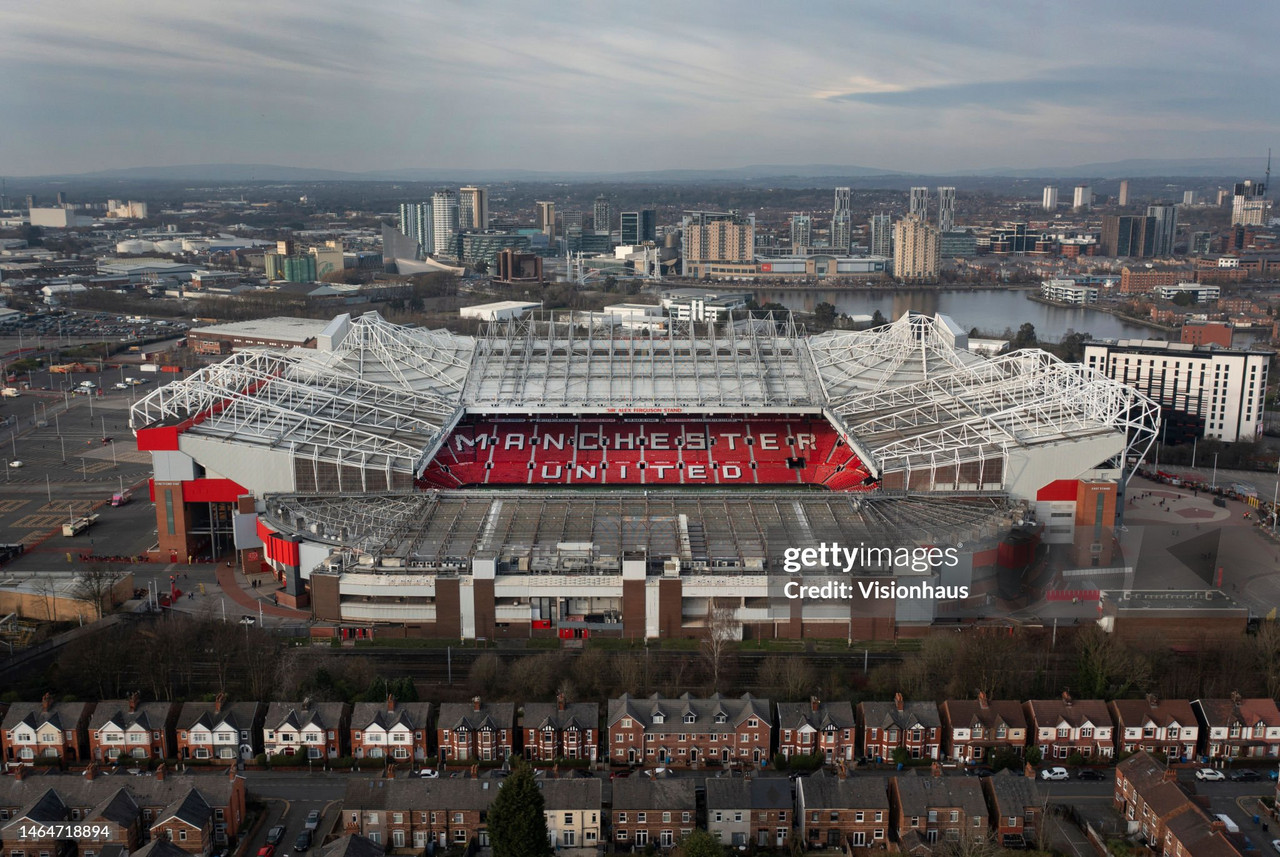
Manchester United likely need major renovation, but a new stadium is not impossible. Sir Jim Ratcliffe is looking to fix a broken club off the pitch, one that is outdated. Old Trafford is falling down.
Chelsea's incentive is to increase capacity, but the move seems unfathomable due to hundreds of issues and blockages preventing the move from leaving the ground.
But with the club sitting on PSR limits, greater revenue needs discovered to justify the amount of money spent on transfers.
It is an expensive commitment that debts your club to a level where you repay in increments for up to 20 years.
Despite that, the long-term stability in the game where regulations are only becoming stricter, earning cash profitably is a dire necessity for those clubs in the summer who had to offload in order to spend.
The profit margins made from stadia are lucrative beyond belief, as detailed by the figures produced by Tottenham Hotspur where they have sextupled their revenue.
Manchester United's project is the one to keep an eye on, as the club chooses a painfully long new build or a light regeneration. Both of which would profit - one in the long-term, the other in the short but not as greatly.
Crystal Palace could be the next club to add seats to their stadium at Selhurst Park, while work is underway on the North stand at the Etihad Stadium, with increased capacity work at Anfield and Craven Cottage completed most recently.
It is no wonder that the ground is yielding the greatest financial results in an era where diversification is keeping businesses afloat.
