


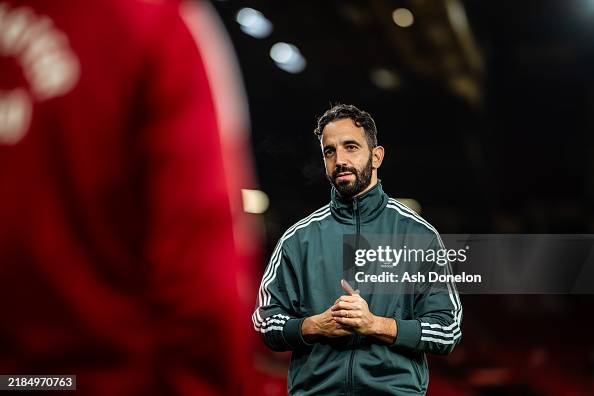

Newly appointed Manchester United head coach Ruben Amorim will take charge of his first game on Sunday against Ipswich Town in the Premier League.
A lot of change will happen under the Portuguese like any manager or head coach coming into a new club, except he is taking on one of the world’s most scrutinized jobs in football.
It is now Amorim who will lead the red ship forwards with INEOS behind him but to get United challenging for the top four and winning silverware again, what issues will he need to address?
-
Style of play
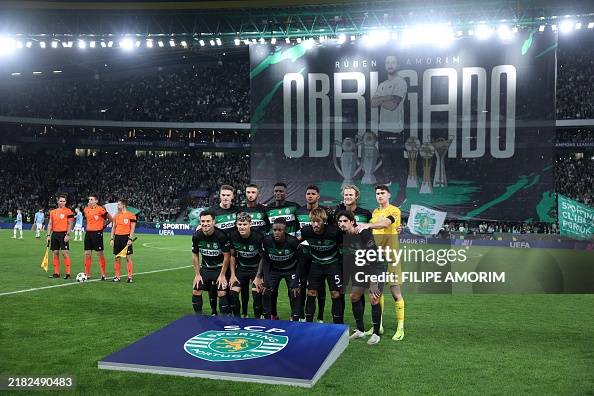
When Amorim was announced as Manchester United head coach three weeks ago the first point many pundits and fans were wary of was his formation and style of play.
The 39-year-old likes his team to set up in a 3-4-3 or 3-4-2-1 formation with a ball-playing goalkeeper and three centre-backs who are comfortable in possession.
During his time at Sporting, it was Gonçalo Inácio who would join the midfield from defence when building out from the back, Lisandro Martinez could play in that role with his capabilities on the ball.
He also likes his two central midfielders to be aggressive and help keep the shape solid when defending, while the two wingbacks press high and need to be very good in attacking areas, as shown when Sporting beat Manchester City in the Champions League.
In front of the central midfielders, there are two attacking midfielders who link the play in playmaking roles to the striker. Up top Amorim likes his strikers to be physical and aggressive, being able to press but also understand when they need to sit back.
United fans will be hoping that Amorim’s work with the in-form Viktor Gyokeres can translate over to Rasmus Hojlund.
The important thing to note is that this current set of United players have never played in a back three regularly, with the brief spells of the formation under Ole Gunnar Solskjær against Manchester City and others.
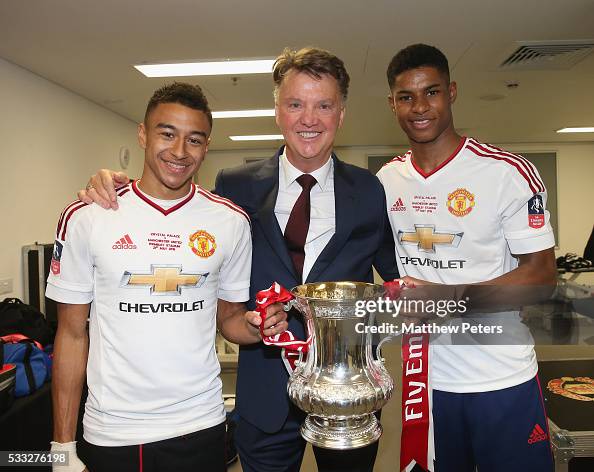
It has never seemed to work historically at Old Trafford. Louis van Gaal was the last Manchester United manager who played a back three frequently and although he led the Red Devils to an FA Cup in 2016 it was a hard watch for United fans.
The 'United way' of attacking football, wing play and being on the front foot is hard to replicate, especially in today's game where all the top teams play out from the back and want to have possession of the ball all the time.
However, football goes in cycles of certain styles of play and tactics, the question is who is going to change it? Ruben Amorim might not be the person to do that but his in-game adaptability is second to none.
He recognises the threats of the opposition but knows that if his team are under pressure from a high press his team can go long and be successful but also knows that the players can break down a team if needed.
With motivating team talks, trying to rally his players up ready for the second half of games this was evidently clear to see against Braga as his last game in charge of Sporting, as they were 2-0 down at half-time and ended up winning the game 4-2.
-
Instilling belief
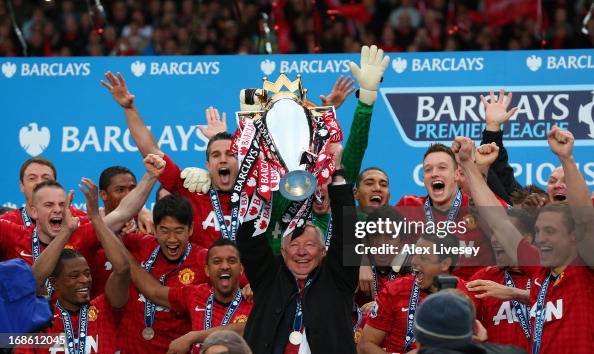
Amorim also needs to instill belief and faith back into the club, as United are now coming up to 12 years without winning the Premier League.
These current crop of players know that they can win cups such as the FA Cup and the Carabao Cup but that big next step needs to be taken in challenging for the league and the Champions League.
The new United head coach got a feeling of what the club is like as he was shown around Old Trafford by a tour guide, who has worked at the club for many years. Fully taking in the culture of Manchester Unite d, it seemed like Amorim understands the club better.
This was done when United signed players under Sir Alex Ferguson and David Gill although in recent times this has seemed to lessen and all the new players who sign for the club just know United as a big club which obviously it is but understanding the key values of Manchester United seemed to give winning teams of the past that edge when competing for trophies.
After his first interview with the club, Amorim wanted that tour to happen to all of the new players that come to the club because the connection with the team and the fans is high up on his checklist of what needs to change.
Another big change at the club will be having their first-ever head coach, as United have only ever previously had the job title of manager in the dugout.
-
Recruitment
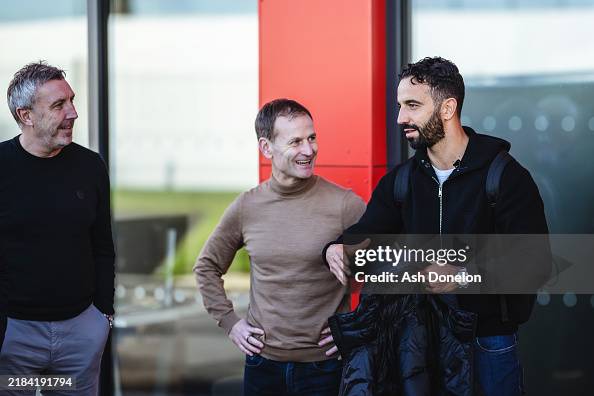
Under the umbrella of INEOS’s system, Amorim will be working very closely with sporting director Dan Ashworth and technical director Jason Wilcox.
Trying to identify the right players for the Portuguese’s style of play and also bringing in players who are not household names but can become that when they come to United through nurturing talent.
Another huge factor is the hierarchy at United getting excited at the prospect of Sporting Club beating City, so the players who played in that game and under Amorim for the past four seasons should automatically be signed by United.
This should not happen as this was trialled with Erik ten Hag bringing in Eredivisie or Dutch players who could not adapt to the Premier League. What could be worrying is that this was done under the new INEOS regime, however, now this is their man that they can work together with, without the tension of being undermined.
The former Braga player and coach has proved that he can work with the hierarchy at clubs during his time at Sporting with sporting director Hugo Viana.
Together they brought in players with mass potential and sold them on for higher fees such as Manuel Ugarte to Paris Saint Germain. Furthermore, they brought academy through into the first team when the club was in a financial crisis.
Matheus Nunes, Nuno Mendes, Joao Palhinha and Pedro Porro amongst others were from Sporting’s academy.
The reign of Ruben Amorim is only just starting but will it be one to remember or another one to forget?
