



Since making their Euros debut in 2008, Poland have faced many early exits having finished bottom of their group on three out of four occasions.
Whilst it seems likely that they may face the same fate in a group with tournament favourites France, dark horses Netherlands, and a solid Austria side, the Poles will still fancy their chances of causing an upset.
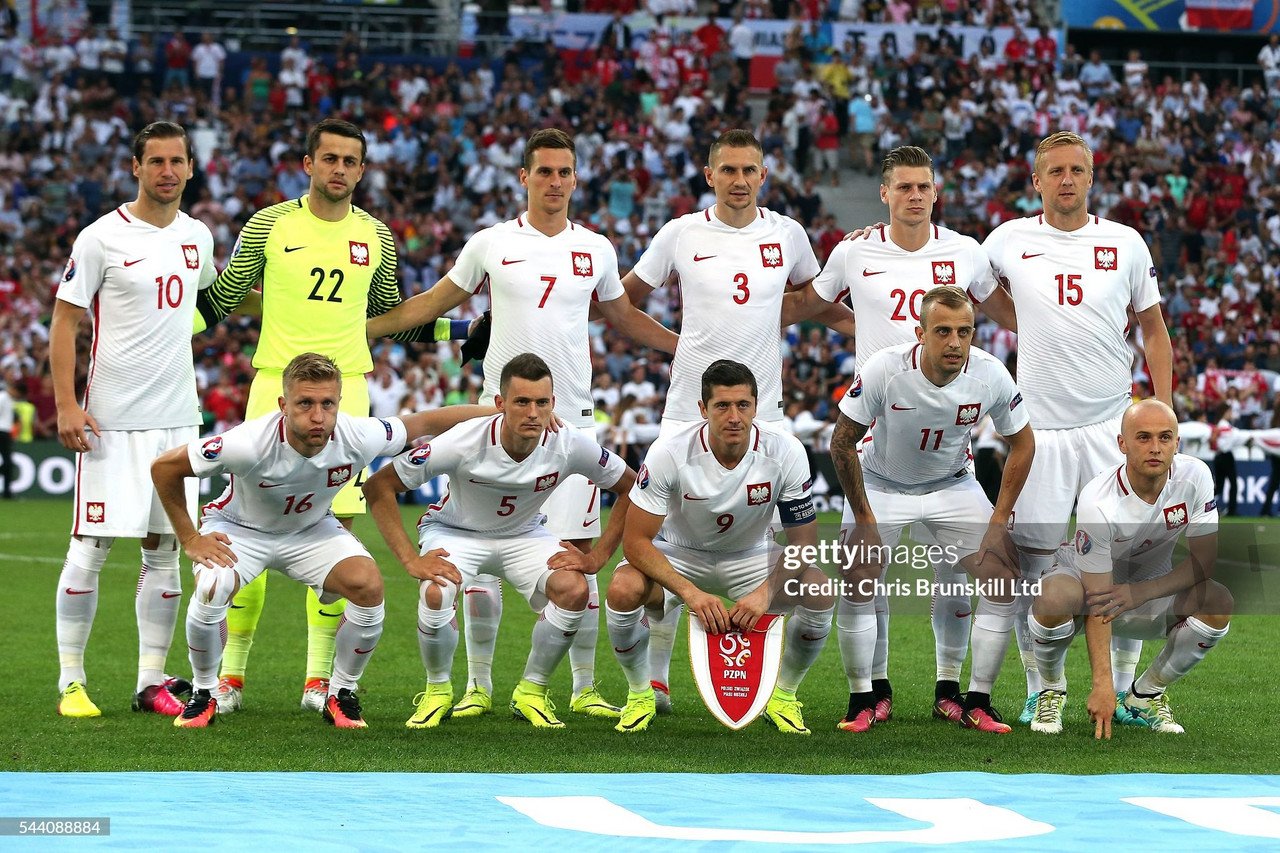
Despite their poor record, Poland’s journey to the quarter-finals in France eight years ago was undoubtedly a memorable one for supporters and players alike.
Coming up against strong opposition in their Euro 2024 group is a difficult challenge for the Eagles but as we all know in football, anything can happen.
-
The Group
Going into their third European Championship, Poland had yet to win a game in the tournament let alone make it beyond the group stage. However, they were hoping it would be third time lucky in France.
Joining Poland in their Euro 2016 group were World Cup holders Germany, Ukraine, the country whom they hosted the previous tournament alongside as well as debutants Northern Ireland.
It was expected that Germany would top the group having won the 2014 World Cup in Brazil with a side that featured plenty of experienced individuals. Manuel Neuer, one of the world’s best goalkeepers at the time, the influential Thomas Muller, and midfield maestro Toni Kroos to name a few.
Ukraine seemed the most likely side to compete with Biało-czerwoni for second place with the attacking threat through the likes of Andriy Yarmolenko and Yevhen Konoplyanka.
The fourth and final side was Michael O’Neill’s Northern Ireland, who impressed in qualifying by topping their group to make it their first-ever European Championship.
Their squad included some experienced Premier League players, such as captain Steven Davis and defender Jonny Evans, who just weeks ago won the FA Cup with Manchester United.
-
The Manager
Leading Poland into the tournament was former Polish international Adam Nawalka. A midfielder in his playing days, Nawalka played nearly 200 games for Wisla Krakow and featured for Poland at the 1978 World Cup as well as making 34 appearances for the national team.
However, it was his managerial career in which he made a name for himself in his native country. Nawalka started off at Swit Krzeszowice before returning to Wisla Krakow to take on numerous positions at the club.
Between 2007 and 2008, he joined the Poland national team as an assistant to Leo Beenhakker before going on to manage GKS Katowice and Gornick Zabrze in the top division of Polish football.
In October 2013, Nawalka was appointed the new Poland manager and success soon followed with the national team, who secured their place at Euro 2016 under his guidance. During qualifying, they defeated Germany 2-0 just three months after they became world champions.
Nawelka also took Poland to the 2018 World Cup in Russia but finished bottom of the group with just one win. However, after almost five memorable years in charge, he soon resigned as manager.
-
How did they do?
Poland’s tournament commenced in Nice where they faced off against the debutants Northern Ireland. Having dominated in the first half, the deadlock was still yet to be broken.
However, that soon changed six minutes after the restart when striker Arkadiusz Milik fired home. It proved to be the winning goal as Poland came away with three points and their first-ever Euros win.
Four days later, Poland faced their toughest test of the group when they took on Germany at the Stade de France. As expected, the Germans dominated and created multiple opportunities but the Polish defence held firm.
Poland eventually held off the German pressure for the entire 90 to pick up a brilliant point meaning the two were level on points going into the final game.
Their final game was against a Ukraine side whose exit from the tournament was already confirmed having lost their opening two matches. Nawalka’s side knew a win would secure them at least second place but depending on the Germany result against Northern Ireland, top spot was still up for grabs.
In a cagey affair in Marseille, the match was settled on 54 minutes thanks to a perfectly placed strike from Jakub Blaszczykowski to ensure Poland picked up an impressive seven points from a possible nine.
However, it was only good enough for a runner-up place due to Germany’s better goal difference but regardless, they were through to the Round of 16. Facing Poland in the knockout stages was Switzerland, who finished second in Group A behind hosts France.
After Blaszczykowski gave Poland a first-half lead, Switzerland found themselves level with eight minutes to go thanks to a stunning bicycle kick from Xherdan Shaqiri to send the match to extra-time.
With the scores still level after 120 minutes, a penalty shootout was needed to decide the winner. After Granit Xhaka blazed his spot kick over the bar and with Poland scoring all four of theirs, midfielder Grzegorz Krychowiak stepped up to convert the winning penalty.
Awaiting Poland in the quarter-finals was Cristiano Ronaldo and Portugal, who defeated Croatia 1-0 in the previous round but prior to that, Fernando Santos’ men progressed by the skin of their teeth in third place, having drawn all three of their group games.
The Eagles made the perfect start after just two minutes through Robert Lewandowski, who rifled home to score his first of the tournament. However, 31 minutes later, talented midfielder Renato Sanches equalised for Portugal in stunning fashion.
Despite both sides creating opportunities, neither side could settle the tie in extra-time meaning penalties were once again required. However, it was to be heartbreak for Poland as Rui Patricio kept out Blaszczykowski’s penalty before Ricardo Quaresma won the shootout from 12 yards as the Poles were sent packing.
Despite crashing out on penalties, Euro 2016 was one to remember for Poland, who pushed the eventual winners all the way. Excluding penalty shootouts, the Eagles managed to go through the tournament unbeaten which is certainly something you can be pleased about from a Polish perspective.
-
The Star Player
Jakub Blaszczykowski played a key role in getting Poland all the way to the quarter-finals and provided plenty of magic down the right-hand side.
He may have been responsible for his side’s exit from the competition but that should not shy away from how the Borussia Dortmund winger performed prior to that. Kuba scored twice and assisted once which included a memorable strike in the group stage against Ukraine which found the top corner.
Blaszczykowski spent the 2015/16 season on loan at Fiorentina before leaving Dortmund after the Euros having been at the club since 2007. He joined fellow Bundesliga side Wolfsburg, where he spent the next three seasons at the Volkswagen Arena.
In 2019, the winger returned to his native Poland and signed for Wisla Krakow, a club he played for earlier on in his career. Four years later, Blaszczykowski announced his retirement at the age of 37.
However, since retiring, Kuba is still involved with Wisla Krakow where he is now part owner of the club.
-
How did their 2024 Qualifying go?
Poland only secured their place at Euro 2024 back in March having qualified through the play-offs, which took place between the best-performed sides in the 2022/23 UEFA Nations League that had not yet qualified for the tournament.
In terms of the main route of qualification, the Eagles struggled having won just three of their eight matches. Their away form proved costly with three defeats from four which included a shock 3-2 defeat to minnows Moldova.
They ended up finishing 3rd behind Albania and the Czech Republic, who both qualified at their expense.
However, in the play-offs, a 5-1 win over Estonia in the semi-finals was followed up by a 5-4 penalty shootout victory against Wales in Cardiff. Daniel James missed the decisive spot-kick as Poland managed a 100% record in the shootout.
With France and the Netherlands most likely to finish in the top two spots, Poland’s game against Austria will be vital if they are to stand a chance of progressing. A 3rd place could be enough for the Eagles depending on how other nations fare in their respective groups.
