



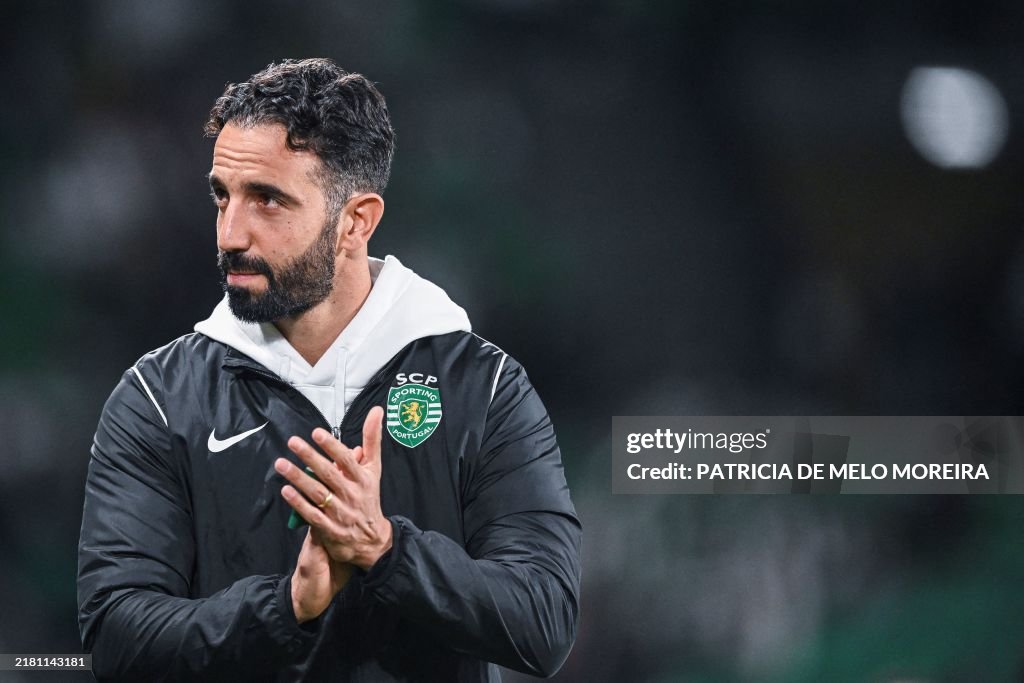

Cast one of the larger fishing nets from Lisbon’s port over the city, and it would almost cover the four clubs within a 10km radius that have formed Ruben Amorim’s footballing career so far.
Amorim, the Sporting manager who has been appointed Manchester United’s next manager, is a man of the city. The 39-year-old was born in Vila Franca de Xira, a suburb to the north east of the city, and it is in the Portuguese capital that Amorim has spent all but three years of his playing and coaching career.
Lisbon was the setting for his first match as a young midfielder, his first games as a head coach and his first league title win. The city on the banks of the Tagus River has been the backdrop to Amorim’s journey to the Old Trafford hot-seat.
Belenenses: Where it all started
Even as debuts go, this one was rather brief. It was only a minute long at the end of a 2-0 home win over Alverca and, as you can therefore imagine, hardly provided much time to make an impression. Nevertheless, that shortest of short cameos in December 2003 marked the start of Amorim’s senior playing career.
Belenenses are based in the Belem district of Lisbon, which is famed for being the origin of Pastel de nata, the renowned Portuguese custard tart. The area’s football club are as equally steeped in history; they are proud to be one of Portugal’s oldest having been founded in 1919 and were the first team to face Real Madrid at the Santiago Bernabeu, in 1947.
It was certainly a team with a backstory, albeit not enamoured with much success, and aged 18 Amorim broke into the first team there having arrived at the club’s academy from Benfica’s a few months earlier.
He was a midfielder and his versatility in the centre of the pitch stood out early on and made him a useful player. There was a sharpness to his play whether he was playing in a defensive role or being more attack-minded.
Although predominantly a midfielder, Amorim became adept at filling in at right back— and it does not take too much imagination to see that he would be a very good fit for the modern-day hybrid role that combines playing full back with drifting into midfield.
During his seven years at Belenenses, Amorim made 96 appearances and was another local lad in a team that featured a lot of them. There was a homeliness to the club, which still exists today. They had consistently been a top-flight outfit since 1982 and were always in the first division during Amorim’s time at the club.
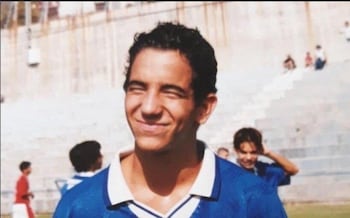
It was also at Belenenses that Amorim first encountered Jorge Jesus when he became manager in 2006. Amorim was an established presence in the first team by that stage but Jesus would oversee the best years of the midfielder’s playing career, and also the worst, but that came across the city.
Benfica: Becoming a treble winner and international
Amorim’s move to Benfica in 2008 was deserved on the back of his breakthrough at Belenenses, but he faced stiff competition at his new club.
As part of the dominant three of Portuguese football, along with Sporting and Porto, Amorim will have been fully aware of the need for him to advance his game further and seek improvements if he was to make the cut at Benfica.
At that point, they had 31 Primeira Liga titles to their name, and this was the first time that Amorim had experienced the demands of a club like Benfica, where the expectation is to win every match, especially when facing either Porto or Sporting.
It was a testament to how Amorim took to the challenge and applied himself that he spent the majority of his playing days at the Estadio da Luz and earned himself a call-up to the Portugal national team. He would make 14 appearances for his country and featured at both the 2010 and 2014 World Cups, albeit mainly as a squad player.
Amorim’s best season at Benfica was the 2013/14 campaign when he made 37 appearances as the club won an unprecedented Treble of Primeira Liga, Taca de Portugal and Taca da Liga having again linked up with manager Jesus. A penalty shoot-out defeat to Sevilla in the Europa League final prevented Benfica from remarkably claiming four trophies that season.
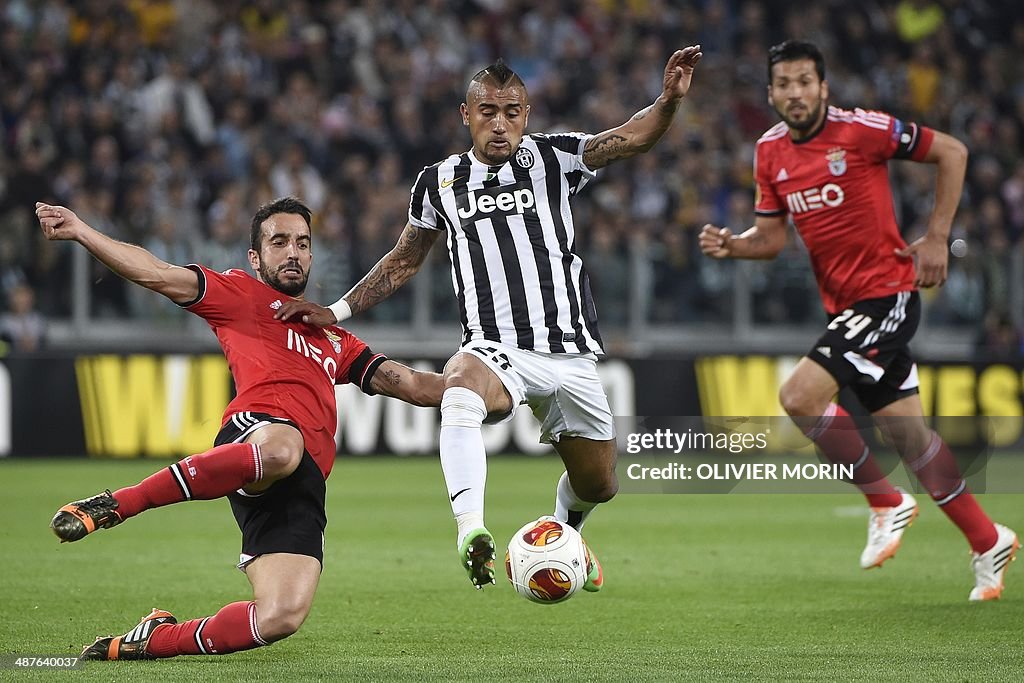
Amorim arguably played his best football during that campaign when he was positioned at the heart of Jesus’s midfield. Over the course of nine years at Benfica, though, it was not all plain sailing.
Firstly there were the injuries. One occurred in 2011, requiring surgery on both knees and saw him spend an extended period on the sidelines. Then another happened three years later when he tore his anterior cruciate ligament whilst playing on a plastic pitch. From which he never truly recovered.
Also, there was the up-and-down relationship with Jesus. It was during an international break that Amorim aimed a dig at Jesus, with part of his grievance being that the manager was not starting enough Portuguese players.
Things worsened when Amorim was asked to train with the reserves but refused — he was soon out on loan at Braga for a season — however, he was back in the fold for the Treble season which signalled that there was no lasting damage.
Amorim retired from playing in 2017, aged 32, following struggles after his ACL injury and a one-season loan at Qatari side Al-Wakrah. Little did he know that his impact on Portuguese football was only just beginning.
Casa Pia: Making the most of humble surroundings
It was certainly an auspicious start. Having lost his first two games in charge of third-tier Casa Pia, Amorim announced that if he lost the third he would quit. They won 4-0 and went on a run of eight successive victories. How things might have been different had they fallen short in that third game.
It would be no exaggeration to say that that victory kick-started Amorim’s managerial career. He had enrolled at the Lisbon Football Association to earn his coaching licence after playing and spent a week shadowing Jose Mourinho at Manchester United, but those first few games at Casa Pia were an eye-opener.
What was also significant about that game was Amorim changed system and played with a back three for the first time. He has never looked back, saying at the time that he had found the formation that allowed him to produce the football he wanted and still uses the system to this day.
Casa Pia, based in the west of Lisbon, were far from the elite in 2018 when Amorim was there — although they are now a first division club.
Their stadium held little more than 2,000 spectators, and given the size of the other clubs that call Lisbon home, they were very much a team frequented almost exclusively by those who lived close to the stadium. This was not somewhere to go to seek publicity, rather to learn a trade.
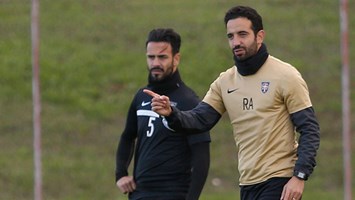
The humble surroundings certainly kept Amorim grounded. However, it was evident from early on that the club had taken a chance on a promising young coach. Not only was he a keen thinker of the game from a tactical perspective, but he also had a way about him that endeared him to the local fans.
There was little money that the club could spend but Amorim transformed their fortunes by forging an identity on the team.
Yet, trouble was only around the corner when he was banned for giving out instructions from the touchline when he was still technically a ‘trainee coach’. It led to Amorim being given a suspended one-year ban which was later rescinded and Casa Pia were deducted six points.
On a matter of principle, Amorim resigned only six months into the role — and therefore missed out on seeing the job through as Casa Pia claimed the league title — but he was quickly snapped up by Braga, initially as under-23s coach before stepping in as interim manager in January 2020.
Amorim may have only been at the helm at Braga for a couple of months, but he steered the club to their first trophy in four years when they won the Taca da Liga and also registered their first win away to Benfica in 65 years. Across the 13 games that he oversaw, Braga won 10 and only lost twice: both coming against Rangers in the Europa League.
Braga had in many ways rescued Amorim as a player, after the falling out with Jesus, and done so again when he was still in the very early days of his managerial career. However, he would not be away from Lisbon for long.
Sporting: Transforming a club
An appointment that was initially questioned proved to be inspired. There is no doubt Amorim had to win over the crowd when he was put in charge of Sporting in 2020 after they had paid €10m to appoint him. It was the third-highest transfer fee for a manager in history at the time.
The former Benfica player had only managed in 17 professional games to that point and the idea that he would arrive and help the club he had been a rival of for many years to a first league title in 20 years appeared fanciful. After all, they had churned through 16 head coaches in those 19 years.

Despite only being separated by a stretch of the Segunda Circular road that sweeps up towards Lisbon airport, Sporting are a different club to Benfica, and their proximity to each other only intensifies the rivalry. But Amorim settled quickly and, as one former colleague said, remained ‘genuine’ despite the increased spotlight placed upon him.
In fact, it would be fair to say that he relished it. A combination of his powerful personality, tactical knowledge and laid-back demeanour have been the foundation on which Sporting’s resurgence has been based.
It would be no exaggeration to say that Amorim has been a breath of fresh air for Sporting and ended a difficult 20 years for the supporters who had endured the duopoly of Porto and Benfica for some time.
In his second season he guided Sporting to their first Primeira Liga title since 2002 and captured a second title last season when they finished 10 points ahead of second-placed Benfica. There have been two cups too, one of which came as part of a domestic Double. And all the while his team have been a high-intensity outfit that have continued to unearth hidden gems.
Viktor Gyökeres is the latest player to have thrived under Amorim’s coaching, with the former Coventry City striker impressively scoring 16 goals already this term having netted a remarkable 43 goals last season.
Other players who have played under Amorim’s successful beat of management include former Fulham midfielder Joao Palhinha, Manchester City’s Matheus Nunes and Tottenham’s Pedro Porro, while Manuel Ugarte, recently signed by United, played his best football under him.
Yet ask any Sporting fan and they will say it is Amorim’s character that has been most endearing. He has a natural way with words and is able to express himself and his ideas very eloquently — as seen in his regular press conferences, which some see as the highlight of their week.
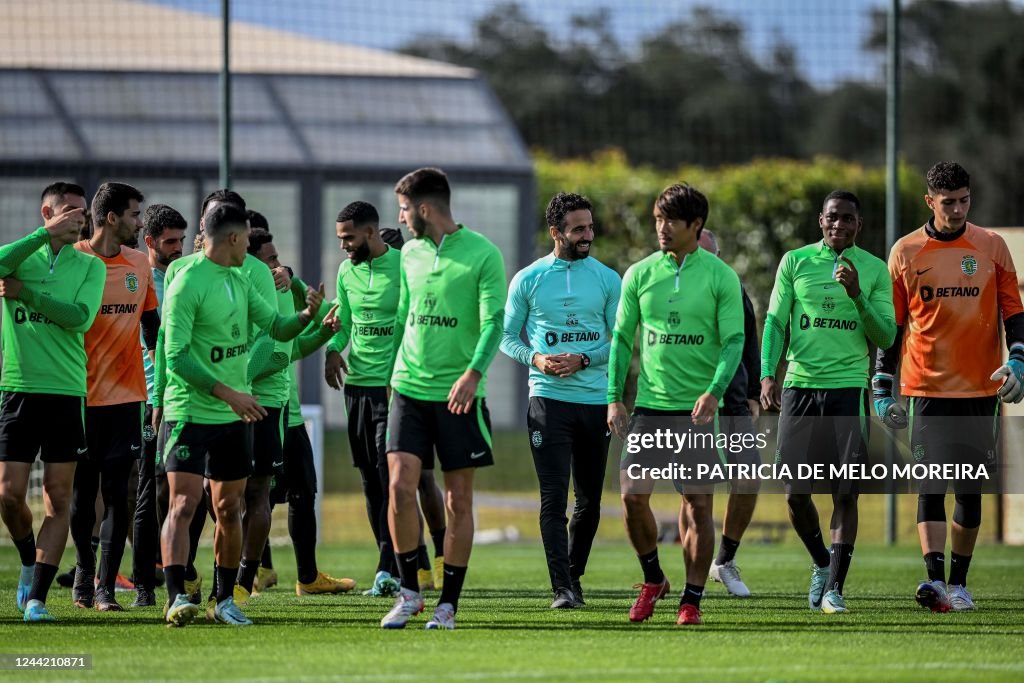
In the words of one supporter, Amorim has ‘transformed the club’. He is transparent, straightforward and humble — typically Portuguese, one could say — and with Sporting currently top of the table and having won every game so far this season, barring a draw at PSV Eindhoven, the prospect of back-to-back titles is a significant one to pass up.
Amorim may have moved before now: Barcelona, Bayern Munich, Liverpool and Juventus were all linked to him last season, and he even held talks with West Ham United, which he admitted were a ‘mistake’.
Add to that Sporting’s director of football Hugo Viana is lined up to replace Txiki Begiristain at Manchester City at the end of the season, and a natural end to Sporting’s current cycle may be coming. Understandably, Amorim has been looking for his own next step.
Taking the reins at Old Trafford will be a test of Amorim’s tactical acumen, affable character and ability to handle pressure. Leaving Lisbon would also see him coming out of his comfort zone, speaking a different language and addressing a new audience.
But at each of the four clubs in his hometown, all of them crucial stepping stones in his route to United, he has left a positive lasting impression. It will be interesting to find out if he can do so once again.
