


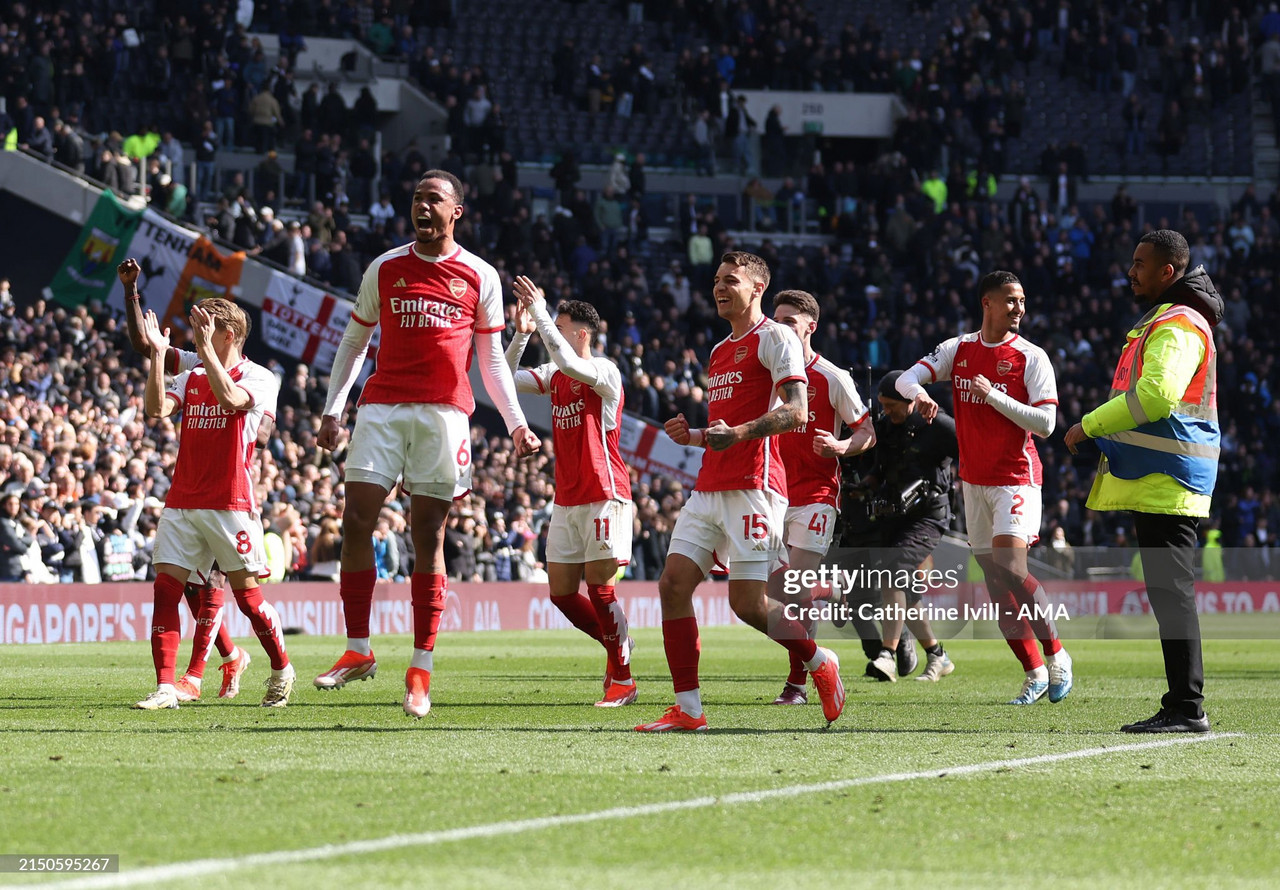

Early on, the North London derby was seemingly an even match between two sides playing patiently and keeping their shape, however, what unfolded was the now age old issue of Ange Postecoglou's side being susceptible from set pieces and poor defending transitions.
Two set piece goals and a counter attack later, the North London Derby was over by half time.
Spurs put pressure on in the second period, but as with Arsenal's goals, the replies were the result of the visiting side's mistakes rather than by design. If the Australian manager is to make a success of his time in North London, he'll need to focus on solving these recurring issues in the close season.
Spurs lack balance
It feels an obvious comment given how many of Spurs' matches feel like a lottery, but if it Spurs lack of balance across the pitch continues presenting itself then it will also continue to be discussed. Spurs are very hard to stop getting down the wings, but rarely have presence in the opposing penalty area to take full advantage.
Postecoglou's side are good at playing through the opposition press, including Arsenal's impressive version, but then seem to slow play and allow the opposition to reorganise before anything penetrative can happen.
Spurs' high line boasts plenty of recovery pace and good one v one defending, but seems to only regain possession very deep in the Tottenham half. Some of these could be issues of familiarity, but I suspect at least a couple of these issues are due to needing a personnel refresh and Postecglou will want to see that backing once the season ends.
Arsenal reaped the rewards from Spurs' mistakes
It seems strange to say considering the away side were leading 3-0 at half time, but Arteta's side really didn't do much for that lead.
The opening goal was an own goal via a corner, the second was route one to the fastest player attacking the south stand, and the third was again via a set piece.
Every goal is worth the same amount and these all perfectly exposed the earlier mentioned recurring weaknesses in the Spurs style. That the visitors were so adept at these more agricultural methods is why Arsenal ended the first half ahead by three goals despite making very little use of the rightly celebrated technicians in red.
Romero is Spurs' heartbeat
Son Heung-min is captain and his goals win most matches Spurs play. James Maddison is the enigmatic, flawed genius the Lilywhite faithful so adore. Romero, who has most cut out the red mist that has haunted much of his career in North London, is the player who stands up to be counted when things are difficult.
This is why his manager singled him out for praise in the post match comments, this is why he was still driving forward to capitalise on Raya's mistake for Spurs' first, and this is why the home crowd will always be patient when that screw does come loose.
Usually such platitudes are given to less elegant footballers, but when you combine the personality with this World Cup winner's composure, technique and passing ability, it dawns that in Romero Spurs have a superb defender who, excitingly, still has some way to improve.
Referees rely too much on VAR
The North London Derby is not an easy match to referee, but Michael Oliver may well look back at some of the clips of his performance with some discomfort.
It isn't a good look when VAR has to intervene for a penalty decision such as that against Rice when Oliver was yards away and looking directly at it.
In addition, some may argue the disallowed Spurs equaliser would have stood in the pre VAR world and probably should have in this world to given that IFAB rules state: A player in an offside position receiving the ball from an opponent who deliberately played* the ball, including by deliberate handball, is not considered to have gained an advantage, unless it was a deliberate save by any opponent. This is unless Takehiro Tomiyasu did not mean to block the initial shot from outside the Arsenal penalty area?
It is understandable that referees find consistency difficult when so many rules are loaded with caveats and nuances, but I'd suggest the men in black might benefit from officiating football matches as if there was no VAR safety net, particularly when VAR itself seems to only consider a portion of the what goes on in it's reviews.
