



Newcastle United’s transformation since the departure of poisonous business tycoon Mike Ashley and his man in the stands, Steve Bruce, has been nothing short of remarkable.
In a relatively short period, the new ownership has reignited a once-disillusioned fanbase, restoring hope and ambition to Tyneside.
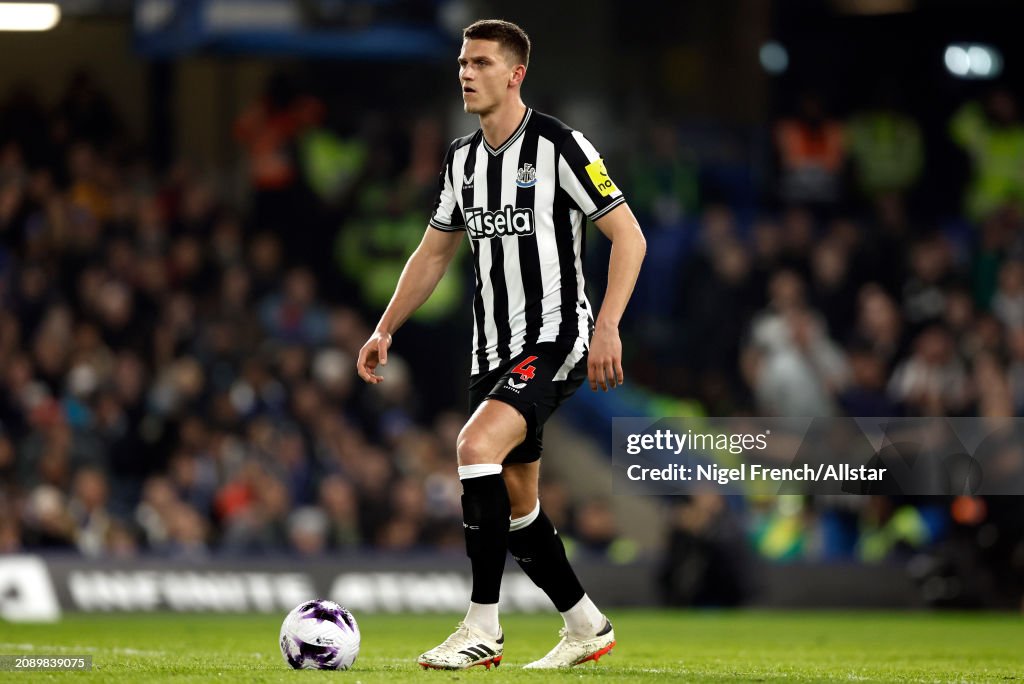
This transition has been underpinned by strategic investment both on and off the pitch, with several high-profile signings that have bolstered the squad, though none has arguably made as profound an impact as Sven Botman.
The Dutch defender’s exceptional ball-playing ability sets him apart from the traditional, physically focused centre-backs of old, instead offering Newcastle a composed presence at the heart of their defence.
Unfortunately for Eddie Howe and Newcastle, Botman struggled with knee issues last season, eventually opting for surgery in March of this year. The Magpies have sorely missed the defender during his extended absence, to the point where it has led to a significant adjustment in their style of play.
Without the former Lille defender’s composure on the ball and ability to distribute from the back, the team has been forced to drop deeper to make up for the decline in quality offered by his replacements.
Dan Burn, while consistently performing close to his limits, lacks technical elegance, leaving Newcastle vulnerable at times and highlighting just how integral Botman has become to their system.
In the season Newcastle secured Champions League football for the first time in 20 years, and just over a year after the takeover, they found themselves sitting fourth in the Premier League – a dramatic turnaround largely driven by their newfound defensive solidity.
At that point, Newcastle boasted the best defensive record in the league, with a backline of Kieran Trippier, Fabian Schär, Sven Botman and Dan Burn conceded just 11 goals in 18 games, keeping an impressive 10 clean sheets in the process.
Addressing this weakness had become a top priority for former Director of Football Dan Ashworth. Focused on strengthening the backline, Ashworth oversaw the £35 million purchase of the young centre-back from Lille in the summer of 2022. He personally scouted Botman on multiple occasions, attending several Netherlands U21 matches to assess his potential.
His impact was immediate. By January of the 2022/23 season, Newcastle remained unbeaten with Botman in the side, boasting a 58.3% win rate, an average of 2.2 points per game, and conceding just 0.7 goals per match.
Botman’s individual performances were equally impressive, recording a 75.3% aerial dual success rate and completing 85% of his passes, making him Newcastle’s most accurate passer. This is even more remarkable considering the presence of midfield maestro Bruno Guimarães, who was at the peak of his powers during this period.
When asked about Botman, former Lille manager Jocelyn Gourvennec described him as “built for European football, and he is at ease playing in it” – undoubtedly a factor in Newcastle’s acquisition of him when considering their lofty ambitions.
Whilst the benefits of Newcastle’s purchase are plain to see, it is also a transfer that highlights the evolution of modern tactics.
Today, the role of a centre-back goes beyond mere defending to include initiating and contributing to periods of possession. This dual responsibility, often compared to the Libero role, becomes much more challenging when a defender is positioned on their less natural side, forcing them to rely on their weaker foot.
For possession-based teams, a left-footer on the left side is crucial, as overreliance on right-footed centre-backs can disrupt the fluidity and effectiveness of build-up play.
Some of the most iconic centre-back pairings in football history have benefitted from the balance provided by a left-footer on the left side. For instance, AC Milan’s 1990 European Cup-winning team benefited from the symmetry between Franco Baresi on the left and Alessandro Costacurta on the right. Similarly, Marseille’s 1993 Champions League triumph featured a partnership of Marcel Desailly and Basile Boli, exemplifying the value of natural positioning across the backline.
But what exactly is it about these players and their style of play that makes them so highly sought after in the modern game?
Playing out from the back
The first advantage relates to how a defender receives the ball from the goalkeeper at the start of a phase of play and their positioning in that moment. A left-footed defender will naturally step wider when receiving the ball, creating more time and space to scan the field and identify opportunities to progress play up the pitch.
In contrast, a right-footed player is more likely to step inside, towards a more congested area of the pitch. This movement can trigger a press from the opposition, who may exploit the defender’s limited options to force turnovers in dangerous areas higher up the pitch.
What’s more, a right-footed player on the left side will likely adopt a deeper starting position when receiving the ball, giving themselves a better chance to clear it from danger if pressed. However, this adjustment comes at a cost, as it sacrifices valuable territory to the opposition.
A left-footed player in the same position can operate higher up the pitch with greater degree of confidence, maintaining possession under pressure. This enhances a team’s ability to play out from the back more effectively, making left-footed centre-backs a vital asset in modern, possession-based systems.
Under Pressure
The second advantage relates to how a defender clears the ball. A sweeping motion to clear the ball upfield comes more naturally to a left-footed player than a right-footer. A right-footed defender, whose instinct is to receive the ball square-on, must let the ball cross their body before making a clearance.
This extra movement takes up valuable time, giving the opposition the opportunity to press and potentially block the clearance. A left-footed player can make a quicker clearance, reducing the risk of pressure and maintaining possession more effectively.
The third advantage is that a left-footed player is naturally more suited to a playmaker role on the left side, which is crucial for passing between the lines and switching the point of attack.
When playing out from the back, the angle of a left-footer's pass offers significant advantages. For example, a pass from a left-footed player travels on an outward arc, allowing it to cover more distance from the opposition while still reaching the intended target. Additionally, the trajectory of the ball typically moves up the pitch, enabling the left-back to take the pass in their stride.
A right-footed player’s pass tends to bend inward, bringing it closer to the opposition and increasing the risk of interception. The left-back would then need to control the ball before moving it forward. This subtle difference in passing style can have a significant impact on a team's tempo, especially at the highest level, where quick and efficient transitions are crucial.
Playing through the lines
Finally, when a midfielder receives a pass through the lines from a left-footed player, the ball is likely to be played to their right-hand side (as if they were facing their own goal). This gives the midfielder more space to receive the ball, further from the oncoming opposition, compared to receiving it from a right-footed player. As a result, they have more time to turn and distribute the ball to a teammate, making ball progression smoother and more efficient. This extra time and space can greatly enhance a team's ability to maintain possession and transition effectively.
Is there anything to say against them?
However, are there any disadvantages to having a left-footed centre-back?
Inverted wingers, like those in the mould of Arjen Robben, can pose significant challenges for left-footed defenders. These players are highly skilled at using their agility to cut inside and quickly move across a defender. When they make this shift across a left-footed player’s body, it can throw the defender off balance, forcing them to rely on their weaker side.
To counteract this, teams often deploy deeper-lying ball-winning midfielders to provide defensive support. Prime examples include Boubacar Kamara (Aston Villa) and João Palhinha (Bayern Munich), who help shield the backline and alleviate pressure on defenders when facing such attacking threats.
Overall, left-footed centre-backs are becoming increasingly synonymous with the modern game, especially as possession-based systems continue to rise in popularity. With only around 20% of players at the top level being left-footed, this rarity is reflected in transfer fees.
Players like Botman are quickly emerging as must-have commodities in modern football, with their ability to strengthen defensive stability and improve ball progression making them highly sought after. Newcastle will no doubt be eager to get him back on the pitch as soon as possible.
