


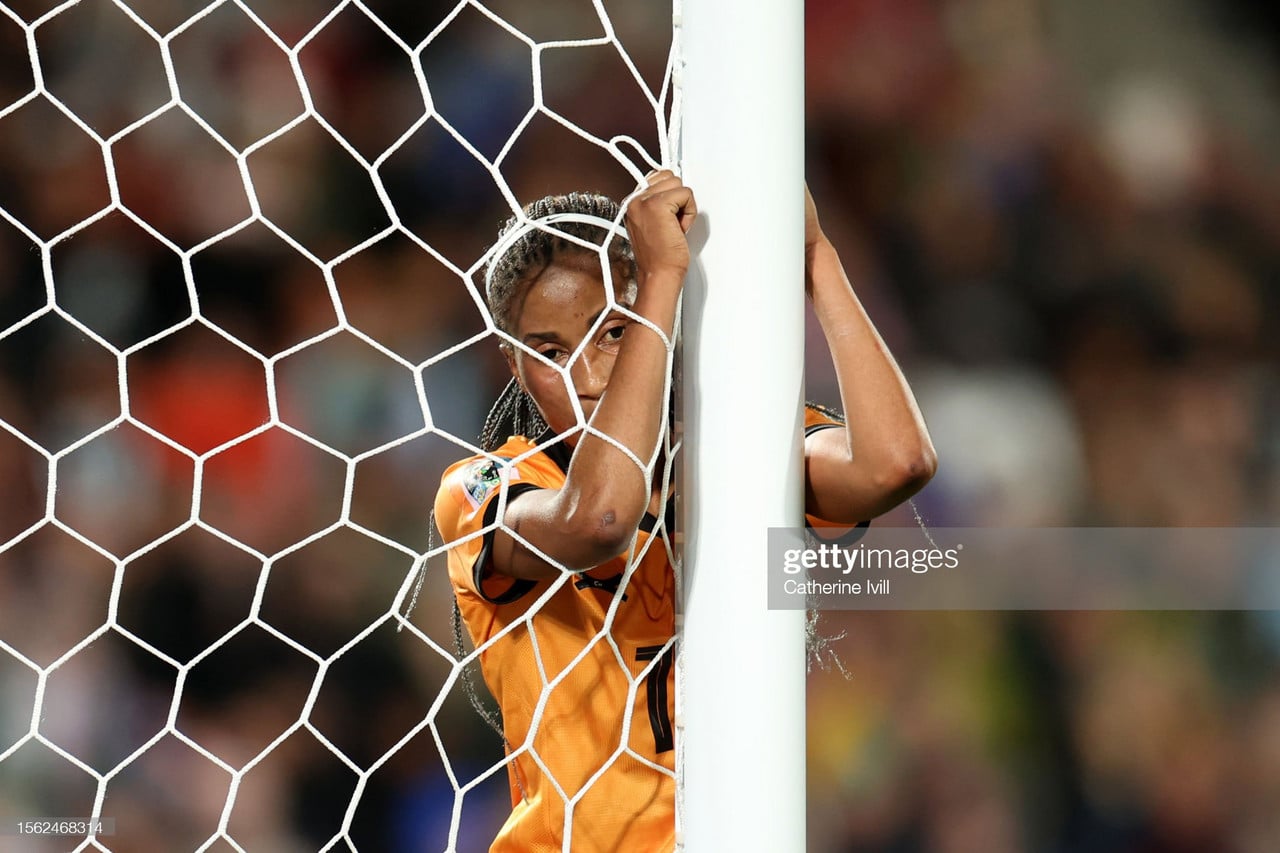

Japan cruised past Zambia 0-5 in the second match of Group C on Saturday. The creative catalysts of Hinata Miyazawa, Mina Tanaka, and Jun Endo stood out amidst an imposing unit that clearly proved all too much for the World Cup debutants.
The clinical Nadeshiko ultimately lay down a marker with this five-goal victory - overcoming two disallowed goals for offside, a penalty shout waved away, and then a spot kick retake in the closing moments. The latter of which, saw goalkeeper Catherine Musonda sent off.
Although determined, 77th ranked Zambia proved no match for the former World Champions. With Spain their next game, the Copper Queens will look to regroup fast if they are to put up more of a fight against a slick La Roja side.
-
With World Cup experience against Zambia, it's time to thrive on underdog energy to the fullest
In the first Group C game, Japan came into this one with a 3-4-2-1 formation and a passing fluidity to match. Head coach Futoshi Ikeda had a wealth of experience to pick from and it was clear from the very start that Zambia were in for a long first 90 minutes of World Cup football.
Bruce Mwape's team felt the pressure immediately as the side from the Land of the Rising Sun foreshadowed a goal on the horizon with lengthy, intricate passing spells throughout much of the first half.
Zambia's industrial 4-1-4-1 adaptation of 4-4-2 seemed set up for damage limitation and lacked the trademark offensive energy prior outings displayed. The first half was effectively: chase the ball, try and break. However, the gulf in professionalism was painstakingly evident as Japan managed the game superbly.
On 20 minutes, Mina Tanaka had the ball in the net. Yet celebrations were cut short after Rion Ishikawa's flick came from an offside position to set up the goal. Cue a Zambian sigh of relief.
Regardless of the setback Japan again withheld a class to penetrate at any time. On 29', Tanaka made a hash of things from close range. Ten minutes later, Fuka Nagano forced a brilliant save from Musonda, who reacted well to a deflection to pick the ball out the top corner. It was all Japan, and understandably it sounds harsh to criticise Zambia's performance - although at times it did feel like they were simply making up the numbers.
Before the break, Japan finally opened the scoring. Hinata Miyazawa wheeled away as her front post poke evaded Musonda well after a delightful right-footed cross from Aoba Fujino couldn't be missed.
It was inevitable, and whilst there was a glimmer of potential to get a foot back in the game (powered by Zambia's defensive luck thus far), on the other side of the break - it was snuffed out immediately with Tanaka putting her disallowed strike firmly in the rear-view as she slid home effortlessly from a pin point low cross from Jun Endo on the left.
Seven minutes later, Japan made it number three with Miyazawa's second of the match. It was somewhat comical and formulaic all at once. Japanese wing play and Zambian nonchalance. Tanaka burst to the by-line and drilled the ball low. Musonda dived out, missed it and Miyazawa tapped into an open goal.
With floodgates now open, Jun Endo turned scorer on 71' - firing the ball into the bottom right from the left side. This came before Musonda's dismissal in the depths of added time, as she smashed through Riko Ueki. Musonda looked to have been booked earlier for a penalty that was ruled out for offside, however now off, Eunice Sakala emerged from the bench.
In what was one of few bright spots, she tipped Ueki's penalty onto the bar emphatically only to find a retake had been ordered after she'd jumped off the line early. Ueki scored the second attempt in a hectic end - but for the Zambians, it was surely a relief it was all over.
So, more to the analysis side of things - aside from pure tournament experience, what exactly could Zambia have done to encompass a tireless underdog spirit like South Africa facing Sweden?
-
Play to strengths! Banda isolated, Kundananji and youth misused, as Japan cruise to five
Zambia of course came in to the match with some big blows to the squad. Just before the tournament, first choice goalkeeper Hazel Nali was ruled out after suffering a serious knee ligament injury. Additionally, the influential Grace Chanda had to withdraw - being hospitalised with illness.
With those points considered, it must be said that despite the goalkeeping conundrum (which I'll come to shortly), Zambia still had both Barbra Banda and Chanda's Madrid CFF teammate, Racheal Kundananji outfield. Plus a supporting cast of youthful exuberance was present (in Siomala Mapepa and Evarine Katongo). Yet, Mwape's team produced very few chances at the Japanese goal.
A lack of any real potency was odd considering the unit of players that had played with each other consistently. Seven of the starting XI played in the three Olympic matches back in Tokyo. Plus, with this youthful burst, paired with Banda and Kundananji - you would've thought Zambia would at least go down fighting (like the Olympic loss to the Netherlands that ended 3-10 ).
Mwape opted for a system that effectively came at the detriment of his side's offensive ability. By having a deep-lying midfielder in veteran Susan Banda slid between two banks of four - it left Barbra Banda isolated up top. As Siomala Mapepa strayed to the left wing, Racheal Kundananji was heavily marked on the right.
Kundananji is a player who scored a brilliant 25 goals in 29 games this Liga F season just gone. One too, might I add, who can play down the middle. So, it begs the question why Zambia, at their first World Cup, decided not to pair her with Banda (another goal machine) - dovetailing up top and playing off one another. Get rid of the holding midfielder and take the game to the Spaniards! Kundananji should know how best to operate against many of her domestic rivals.
Perhaps, the idea in principle, was to use pace on the wings and have Banda hold up. However, the reality was that hoofing the ball up from the back to the singular 5'11 Banda proved futile - as either the Japanese crowded her out or simply possessed better timing when competing in the air. Anyway, if she won the knockdown, who would get it? The Zambians were unfortunately too slow in transition to play that style.
Moreover, having Susan Banda in the middle didn't really combat Japanese passing lanes. In turn, it actually at times congested the midfield for Zambia, if anyone. This was especially noticeable in Japan's fourth goal. Jun Endo flew forward on the left, while one pass round a crowd of bodies set her free. It was like primary school lunchtime football, something Zambia are lightyears better than.
-
Goalkeeper an interesting point of conversation as Zambia must use breaks in the game effectively
One figure who caught the eye for the Copper Queens on Saturday was goalkeeper Catherine Musonda. In what may have been the most interesting game a player has had on a World Cup debut: she showed the capability to make top saves, but then questionable decisions. Then, she got herself sent off to crown it all off nicely.
What Musonda could also be a poster child for, is defensive mismanagement and a side that rested on their laurels. This, you simply cannot do against a team such as Japan.
Musonda and her defence faced two disallowed goals AS WELL AS an overturned penalty call that the keeper picked up her first booking for. Yet, they didn't learn from their mistakes. Up the other end too, the Japanese weren't punished for their missed opportunities.
As young Eunice Sakala emerged for the spot kick, saving the initial strike - that incident offers a glimmer of hope for the side. In just that glimpse, Zambia will have seen that the big teams are fallible. Yes, perhaps over-eager - the pouncing off her line early perhaps showed her inexperience. Yet, there's clearly a gift there and if she is to be the starting keeper in Musonda's absence against La Roja she has to use that as momentum.
-
This is the World Stage, at least get some people off their feet
Looking over the line up from that Japanese drubbing, it is quite contradictory to suggest Zambia possess some very capable players. Yet they do - and it's a young squad. With an average age of 23.7 years, (and with the previous point of Sakala as an example), it should be re-emphasised what a tournament like this could do to a career.
Realistically, the WAFCON bronze medallists have two, three games left maximum. Everything should be left out there. Who knows, like Barbra Banda at the Olympics, it could not only switch more eyes on to a national game that is already developing, yet it could get players some life changing transfers.
I don't expect this to be Zambia's last World Cup appearance at all, yet this game against Spain will prove a crucial test of the scrutinised Bruce Mwape's players as well as his ability as a manager.
