


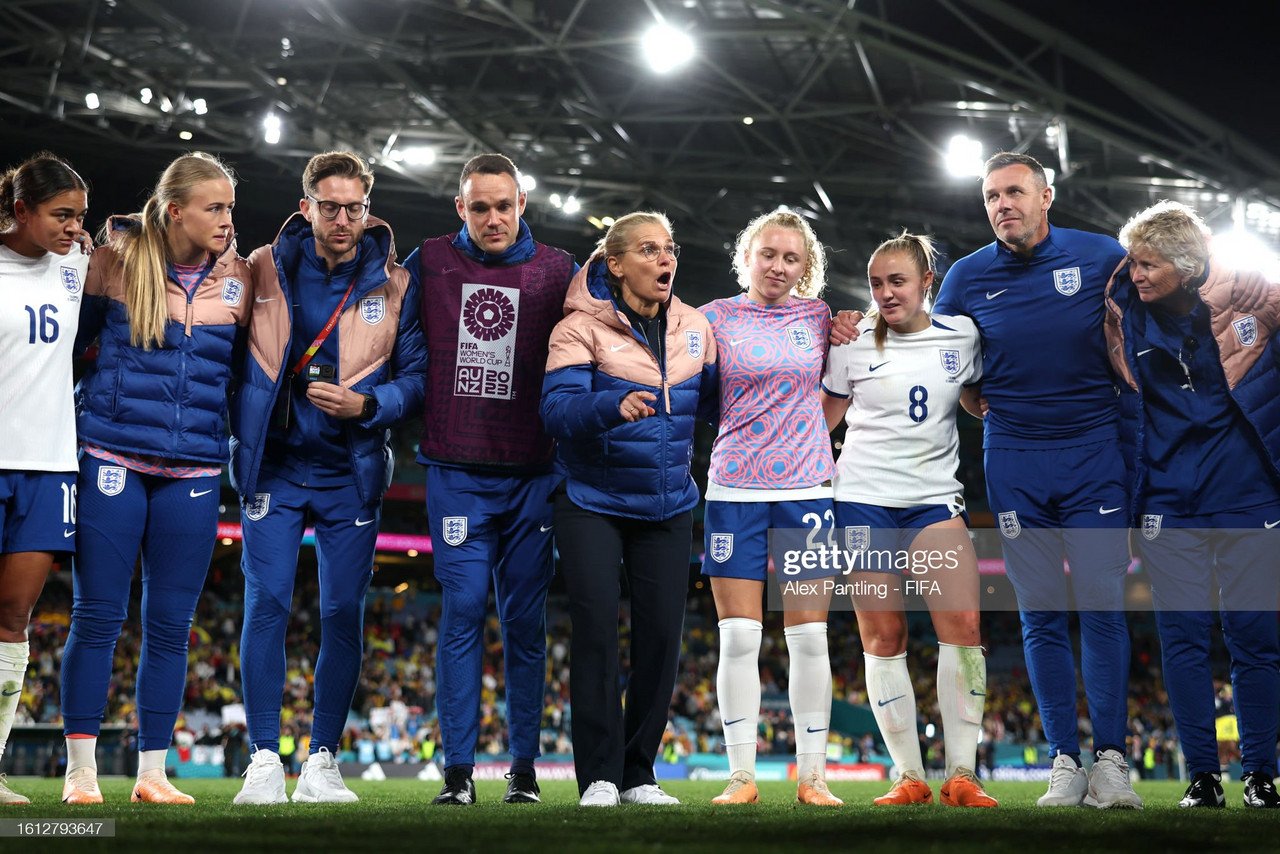

England hasn’t exactly set the world alight at the 2023 FIFA Women’s World Cup. In a tournament that has provided countless upsets and seen the likes of Germany and Canada bow out early, it is somewhat of a miracle that the Lionesses are still contending for silverware.
Coached by Sarina Wiegman, England was widely expected to build upon their sensational success at last summer’s European Championships, in which the Lionesses laid their hands on the trophy after a stunning extra-time win against Germany at Wembley Stadium.
And while they may have reached the semifinals down under, there are evidently some painful home truths that need telling - as England simply does not look like a side capable of lifting the greatest honour in international football.
With the Lionesses set to face Australia on Wednesday with a spot in the final at stake, why has criticising the national team become taboo?
Goalkeeping ‘blunders'
Mary Earps has established herself as England’s first-choice goalkeeper, and for good reason. The Manchester United shot-stopper has resembled a brick wall at the heart of the English defence for quite some time now and is arguably the first name on Sarina Wiegman’s teamsheet.
The 30-year-old has been the focal point of media attention throughout the tournament so far though, having drawn attention to Nike’s refusal to make her goalkeeper shirt available for sale - despite offering to fund production herself.
But when the media chose to highlight her poor positioning that directly resulted in Colombia’s opening goal on Saturday, journalists were quickly silenced and told that Leicy Santos‘ strike would have been ‘difficult for ANY keeper to stop.'
But surely the Lionesses deserve praise?
The Lionesses do deserve praise. At the very least, they ended England’s sixty-year wait for a major trophy - inspiring millions of young children to chase their dreams in the process.
Since that glorious day in London just over a year ago, women’s football has grown exponentially - both in England and further afield. The Lionesses have been the driving force behind serious social change, forcing the UK government to implement changes to the Physical Education curriculum and boosting acceptance of the women’s game across the country.
Despite struggling in some games this summer, the Lionesses have won all of their matches - Sweden is the only other remaining nation to have replicated that feat. On paper, that is a colossal achievement - but England could have quite easily found themselves heading home on an early flight...
Why is criticism important?
It is for that very reason that these players must be criticised. Accepting mediocre performances, regardless of the result, has the potential to be the limiting factor that stunts the growth of women’s football.
On a stage that garners as much attention as the World Cup, there will undoubtedly be fans tuning in to watch their first women’s football matches. The tournament should be a great recruiting factor for this new generation of supporters, but a lack of criticism could turn them away.
Imagine you had never watched a women’s football match before - and England vs Colombia was the first time you tuned in. Mary Earps’ positioning for las Cafeteras’ opening goal was simply woeful - yet when you turn to social media post-match, it’s simply brushed aside.
The fact of the matter is that in a game of small margins, that error could have seen England knocked out. Comparisons to the men’s game are often controversial, but Jordan Pickford would have been heavily criticised if he had let in a goal of that nature - so why shouldn’t Mary Earps be?
It is fundamental for the growth of the women’s game that we recognise these errors, flaws and mistakes. Allowing them to be brushed under the carpet only serves to produce a poor image of women’s sport, with new fans led to believe that it is of inferior quality to the men’s game.
When those involved in women’s football are pushing for the equality they deserve, why should they escape criticism after an underwhelming match? Of course, a line has to be drawn somewhere abuse in any form is simply unacceptable - but recognising poor performances is a key part of sport.
Heralding the Lionesses for ‘showing immense grit and determination’ is fair enough, but a failure to acknowledge poor individual performances is simply mind-boggling given that these players are professionals.
The reality is that if the Lionesses are crowned as World Champions on August 20, they will be exempt from all criticism - and they will deserve a period of widespread media celebration. But when Sarina Wiegman’s side has limped to unconvincing victories on the path to glory, there will need to be heavy reviews and plenty of difficult questions asked as to why they struggled so much this summer.
