


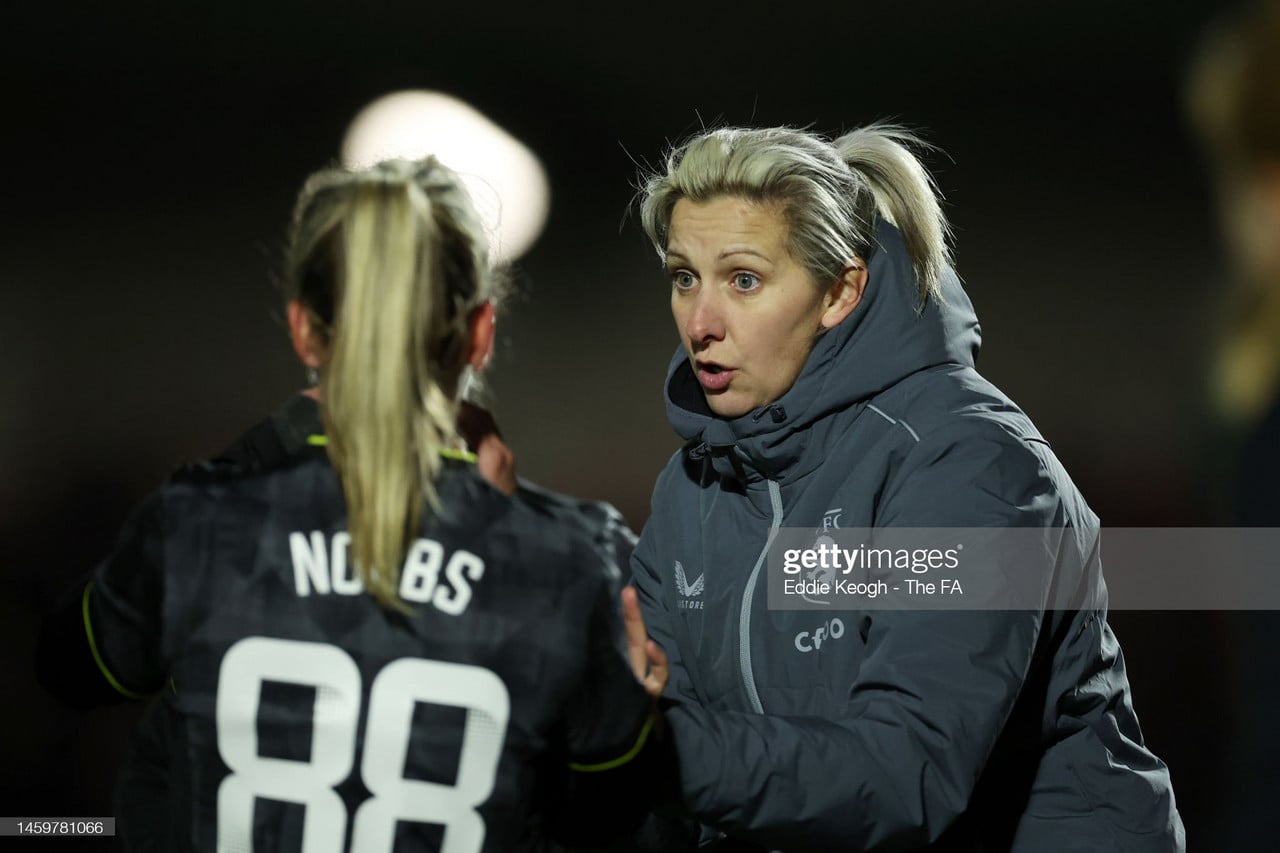

In the summer of 2021, Carla Ward, formerly of Birmingham City, was announced as the next manager of Aston Villa Women. She proceeded the popular Gemma Davies, whose leadership fired Villa into the top tier of women's football just a season before Ward took over.
Ward joining the Villains came with a great amount of positivity from not only Villa fans but also those across the Women's Super League. Most had seen the job the 39-year-old had done at Birmingham City, despite the lack of investment and quality facilities at the club. Excitement at where Ward could take a club willing to invest and progress into the top positions of the WSL was evident amongst supporters.
This season, Villa has stormed up the league, taking on and seriously challenging the WSL heavyweights. For example, the Villains recently took on Chelsea in the semi-final of the Vitality Women's FA Cup, where although losing 1-0, they more than kept themselves competitive for 90 minutes.

Questions should be asked, how has Carla Ward transformed Aston Villa?
Through tactical analysis and decisions made by Ward since joining the claret-and-blue-occupied area of Birmingham, I aim to answer that question.
-
Relegation-Battlers to Top-Four Pushers
To understand the scope of Villa's achievements this season, looking at previous table finishes is important.
Gemma Davies departed the club after placing 10th out of 12th in the 2020/21 season, picking up 15 points in 22 games. This was Villa's first season in the top tier of women's football in England. Furthermore, Davies' squad was knocked out of the FA Cup in the fourth round after conceding a whopping eight goals to Manchester City.
In Ward's first season with the Villains, she led them to a ninth-place finish with a total of 21 points - winning double the amount of league games than the previous season. Despite their narrow improvement in the WSL standings, Villa was again knocked out of the FA Cup in the fourth round, this time losing 3-1 to serial trophy winners, Chelsea.
So that takes us to the 2022/23 season, where Villa has shot up the league's rankings. At the time of writing, the Villains sit in fifth place with 33 points accumulated across 20 games. They have won 10 of these, and had a very successful FA Cup run; beating heavyweights Manchester City to get to the semi-finals, but narrowly missed out on a trip to Wembley after a 1-0 defeat to Chelsea.
In three seasons, Villa has gone from a bottom-half WSL team to one testing the biggest teams in the league. But how?
-
A Proven, Trusty Tactical Formation
Ward tends to favour a 4-1-4-1 formation with her teams, demonstrated through both Aston Villa and Birmingham City.
This formation is used by many well-respected teams across the world, and, when executed well, can be a defensive and attacking nightmare for opposing teams.
To create a visual of the formation, Villa lines up with a backline consisting of four defenders, with a lone holding midfielder sitting just in front. Four more attacking players proceed, and a lone striker remains at the highest point of the formation.
For this configuration to be most effective, good performances from the holding midfielder are crucial. In Villa's case, the preferred holding midfielder is Lucy Staniforth, whom they signed in January 2023. Staniforth's domestic and international experience intertwined with her possessional ability has proven a fantastic signing to suit Ward's formation.
Since making her first domestic appearance against Tottenham Hotspur in January, Staniforth has started all available games in the Women's Super League. Of the nine games she has started, Villa boasts of being unbeaten in eight. A stark contrast to before the former Manchester United player's transfer, where the Villains only picked up points in four out of nine games.
Staniforth's role as a holding midfielder means she connects the defence to the attack when in possession, and shields the backline when Villa are without the ball. As the connecting player, rarely does Staniforth need to play long, elaborate passes. Her short passing statistics for Villa are impressive, considering having only played eight domestic matches for the club. The 30-year-old is in the midst of her most accurate passing season, completing 88.6% of all short passes (between five and 15 yards) and 86.2% of all medium passes (between 15 and 30 yards).
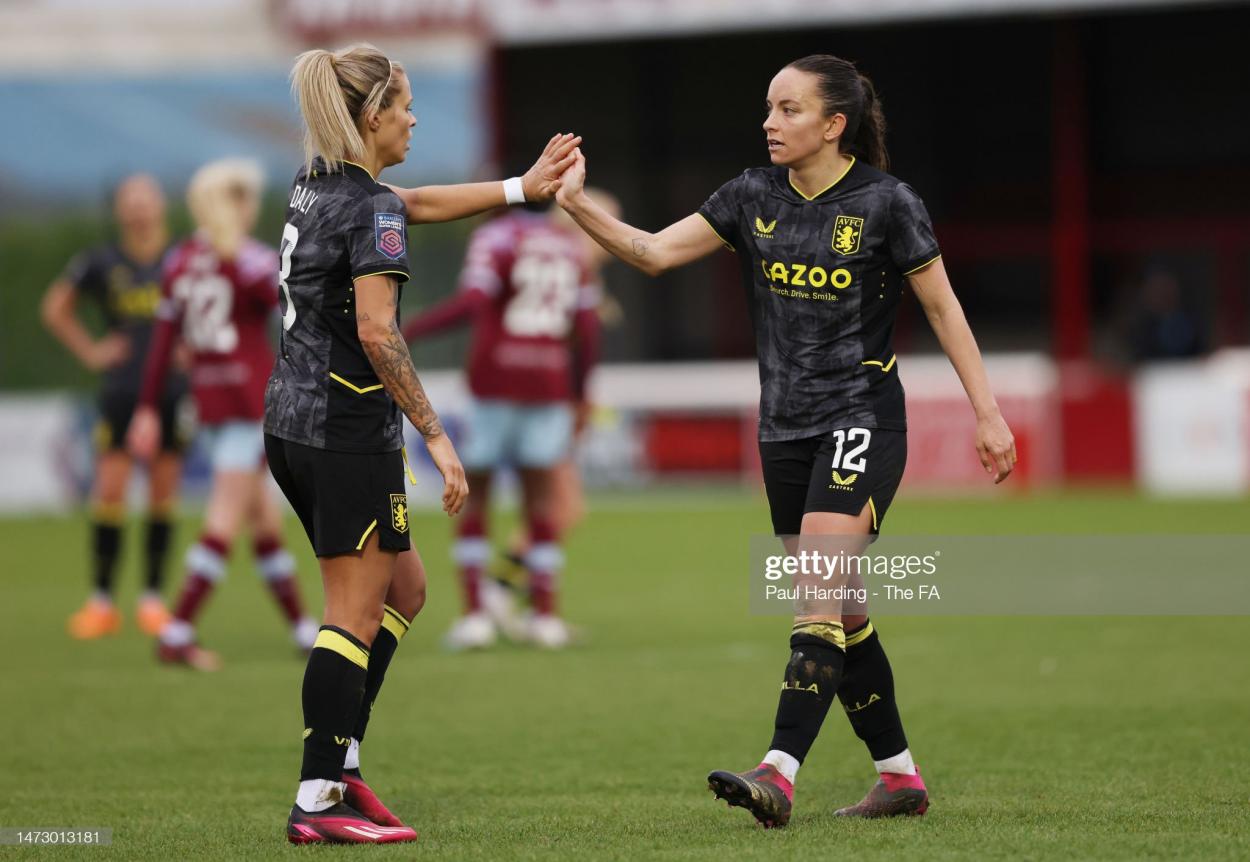
Staniforth is not the only hidden jewel in Aston Villa's tactical set-up.
Ward is known to emphasise developing fantastic relationships between wide players - ensuring the wingers and full-backs can work together fluently. She deploys full-backs that pose attacking threats, as well as providing stability in defence. The requirements are essentially flipped for the wide attacking players, as the ability to defend high up the pitch is a beneficial tactic.
When attacking, using the fullbacks to drive the ball into the final third means the two widest midfielders (usually a variation of Alisha Lehmann, Kirsty Hanson or Laura Blindkilde) can position themselves in the box - providing Villa with more attacking options in goalscoring positions. Ward's preferred fullbacks are Maz Pacheco and Sarah Mayling, due to their pace and attacking ability.
Of course, however, to make a formation effective you have to ensure you play to your squad's best qualities...
-
Utilising Players' Best Qualities
European Champion and Lioness Rachel Daly is having her greatest season to date. Why? Carla Ward is playing to Daly's strengths.
Daly has been surfing the wave of confidence for months. From winning EURO 2022 with England to becoming one of the WSL's most clinical strikers, the Harrogate-born player has been the cutting edge for Villa this season. Before signing for the Villains, Daly was used by Sarina Wiegman as a left-back for England - but her versatility is unlike most.
When she signed the England international in the summer of 2022, Ward said:
"Rachel is a top forward and a proven goalscorer. Having performed admirably at full-back this summer, she showed us that she is a player you simply need in your team. But for us, she is a forward and we can’t wait to see her scoring goals."
Daly is utilised as a lone striker but picks up the ball at all areas of the pitch. She has quickly become a fan favourite in Birmingham due to her immense work rate and goalscoring ability. The 31-year-old is the difference maker for Ward and has put away 20 goals in 20 games - making her the league's highest goalscorer this season.
After her hattrick against Reading in gameweek 20, Daly became the first English player to score 20 goals in one season in the WSL.
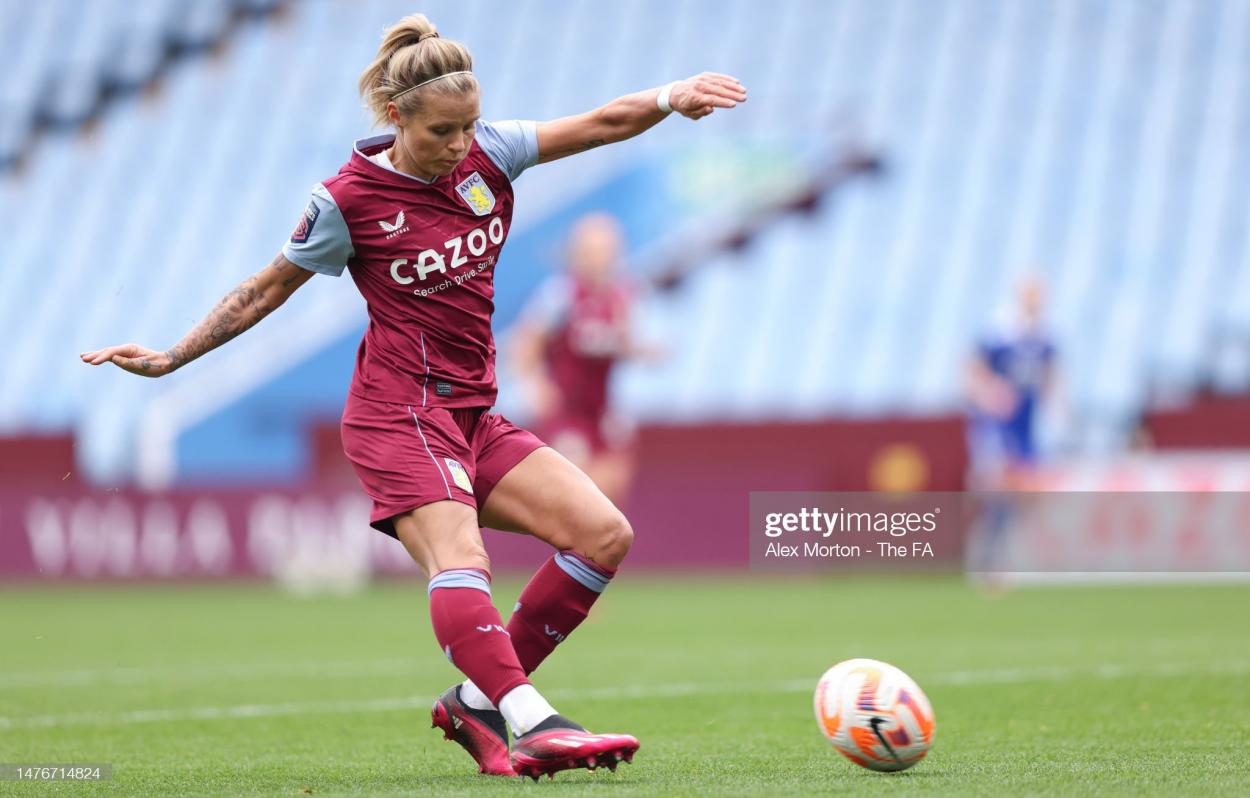
But it's not just Daly that's changed the dynamic of this team.
Villa's recruitment has made an unbelievable difference to the progression of the team, this season. Bringing in Jordan Nobbs and Lucy Staniforth was a criminally underrated piece of business from Ward in January.
Both midfielders have a wealth of domestic and international experience, playing in the top tier for many seasons. Not only beneficial technically and tactically for Villa on a matchday, but the duo will also be developing those with less experience around them.
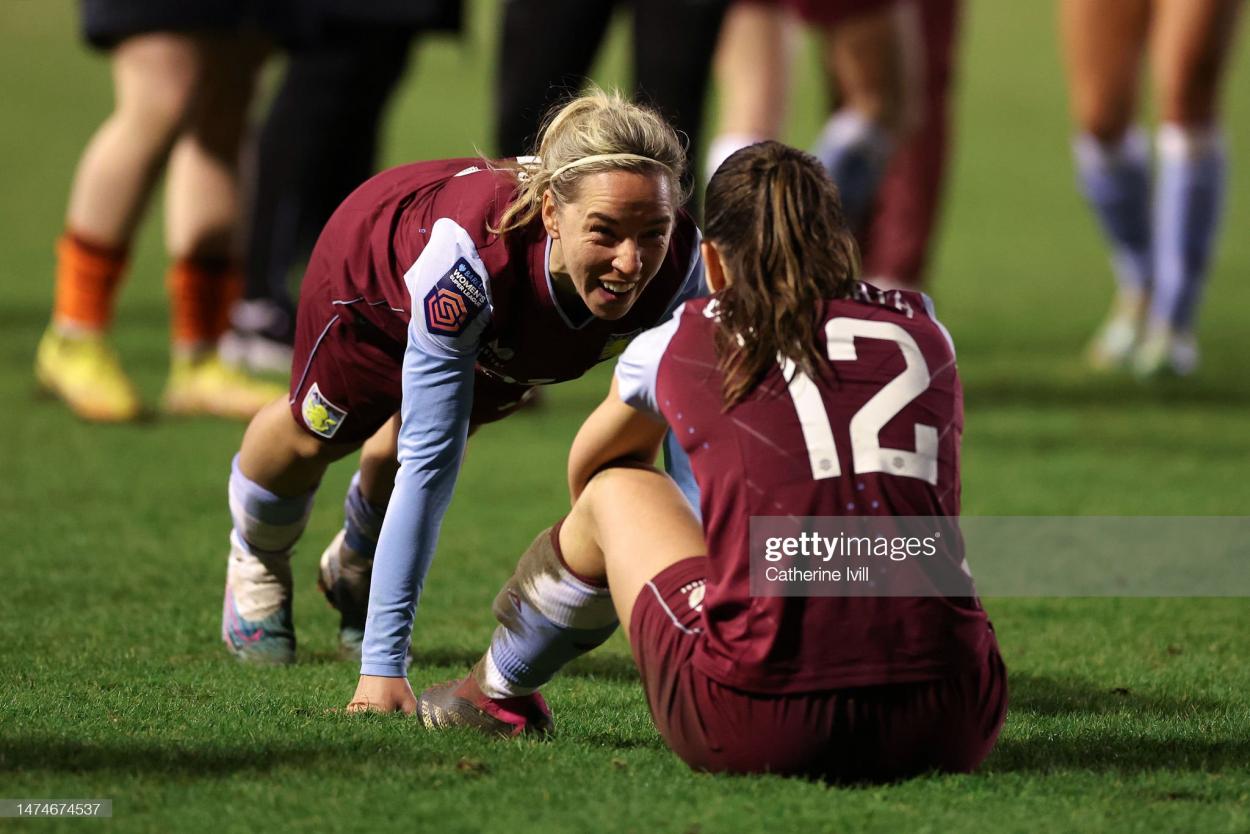
Nobbs, in particular, has seen a revival in her career, following her reduced playing time towards the latter end of her time in north London with Arsenal. Within just months of joining the Villains, the 30-year-old has returned to the England squad she was a part of for so many years, after missing out on a handful of recent tournaments.
-
To Conclude
This season, Carla Ward's game plan has clicked. From the recruitment to the tactics on the pitch, Ward and her staff have developed a team that regularly flirted with relegation to challenging the top four within, essentially, one season.
Without a doubt, Ward deserves to be praised for her efforts in claret and blue this season. This is a very exciting time for Villa fans, who will hope their team's progression up the table shows no limits.
