



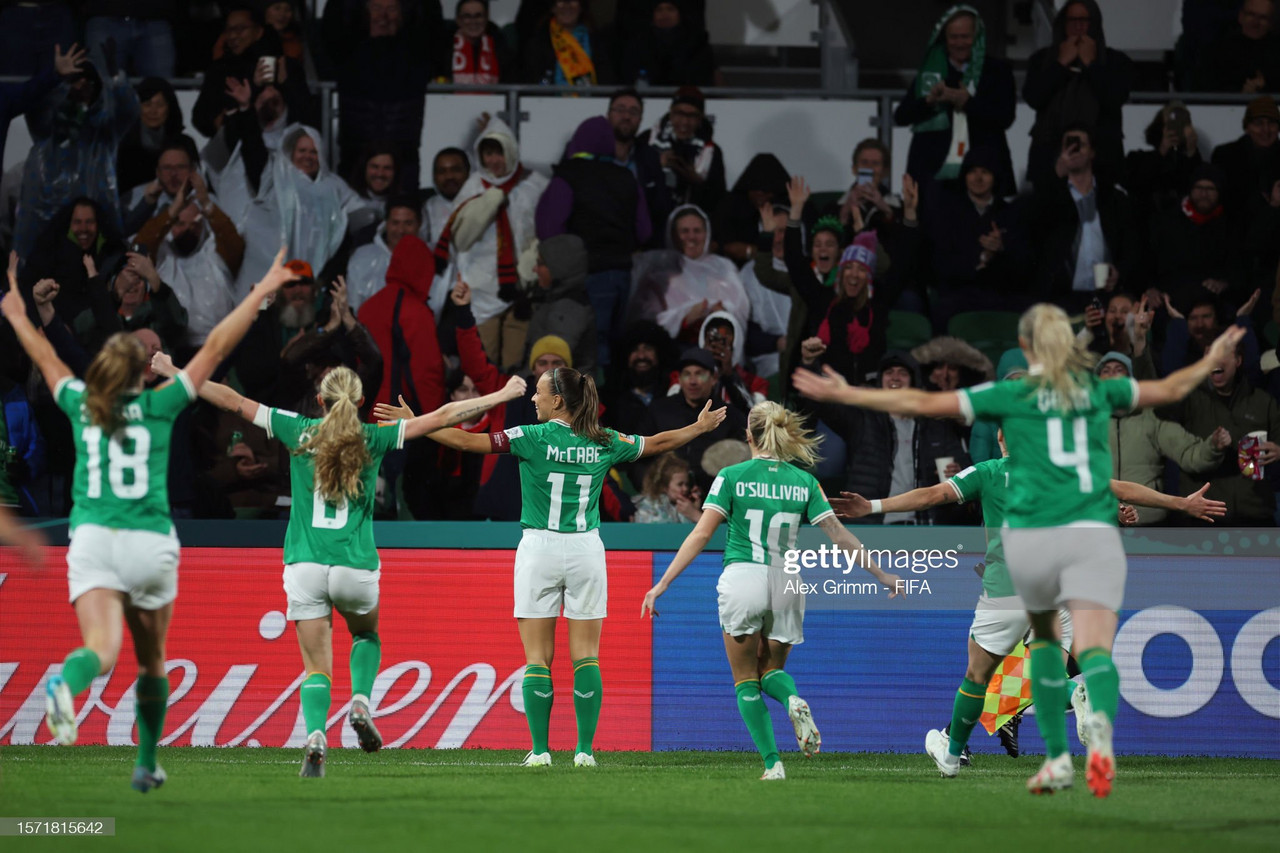

Over 10,000 miles from home, representing a country that doesn't even boast football - or soccer over there - as the national sport, viewers were enamoured as the Republic of Ireland made their Women's World Cup debut.
The Land of Saints and Scholars have a rich but not extensive World Cup history, only featuring in three versions of the men's tournament and 2023 being their first appearance at the most prestigious competition in women's football.
Supporters told the team to "put them under pressure" in Italia 90, the tournament that birthed the famous "Ole, Ole, Ole" chant that has become synonymous with Irish success - their Eurovision wins in the 90s saw the Irish faithful sing it louder than any competitors when the results were announced, the chant was born.
And success it was that summer in the south of Europe. Jack Charlton's Boys in Green reached the quarter-finals, only narrowly losing to hosts Italy, but a country was hooked on the Coppa del Mondo. The Irish takeovers of Palermo, Cagliari, Genoa and Rome set the bar high for any future tournaments.
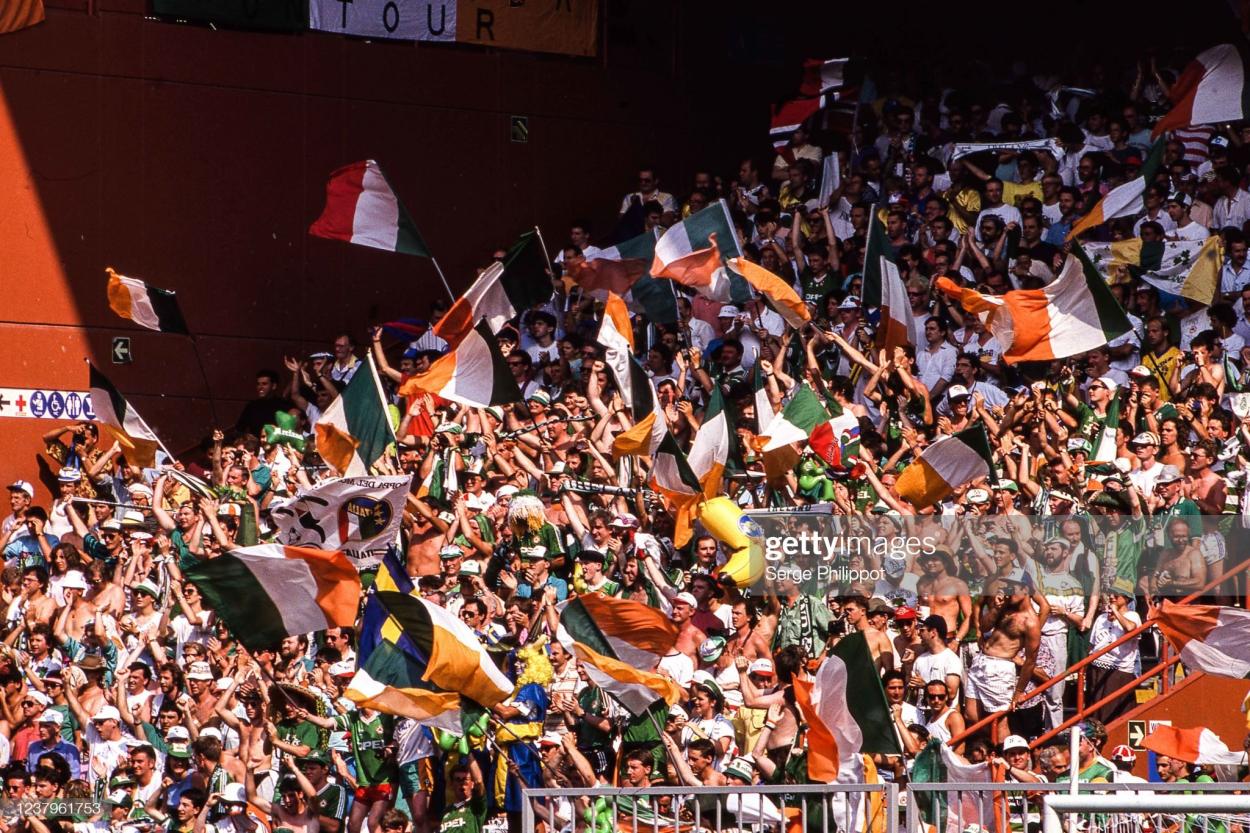
Fast forward four years to USA '94, the Irish had already beaten near neighbours England by qualifying for the tournament and once again progressed through the groups, but fell at the Round of 16 hurdle against the Netherlands.
2002 was next up and once again Ireland progressed through the groups into the knockout stages where they met Spain, losing 3-2 on penalties. A win would have seen the Boys in Green face off with South Korea in the quarter-finals, in what would have been their best chance to reach a World Cup semi-final.
But something went wrong, the 2002 edition was the last Irish appearance at a World Cup until 2023 where the women would look to make history and follow on in the footsteps of '90, '94 and '02.
-
What's gone wrong for Irish football?
A premier division that is known for all the wrong reasons, the League of Ireland Premier Division is ranked 93rd in the world on the TeamForm league rankings, falling under leagues such as Serie C in Italy, the second tiers of Venezuela, Chile and Uruguay amongst others, and League One in England.
The recent rise in attendances in the top flight of Irish football post-Covid, however, shows that football is still popular on the Emerald Isle, despite the reigning supremacy of Gaelic football and hurling across the country.
With the league only having 10 teams, teams play each other four times a season. No Cork City fan is getting overly excited about the need to travel the length of the entire island to play Derry City away twice a season, and vice versa.
Added to the small number of teams and therefore long trips to far fetched away clubs on not one but two occasions, promotion and relegation between the Premier and First divisions only helps hinder the progression of the grassroots game with no path from amateur to professional leagues for clubs where it even got to the point that Shamrock Rovers' B Team filled a gap in the First Division in 2020.
Only two Irish clubs have ever made appearances in the group stages of major European Competitions: Dundalk and Shamrock Rovers both in the UEFA Europa League. Cork City, Bohemians and Sligo Rovers have all made the group stages in the UEFA Intertoto Cup, which was a summer European competition.
The poor standard of domestic football in comparison to other top flights in European countries with a similar national team world ranking immediately puts the Irish game at a disadvantage with the best players looking to move abroad to play, leaving a lower standard of players playing in the domestic league which less people will therefore watch, generating less income for the Football Association of Ireland (FAI).
They've still got close though. A body part, Thierry Henry's 'hand of frog', saw France progress via the play-offs to qualify for the 2010 World Cup. 1998 and 2018 also saw play-off final defeats, just without the added controversy.
European Championships have also proved a distraction. Ireland didn't progress past the groups in 1988 and 2012 but did reach the Round of 16 in 2016, losing to hosts and eventual finalists France.
-
A new hope in the women's game?
Not only attendances in the domestic men's league rising, but they're also rising in the domestic women's league. Every single game in the Women's National League is being live streamed on the same platform as every Premier Division game with the first ever TV deal for the league also being struck with Irish language broadcaster TG4 three years ago, that deal has only progressed and been renewed for the 2023 season.
The rising nature of the WNL mirrored perfectly with the Irish Women's National Team qualifying for the World Cup 2023, with a 1-0 play-off win in Glasgow against Scotland securing their first ever appearance at the most reputable women's tournament in the world.
World Cup fever hit the country, the FAI offered out supporter kits to all of its member clubs that included flags, bunting, advertising and more with the idea of getting as many clubs as possible to hold watch parties as the Girls in Green made history.
Over 10% of the entire Irish population watched their second game in the tournament against Canada where Katie McCabe made history just four minutes in - scoring the nation's first ever Women's World Cup goal, with RTÉ revealing that 550,600 people watched the game live on RTÉ 2, with another 234,883 watching on RTÉ Player - staggeringly less people tuned in to the GAA All Ireland Final on RTÉ Player between Dublin and Kerry. 511,000 tuned in on live TV for the opening game against Australia which did see technical issues.
An RTÉ spokesperson said "The streaming numbers and TV ratings from Wednesday's game demonstrate the continuing support for the women’s national team as live audiences for women’s sport hit an all-time high.
“On RTÉ Player there has been over 750,000 streams of all FIFA Women's World Cup games in the first seven days, with the numbers continuing to grow. On RTÉ.ie, the live blog with minute-by-minute updates from the match received over 430,000 views.”
The game became the most viewed women's sporting event in Irish television history and both Australia and Canada games pushed their way to the top of viewing figures for live events on RTÉ player in 2023, with figures for the Nigeria game not available at the time of writing.
In comparison, the All Ireland Camogie final only had just over 200,000 television viewers in 2022. The national sports of Ireland may be GAA, but women's football may be taking over as the national women's sport on the Emerald Isle.
-
The run down under
Drawn in what was pitted as the 'group of death', a daunting first challenge was placed in front of the Girls in Green against co-hosts Australia.
World Cup fever had not just hit in Ireland but also down under, with the opening Group B game in Sydney was moved from the smaller capacity Sydney Football Stadium to Stadium Australia where nearly 80,000 watched a penalty prove decisive, Vera Pauw's side heading away with nothing.
Even inside the stadiums, the Irish made their mark and people watching in on their TV with the audio up would easily have been forgiven for thinking that Ireland were the host nation - chants of Fields of Athenry and Olé, Olé, Olé audible for the entire 90 minutes.
History came within four minutes of their second game. A rare Olimpico goal from Katie McCabe did what every Irish fan dreamt of and opened their World Cup account to give the side that McCabe captains a lead against Canada.
Their lead wasn't to be though, and a cruel own-goal from Megan Connolly added to Adriana Leon's second half strike confirmed that Ireland would be heading home after the group stages finished, albeit with their heads held high.
They could hold their heads even higher after the last game. A 0-0 draw against Nigeria in Brisbane earned a first ever World Cup point for Ireland, more history made from a successful debut competition appearance - despite getting knocked out during the group stages.
Thousands lined O'Connell Street in Dublin as they welcomed back their stars in a homecoming celebration. There was a divide in the country with people thinking manager Pauw may leave after the competition, but the excitable Dutch manager who was seen dancing on stage almost certainly dispelled these rumours, announcing "Be with us because in the next tournament we’ll go for medals!"
The hunger is certainly there now they have made their first appearance, confidence will only spread as Irish women's football look to take their next major step.
With more fans coming through the gates at WNL matches, more coverage on TV of both the WNL and the English Women's Super League which boasts a plethora of Irish talent and a realisation around the country that women's football will be able to bring the nation together as it did this summer, Ireland seem to have finally broken back onto the international stage however this time it's for McCabe's skills and Brosnan's heroics, not Roy Keane's wants and needs.
Irish football may not be as attractive as English, Spanish or French, but it's a work in progress and the desire to be one of Europe's elite will only help. Wherever there's a will, there's a way.
