


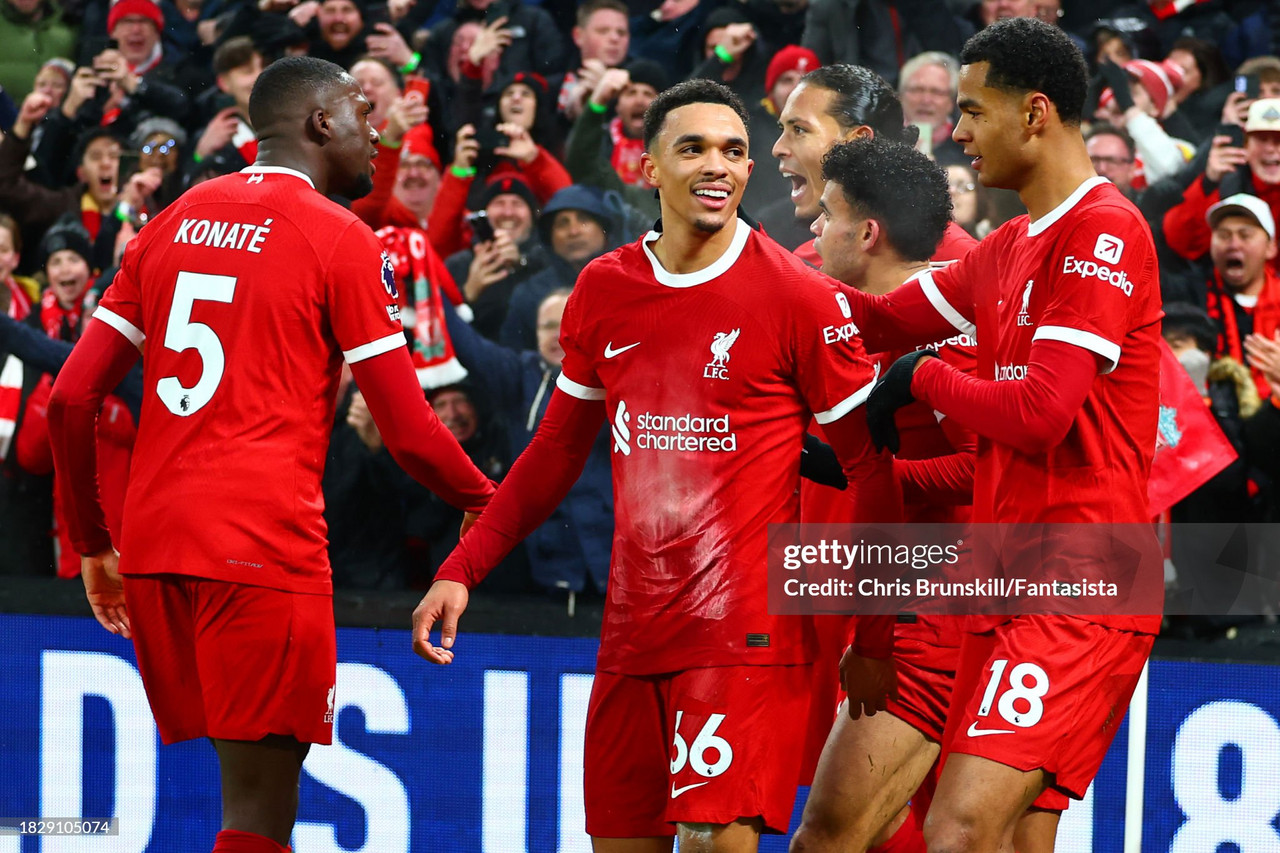

‘Intrigue’, ‘excitement’, even ‘unknown’. They arguably felt three of the most attachable words to Liverpool as the 2023/24 season began.
To a certain extent, that remains the case – such has been the nature of the change over the summer and the subsequent, ongoing, evolution. In time, revolution may become the apter term.
Primarily, of course, this has stemmed from the centre of the park. Alongside adored former No.9 Roberto Firmino, long-serving midfielders James Milner, Alex Oxlade-Chamberlain, Naby Keïta, Jordan Henderson and Fabinho each departed ahead of the current campaign.
In turn, the arrivals of Alexis Mac Allister, Dominik Szoboszlai, Wataru Endo and Ryan Gravenberch gave that area of the squad a distinctly fresh look.
After winning the Carabao Cup and FA Cup and coming so close to an unprecedented quadruple in 2021/22, the 2022/23 campaign was a largely chastening one, in which systemic and individual issues were painfully exposed.
Midfield shortcomings in and out of possession were viewed as at least a key contributing factor – often the catalyst. Since the summer of 2018, Thiago Alcântara’s September 2020 signing had been the only bit of senior recruitment in the engine room.
A strong run-in – cued by a switch to an in-possession box-midfield that has remained prominent in ‘23/24 – salvaged a fifth-placed finish and Europa League spot, but a summer of change was anticipated. The sheer extent of it could hardly have been foreseen, however.
The farewells for Firmino, former vice-captain Milner, Oxlade-Chamberlain and Keïta upon the expiry of their contracts were, in the end, largely expected.
The transfers of ex–club captain Henderson and Fabinho to Saudi Arabian clubs very much weren’t, however. It was widely thought, particularly in the case of the latter, that they would remain prominent – if more regularly rotated – squad members.
It is that additionally stark level of turnover that has made the new-look Reds’ promising start to the season all the more impressive and encouraging.
At time of writing, they sit top of the Premier League table on 37 points after 16 matches and have won their Europa League group with a game to spare, securing a place in March’s round of 16.
Following a poor opening 75 minutes, Mohamed Salah’s 200th Liverpool goal and substitute Harvey Elliott’s stoppage-time winner saw Jürgen Klopp’s team come from 1-0 down to beat 10-man Crystal Palace at Selhurst Park on Saturday lunchtime – offering the latest display of several strong traits in the process.
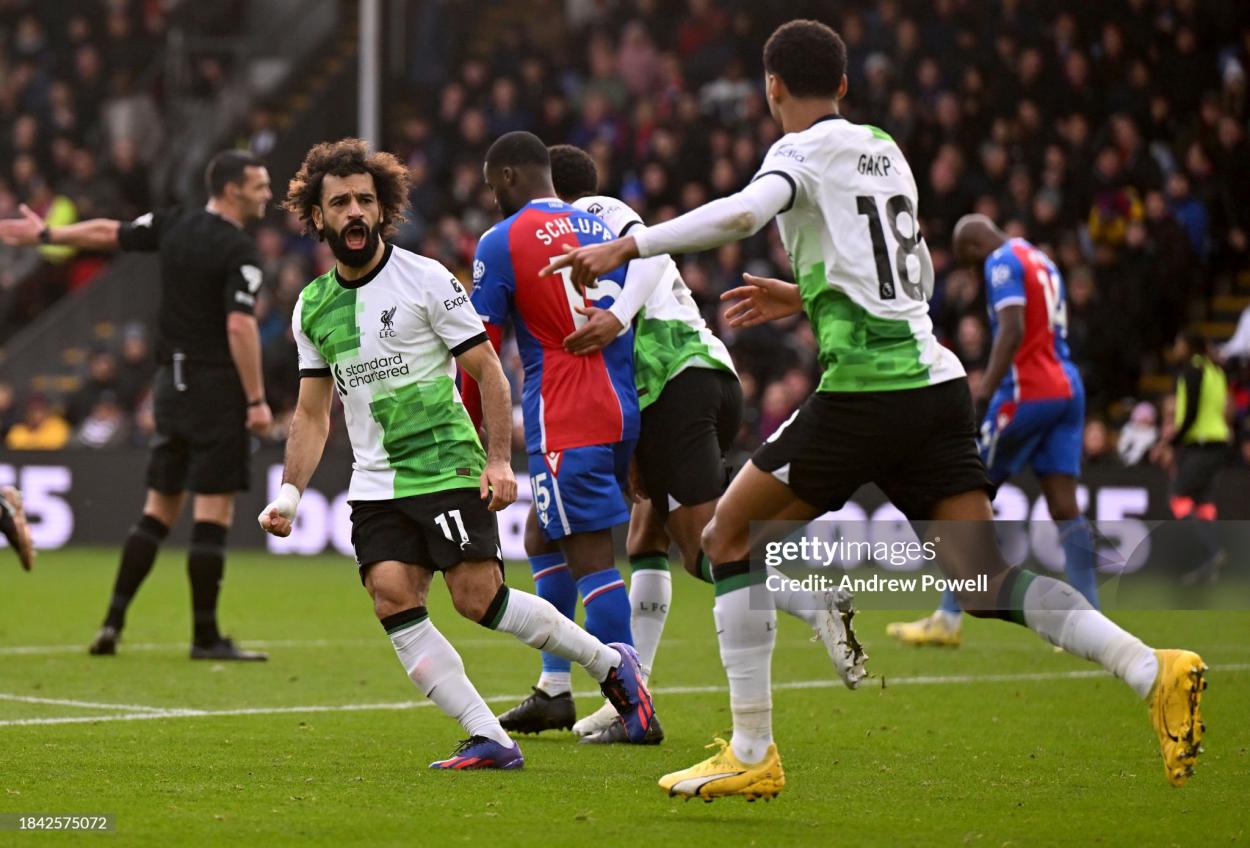
Third-placed Aston Villa’s 1-0 home win that evening over Arsenal, who’d started the weekend at the summit, then ensured the Merseysiders ended a matchweek top of the domestic tree for the first time since late September 2021.
A notable statistic, even if leading in mid-December brings no silverware. The fact the Reds are doing so while the renewal process appears to be ongoing and as new relationships are being forged bodes well and reflects superbly on the early direction of “Liverpool 2.0”, as this incarnation have been referred to by Klopp and others.
Significant tests approach as the typically intense festive schedule kicks in. Manchester United – aiming to bounce back from exiting Europe on Tuesday – and Arsenal come to Anfield for crucial league clashes on 17th and 23rd December respectively, either side of West Ham United’s visit in the Carabao Cup quarter-finals.
After a Turf Moor meeting with Burnley on Boxing Day, last season’s fourth-placed finishers Newcastle United then travel to L4 on New Year’s Day.
Before all of that, though, is Thursday’s trip to Anderlecht to face Belgian Pro League leaders Royale Union Saint-Gilloise as the Europa League group stage comes to a close.
Having already qualified as Group E winners, additional – and potentially priceless – room for rotation has been earned and Klopp is expected to make wholesale changes.
Indeed, goalkeeper Alisson Becker, captain Virgil van Dijk, vice-captain Trent Alexander-Arnold and top-scorer Salah – who have continued to represent the strongest of spines for the squad as the new faces have settled – haven’t travelled to the Brussels municipality.
Valuable minutes will likely be given to those players in need of greater rhythm and to youngsters looking to earn a consistent first-team role.
Union SG can themselves still qualify, so the intensity and competitiveness levels ought to be helpfully high.
Thursday could, therefore, prove immensely productive in terms of testing, experimenting with and enhancing the squad.
Excitingly, it’s a squad that already looks to have such a wide range of strings to its bow, including a familiar willpower.
Saturday's clincher was the 17th stoppage-time winner Liverpool have scored in the Premier League under Klopp, one more than Manchester United registered in the competition under Sir Alex Ferguson.
Bench press
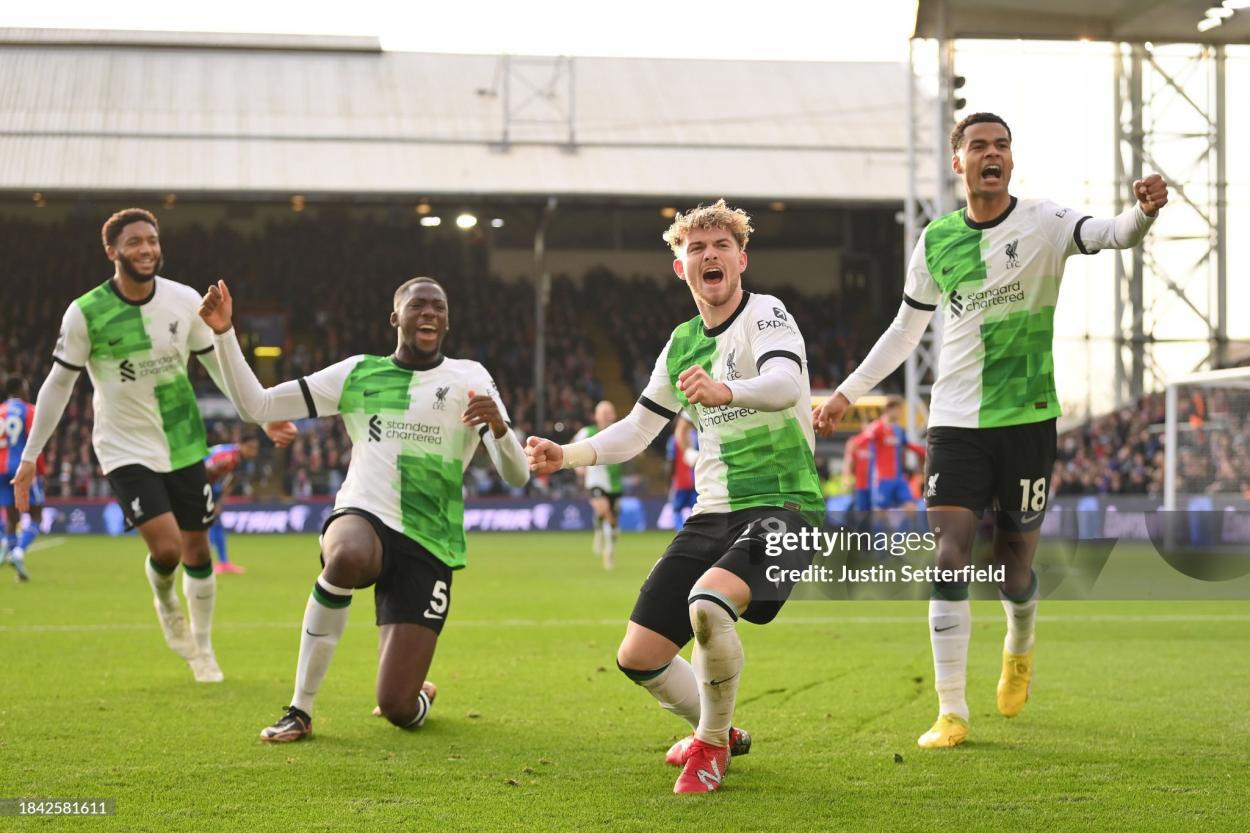
So often already this term, that breadth of options and attributes has been evident through Klopp’s use of substitutes.
“That’s actually the story, so far, of this season, that what we bring from the bench has a real impact,” said the 56-year-old in Saturday’s post-match press conference.
The German boss has made 70 of a possible 80 in-game switches in the Premier League and 34 of 35 across the five Europa League outings and two Carabao Cup ties to date.
There is a depth of quality to the current squad that arguably wasn’t present in the successful ‘18/19, ‘19/20 and ‘21/22 campaigns.
Previously – admittedly slightly less so come ‘21/22 – there was a feeling that going three or four players beyond the perceived first XI would lead to a considerable drop in level.
The ability to use five substitutes – rather than three – across every competition from ‘22/23 onwards has, of course, somewhat added to the potential advantages of possessing numerous high-level options.
Depending on the situation, this additional scope for using the bench can manage minutes and change games to an extent that we are perhaps still in the process of discovering.
The finely tuned nature of the modern footballer and intensity of the schedule makes any opportunity to reduce the strain especially valuable – particularly around this time of year.
Having the ability to change half of the outfield players, meanwhile, also means a team’s on-field identity can now be virtually transformed rather than simply tweaked.
It almost feels NFL-like. If certain moves need to be made, if a result needs to be chased or protected, or a threat has to be managed, the personnel and setup can be moulded and remoulded to fit said purpose.
This capacity was perhaps most clearly on show in November’s 1-1 draw at champions Manchester City.
Having each been introduced earlier in the second half, the ball-carrying capabilities of Gravenberch, take-on threat of Luis Díaz and shrewd off-ball movement of Cody Gakpo all played a key part in Trent Alexander-Arnold’s 80th-minute leveller.
Endo and Elliott were then both introduced within a few minutes, likely with the intention of offering additional security.
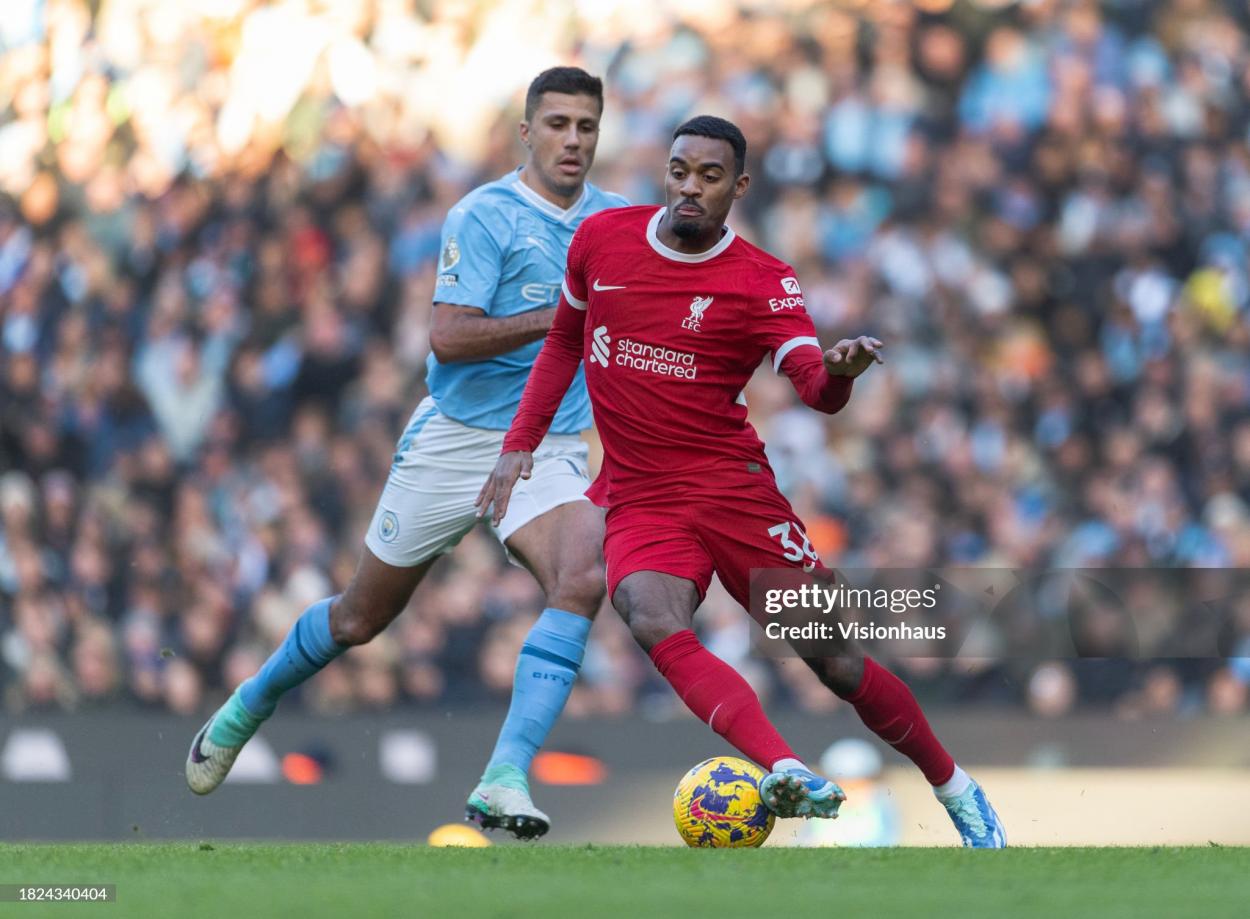
While Klopp made all five available alterations, Pep Guardiola – who admittedly was without several key players and tends to prefer a relatively small squad – made none over the course of the match.
The previously mentioned numbers highlight the extent to which the Reds have utilised such capabilities, but the fact that 11 of their 57 goals this season have been scored by substitutes demonstrates their impact.
As does a stat in Gregg Evans’ recent piece for The Athletic – that, of the last four stoppage-time winners scored by substitutes in the PL, three of them have been converted by Liverpool players.
Diogo Jota’s cool finish in the 4-3 Anfield win over Tottenham Hotspur late last season, Darwin Núñez’s second in August’s 2-1 comeback success at Newcastle United and Elliott’s 25-yarder at Palace on Saturday are the relevant goals.
Elliott is someone who has consistently made telling contributions from the bench. Klopp’s most used substitute this term, having joined the action 12 times, the 20-year-old’s understanding of where and how he can influence proceedings has impressed many.
A reliable retainer of possession, he has often invaluably upped the tempo and fluidity levels.
An off-target right-footed attempt and ambitious cross towards Díaz that was gathered – nearly recreating the Colombian’s equaliser at Luton Town – were the only times he lost the ball after his 74th-minute introduction at the weekend. Alongside his winner and drawing the foul that led to Jordan Ayew’s dismissal for a second yellow card, each of his 24 passes found a teammate.
Since the November international break, subs can arguably be deemed to have played a prominent role in as many as seven of the 13 goals Liverpool have scored in all competitions.
They are often referred to as ‘finishers’ rather than ‘substitutes’ within football, and those coming from the bench are indeed helping the Reds to press an in-game reset button, press on, and regularly round off matches with aplomb.
Formation fluency
Further dimensions are offered by the team's tactical options – options that have arguably expanded since the summer.
It is very much a two-way street. The players’ range of unique traits broaden the systemic horizons, while changes – subtle or otherwise – in approach enable individuals and the collective to thrive in different ways, situations and spaces.
On the surface, at least, Liverpool have started each match in their regular 4-3-3 on-paper shape. There are variations but, generally, at some point within build-up play, that sees the right-back – usually Alexander-Arnold – invert into midfield alongside the ‘Number 6’. In turn, the two ‘Number 8s’ advance higher to hover around or on the last line, creating a shape akin to 3-2-2-3 or 3-2-5.
It has plenty of potential advantages.
Alexander-Arnold can get on the ball more and in a position that offers his exceptional passing range a wider variety of angles.
There are good numbers within reasonable proximity of each other across the park to both retain possession and to counter-press.
And each of the five widely recognised on-field zones or lines – both wings, the central space and the two inside-channels (often known as ‘half-spaces’) ought to be occupied. It is an approach that largely echoes elements of Manchester City and Arsenal’s in-possession shape.
The right-back position vacated by Alexander-Arnold is often targeted, though, particularly upon turnovers, which can leave the right-sided centre-back with plenty of ground to defend.
That system doesn’t always remain in place for the duration of a match, though – particularly when goals are needed. An on-paper 4-4-2, which could also be viewed as a 4-2-4 or 4-2-3-1, has been utilised to good effect on occasion.
The Merseysiders have switched to it in games against Wolverhampton Wanderers, Luton Town, Fulham and Crystal Palace. It has been used for around a combined 160 minutes across those matches and has led to seven goals – approximately one every 23 minutes – being scored, just two being conceded in open play, and nine points being gained from either losing or drawing positions.
With the opposition generally sitting relatively deep within these phases, this approach often forms a 2-2-6 in possession, giving more chance of matching or overloading a well-stocked defensive line.
It is more high-risk, in many ways, but it has often proved a chance worth taking. It has also, at times, allowed players’ roles to be productively tweaked.
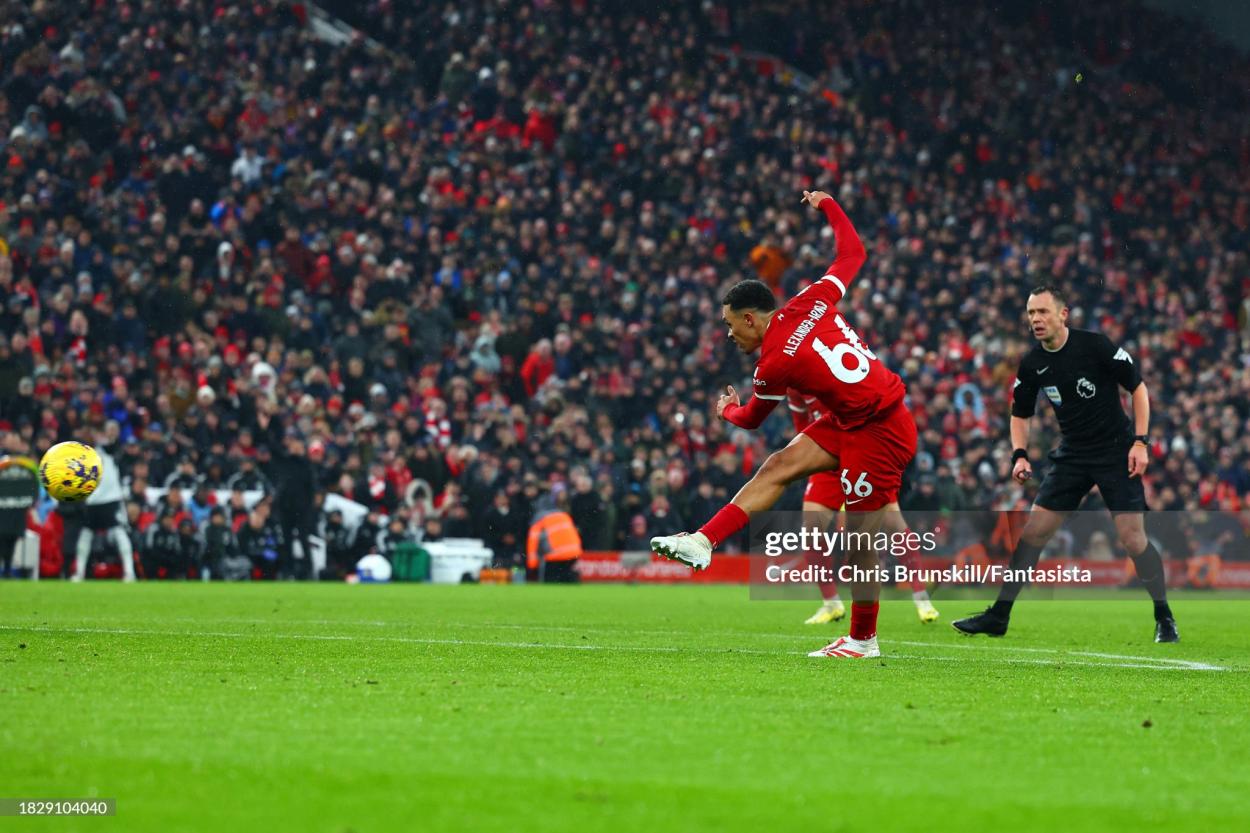
Alexander-Arnold became part of a conventional midfield double-pivot within this shape in the games against Fulham and Palace. The former saw him ideally placed on the edge of the box to control a loose ball and fire home an 88th-minute winner.
It is a role that spares him from having to swiftly retreat into a right-back – or temporary centre-back – position when the ball is lost, as is required when he fulfils the inverted role.
Simultaneously, it gives him more licence to move forward – and arguably better access to the half-spaces’ advantageous angles – than when he operates as a ‘conventional’ ‘Number 6’ within the 4-3-3.
Elliott is another who has regularly thrived within that shape. The ‘Number 10’ role or the one on the right of a front-four arguably suits his profile more than either a ‘Number 8’ position or the one on the right of a front-three.
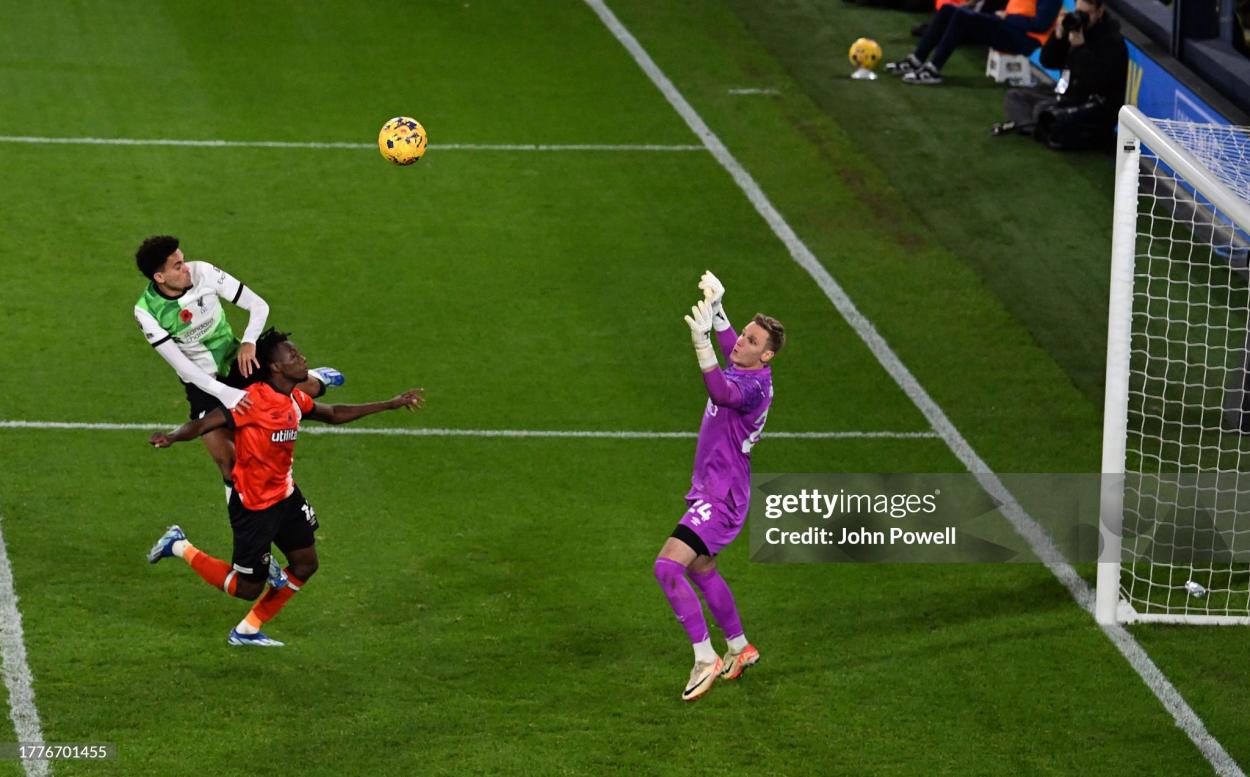
His clever positioning in the right half-space led to his well-struck winner in South London on Saturday and it was from a similar zone that he delivered the inviting cross that Díaz equalised from at Luton.
Which brings us to the Colombian. There is a feeling that his output in terms of goals and assists could be better. Having found the net five times in all competitions for the Reds this term and not yet registered an assist, that feels a reasonable observation.
He is, though, often the most natural provider of width within Liverpool’s five regular forward options – consisting of himself, Salah, Núñez, Gakpo and Jota. His game perhaps isn’t centred around such numbers to quite the same extent as some of his colleagues.
Still, the on-paper 4-4-2 shape is one that could see him operate more centrally if the left-back pushes into the last line. This was the case against Wolves in September and saw him get into several dangerous areas from the inside-left.
His last four goals for club and country have each been headers, so the potential for this shape to give him additional scope to get between the posts could further enhance his threat in that regard.
It will be interesting, too, to see if he fulfils a similar role from the right wing or half-space in early 2024 while Salah is due to be captaining Egypt at the Africa Cup of Nations.
If that proves the case, it isn’t all that difficult to envisage Díaz thriving off deliveries from the left by Kostas Tsimikas or, when he returns from his shoulder injury, Andy Robertson.
Salah himself tends to enjoy this system, with it often also allowing him to move inside and closer to goal.
That inside-right zone feels like the area where he is most menacing and the switch in shape on Saturday put him in a front-two with first Núñez and then Gakpo, meaning he was in prime position to convert the equaliser.
The likes of Curtis Jones, Szoboszlai and Mac Allister have also all shown themselves to be capable of operating effectively within either a midfield double-pivot or as part of the front-line. Gravenberch is another who may be in that category.
The technically adept and flexible profiles that are now commonplace among the squad offer so many options and a helpful degree of unpredictability.
Rounded cutting edge
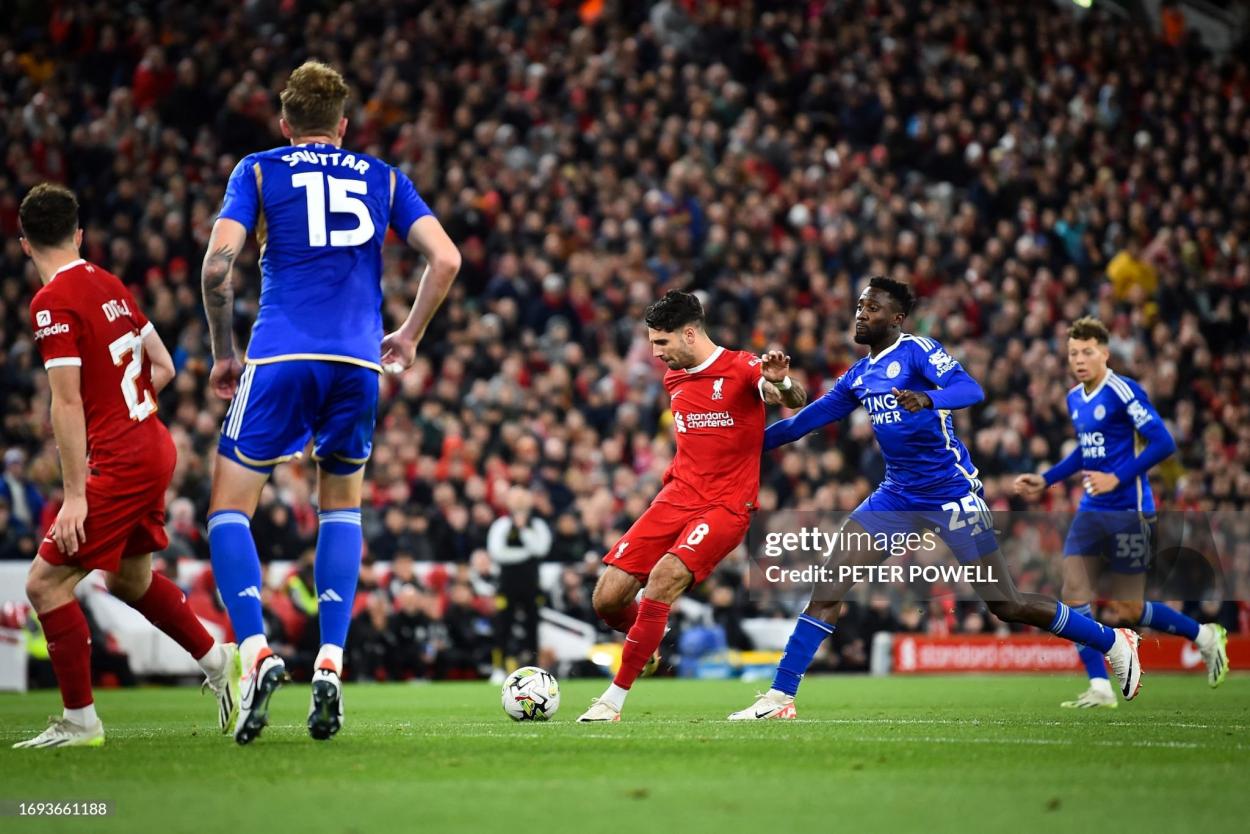
And, with that, comes an additionally varied goal-threat. For many, the most pertinent example of that development came against Fulham on 3rd December, when all four goals came from attempts from at least 18 yards which had a combined Expected Goals (xG) rating of just 0.28.
That game may have been a statistical anomaly, to some extent, but it highlighted the level of technical ability within the current squad and how that could ensure that – even if clearer chances were missed – there remained plenty of potential scoring routes.
Seven of Liverpool’s 57 goals in all competitions have come from outside the box so far this term. Meanwhile, according to WhoScored.com, only Fulham (41%) have taken a higher proportion of their Premier League shots from outside the area than the Reds’ 39% so far in ‘23/24.
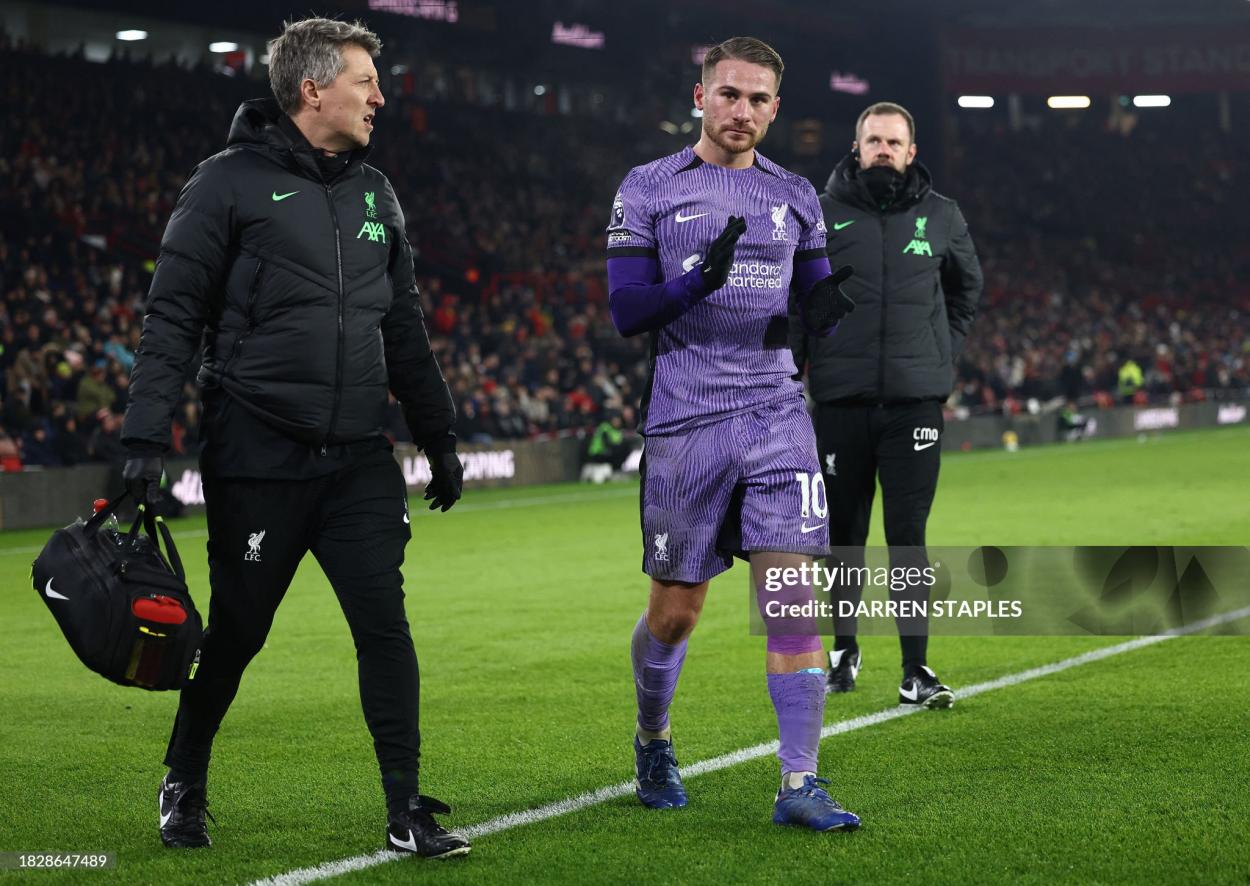
The ball-striking capabilities of the likes of Alexander-Arnold, Szoboszlai and Mac Allister – the latter of whom is currently sidelined with a knee issue picked up against Sheffield United – suggest that efforts from range could continue to prove a fruitful area for Klopp’s charges.
Even if goals don’t come directly from such situations, opportunities via rebounds remain distinctly possible while simply the spectre of certain players taking aim from distance can attract opponents and create space elsewhere – potentially giving Núñez all the more room to maximise his physicality.
There are occasions when the 3-2-5 set-up can appear to lack width, which is something that may need addressing if low blocks, in particular, are to be effectively deconstructed in the coming weeks and months.
However, this side have the look of an outfit who are becoming increasingly capable of progressing and retaining possession in tight areas and subsequently creating from them due to their increased technical proficiency this term.
Such profiles were required over the summer due to the more advanced role of the ‘Number 8s’, in particular.
Simultaneously, the physicality levels also look to have improved and the immense threat in transition remains, while open-play crosses and set-pieces are still fruitful sources of opportunity.
Mac Allister is worth highlighting here. Often seen as naturally being a more attack-minded midfielder, the Argentinian World Cup winner has most often operated as the ‘Number 6’ so far this season.
He isn’t always viewed as a conventional fit for the role, largely due possessing neither considerable height nor speed, although he has also regularly fulfilled a similar deep-lying role for his country in recent months.
His press resistance and vision over short and long range make him a reliable receiver and distributer of the ball under pressure within earlier phases of build-up.
That, coupled with his dribbling capacity, has the potential to attract opponents and create space for teammates upfield in a way that few other ‘6s’ may be able to.
Conversely, if he is afforded space and time in these deeper areas, his range of passing and ability to drive forward could open up uniquely effective angles to progress the ball. That was showcased by his superb flighted assist for Núñez in September’s 3-1 Anfield victory over West Ham.
His lay-off through that knee issue – which will keep him out of Sunday’s Manchester United clash – is a blow.
Endo, who is himself set to captain Japan at the Asian Cup shortly after the turn of the year, may have struggled at times, but he’s also shown himself to be a rounded and diligent midfield presence.
He, Alexander-Arnold, Jones or perhaps Szoboszlai or Gravenberch could conceivably operate within deep-lying midfield roles in the Argentine’s absence and it will be interesting to see if a shape akin to 4-4-2 is utilised more regularly as a result.
Particularly if Jota returns from his own injury in the meantime, making all five regular forward options available, that shape may become an additionally tempting option, considering it could also offer more opportunities to rest midfielders.
There are so many options in approach and personnel terms, and that might just make Klopp’s team additionally durable.
With further injuries always a possibility and Salah’s AFCON commitments on the horizon, remaining effective and posing a threat in various contexts is likely to prove crucial.
The fact that Liverpool have five players – Salah, Núñez, Díaz, Gakpo and Jota – on five or more goals in December for the first time since 1992 is a promising sign in that regard.
As is, arguably, the fact that only one of the eight goals across the recent wins over Fulham, Sheffield United and Palace came from one of said players. Not that the forward line will want to remain scoresheet-shy for long.
By the game, more and more is being learned about this reinvigorated version of Liverpool. Excitingly, though, the sense remains that there are still fresh gears to find, new approaches to utilise and that there is additional potential to tap into.
That persisting element of unknown could remain one of many helpful qualities for the Reds in the coming weeks and months.
